
 Unbelievable facts
In modern society, death is treated differently than in the distant past.
Unlike us, who consider funerals to be a sad event, our ancestors organized entire celebrations with complex mystical rituals.
These creepy but fascinating rituals were mandatory in ancient society when it came to burying a person.
Sometimes even the dead have their own fascinating stories.
Ramesses
1. Ramesses III
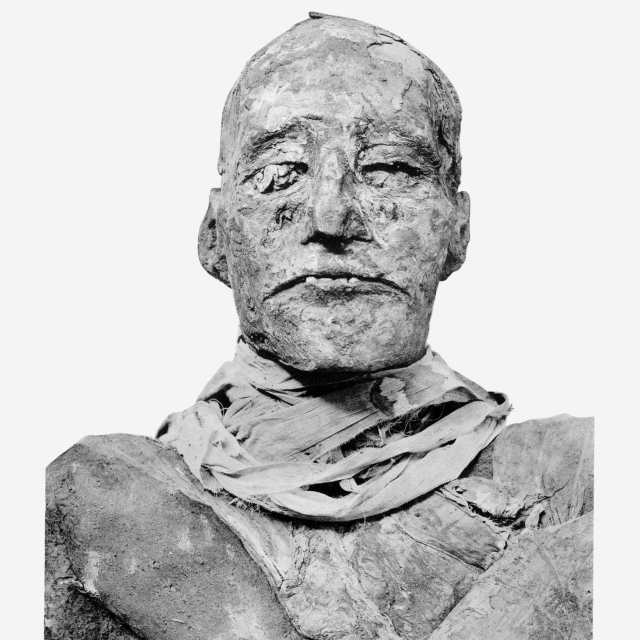
We know the following about the ancient Egyptians: they skillfully built pyramids, and also embalmed the bodies of the dead with a special composition. The beautifully preserved mummies are a kind of window that allows us to look into the distant past.
Several mummies from that period have been preserved and have come down to us, but the mummified remains of Ramesses III are of particular interest to archaeologists. This is one of the most mysterious figures of ancient Egypt.
A mystery in the museum: an ancient Egyptian statue began to turn on its own
Ramesses III was a pharaoh who dutifully served Egypt during the 20th dynasty. For over a thousand years, scientists have been actively discussing the events that led to his death. Fortunately for scientists, his body was treated with a complex of complex substances, thanks to which the remains have been preserved even centuries later.
Many questions were answered after archaeologists discovered Ramesses's tomb. Experts found a deep cut on the neck, 7 cm long.
According to scientists, this cut caused the rupture of large blood vessels, esophagus and trachea, which led to the death of one of the greatest Egyptian pharaohs. Ramesses is believed to have been killed by his sons.
2. The Man from Grauballe
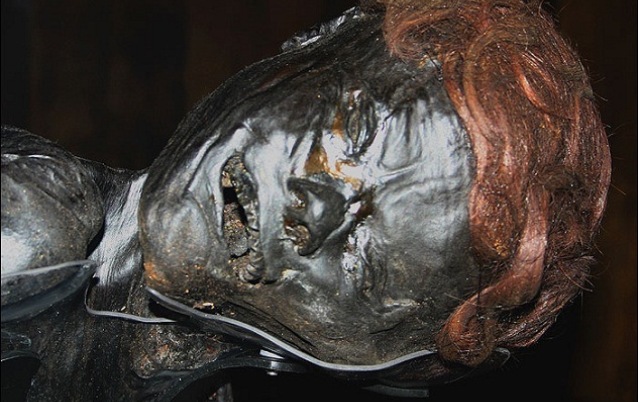
In the middle of the last century, archaeologists discovered several mummies in the peatlands of Denmark, which, despite their age, are surprisingly well preserved.
Among all the bodies found, scientists were particularly impressed by the mummified body of a young man.
Surprisingly, the mummy's facial features are preserved, and a pile of fiery red hair frames the skull of the deceased. And the whole mummy is not a sight for the faint of heart.
Thanks to radiocarbon analysis carried out by specialists on liver remains, the exact date of the guy's life was established. Experts believe that the young man lived in the very first years of our era.
Presumably, the guy was killed as a result of a ritual sacrifice to the gods. He died at just under 30 years of age. A deep cut was found on his neck, proving that the young man died violently.
3. Princess Ukoka
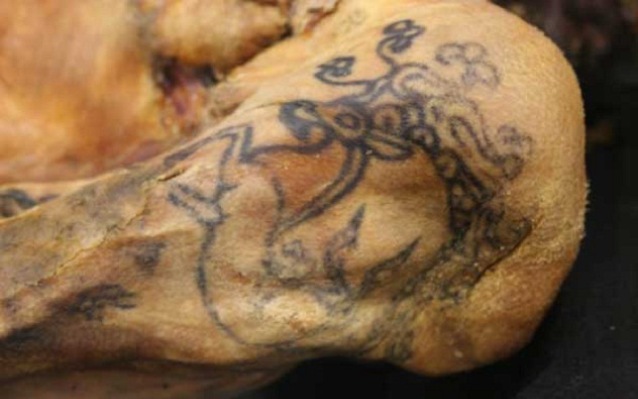
If you need more proof that tattoos last forever, Princess Ukoka can easily prove that they are.
While the body itself is not particularly well preserved, intricately defined tattoos can be traced to the princess's mummified skin, despite the fact that the princess died more than 2,500 years ago.
According to the examination, Ukoka died at the age of 25. Digital scanning made it possible to better view tattoos that include images of animals. It is possible to clearly distinguish the shape of a deer, but not an ordinary one, but a mythical one, with the horns of a capricorn and the beak of a griffin.
Researchers believe that Princess Ukoka was a member of the Pazyryk tribe that lived in the Siberian mountains. Representatives of this nomadic tribe were deeply convinced that tattoos help people find each other in the afterlife.
At that time, it was believed that the more complex the pattern on the body, the more likely its owner was to find relatives after death.
The remains of six horses were found near the princess's body, found in 1993. Ancient people believed that horses played an important role in escorting people to the afterlife.
4. Wet Mummy
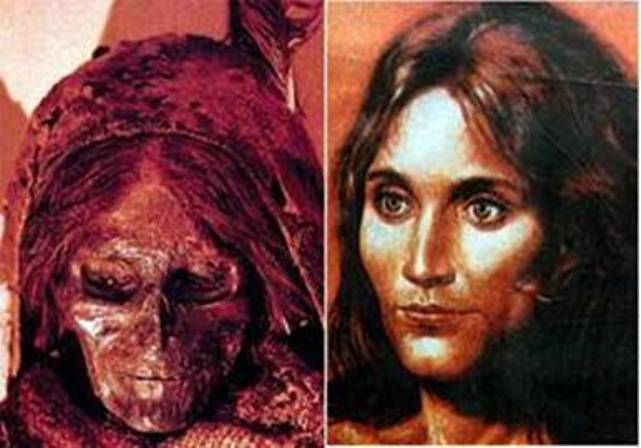
In 2011, during the construction of a new road in China, the mummy of a woman who lived 600 years ago during the Ming Dynasty was found.
Although the dead body lay in the wet ground for several hundred years, it is surprisingly well preserved. The mummy's skin has survived decay, and her hair and eyebrows have also remained untouched by time.
Time has also spared jewelry, including a jade ring and a silver barrette that supports the deceased's hair. The face was framed by several elaborate jewelry that the woman apparently wore during her lifetime.
This mummy is the greatest mystery of the century. One of the rarest cases where a mummified body has been found in China.
According to archaeologist Victor Mair, there is very little evidence that China used the practice of mummifying the bodies of dead people. As a rule, the bodies of high-ranking community members were embalmed in this way.
The woman's mummy lay in damp ground, but was hardly destroyed by time. Experts insist on the version that the soil in this area contains a small amount of oxygen. It was this fact that prevented bacteria from subjecting the body to the normal process of decomposition.
5. Tutankhamun Torquay
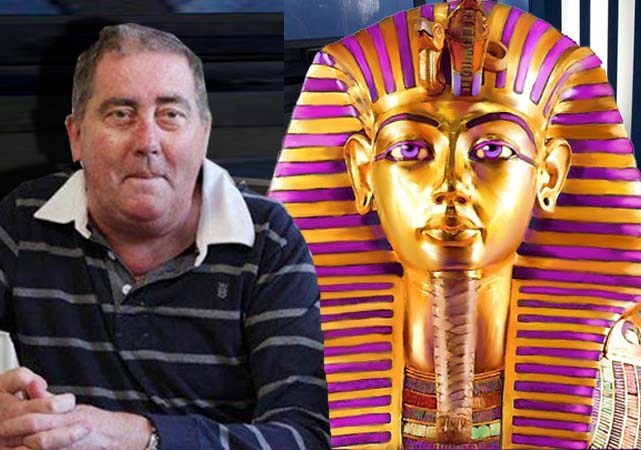
Mummifying your own body after death is a very unpopular choice these days. However, as practice has shown, there are always rare exceptions in life.
Allan Billis not only voluntarily chose to mummify his body, but also agreed to broadcast the process itself on television.
Journalists nicknamed the 61-year-old taxi driver, who died in 2011 from lung cancer, nothing more than “Tutankhamun Torquay”. Just before his death, the man bequeathed his body to science.
Strange microbes allowed mummies to be perfectly preserved
Thanks to the work of Dr. Stephen Buckley, Billis's corpse was the first body in more than 1,000 years to be mummified using the same ancient Egyptian technique that was used to embalm Tutankhamun, who died more than 3,000 years ago in 1323 BC.
The family of the deceased taxi driver agreed with the man's desire to give his body to science. The wife of the deceased taxi driver sadly jokes that she is the only woman in the country who has her own husband's mummy.
6. Dashi — Dorjo Itigelov
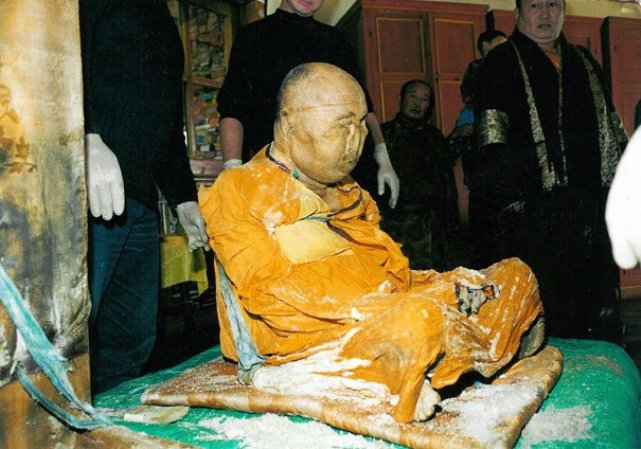
During Dasha's lifetime, Dorjo Itigelov was a monk. One night in 1927, he told his students and brothers in faith that his time was right. He was ready to go to another world, but first he asked everyone to join him in meditation.
Legend has it that Dashi-Dorjo died quietly while meditating. Shortly after his death, he was buried sitting in a lotus position in a pine coffin that was specially carved for the deceased's unusual posture.
A few years later, the monk's body was removed from the coffin. To everyone's surprise, the corpse was perfectly preserved and remained sitting in the same lotus position. He was buried again, and the coffin was placed in a salty environment.
And just recently, the monk's body was exhumed for the second time. Scientists and forensic experts were amazed that the body was preserved in almost perfect condition. Time has no power over the mummy.
An analysis of skin and hair samples showed that his body cells look like a dead man who died within 36 hours, rather than who died almost 100 years ago.
Franklin Expedition
7. Franklin Expedition Mummies
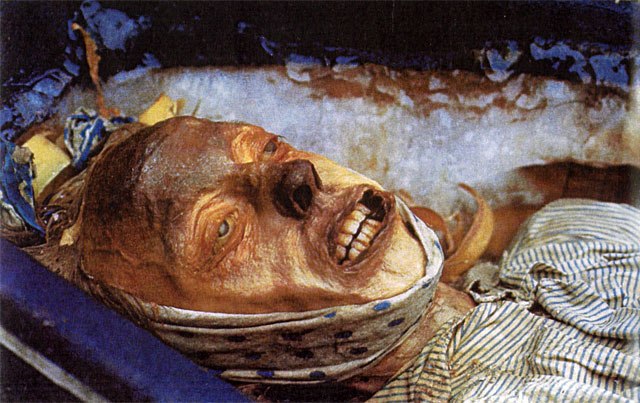
In 1845, an expedition led by John Franklin, consisting of more than 100 people, traveled to the New World in hopes of finding the Northwest Passage, the legendary trade route to Asia. Two ships carrying all members of this expedition went missing before reaching their destination.
The search for the missing expedition only began in 1848. In 1850, the graves of three members of the missing crew were found on Beechey Island.
More than a century later, in 1984, a group of anthropologists traveled to the region to conduct a forensic examination. After the bodies were exhumed, it became clear that all three bodies were perfectly preserved. According to experts, this is largely due to permafrost in the tundra.
Due to the fact that the bodies found were in excellent condition, it was possible to establish the probable cause of death of a man who died 138 years ago.
Experts found signs of pneumonia and tuberculosis, as well as huge amounts of lead that could cause the death of sailors. Lead may have been ingested by travelers through water.
Lithopedion
8. The woman who gave birth to a mummy

In 1955, Zahra Abutalib began to have labor pains. The woman went to the hospital to have a baby. However, after much suffering, Zahra was never able to give birth, and the doctor strongly recommended a cesarean section.
But frightened by the operation, the woman in labor left the hospital. Some time later, the baby died in the womb. Zahra refused to remove his body from her womb. The dead baby was still inside the mother.
After 46 years, the woman began to suffer from excruciating abdominal pain. Doctors took an X-ray, which showed that the remains of her child who died almost half a century ago were preserved inside the woman.
A 2,000-year-old mummy was found to have cancer
A similar phenomenon of fetal mummification in the womb is called lithopedion. This doesn't happen very often. There are about 300 such cases in history. The reason for this process is the body's inability to expel the dead fetus.
In order to protect itself from all kinds of infections caused by tissue decomposition, the body begins to intensively produce calcified material around the fetus, thereby turning it into something stone-like. Thus, the body in the womb is rarely mummified.
9. Donsell
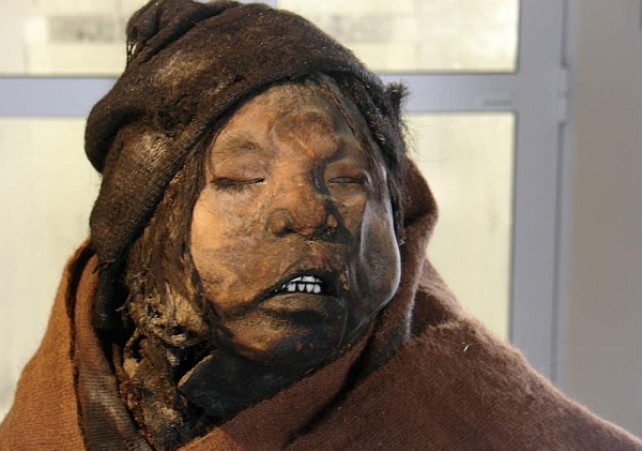
Donsella, or young maiden, is the well-preserved body of a 15-year-old Inca girl.
It appears to have been sacrificed to the gods over 500 years ago. The sacrifice ceremony took place at the top of Argentina's Llullaillaco volcano, located at an altitude of 6700 m above sea level.
Her remains, along with those of two young children, were discovered in 1999. Thanks to special expertise, experts found that during her lifetime, the girl suffered from a disease similar to tuberculosis or a chronic lung infection.
Inca children were sacrificed by pumping them with alcohol and coca leaves
At that time, such ailments could well lead to death. It is believed that the girl died from hypothermia.
It is obvious that before her death, the girls treated her with special care. Cocaine leafs were found in her mouth. The Incas used them to counteract the effects of altitude sickness.
It is worth noting that if someone was sacrificed to the gods, it was considered a great honor for the Incas.
Evita Peron
10. The wife of Argentine President Evita Peron
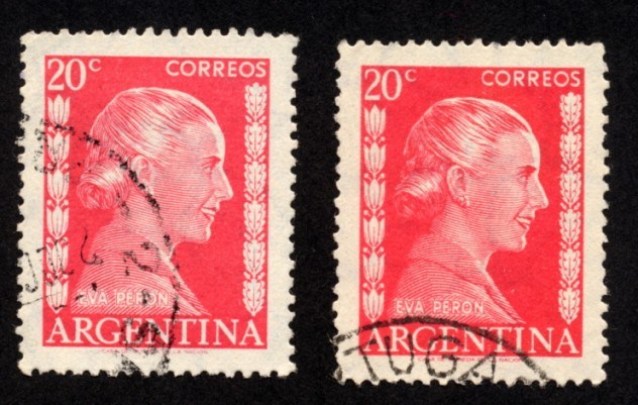
During her lifetime, Eva Peron was the wife of Juan Peron, who was President of Argentina from 1946 to 1955. She was the first lady of a country that was loved by the people.
On July 26, 1952, at the age of 33, Evita passed away from cancer. The young woman's body was embalmed using a cocktail of various components. This was done so that thousands of people could see their favorite as beautiful as she was during her lifetime.
Then in 1955, Evita's body was stolen by anti-peronists, opponents of her husband. It took almost 15 years before experts found the mummified corpse of Argentina's former first lady.
In the end, Ava's body was returned to her husband, who had already remarried. His new girlfriend was a woman named Isabel.
Unfortunately, it turns out that Evita's body has suffered several blows over the years. Blunt marks were found on the woman's face, and there was no finger on her hand.
Peron and his new wife decided to keep the body of their late wife at home. It may even be shocking, but it is known that the president's second wife combed Eva's hair every day and seated the corpse at the dinner table.
There were rumors that the woman even lay down in the coffin next to the deceased, “hoping to absorb some of Evita's magical energy.”
Today, the body of the Argentine dictator's first wife is finally buried. Evita is buried in the family crypt. And many years after his death, the mummified corpse is exactly where it belongs.