
 Events
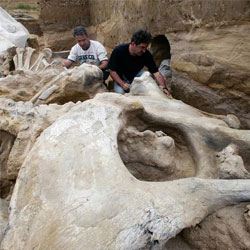
For the first time, researchers have discovered the mass grave of an entire herd of mammoths located in present-day Serbia. Heavy rain early last week revealed the remains of at least six mammoths near an open mine near Kostolak, east of Belgrade. This site is close to another site where archaeologists discovered the remains of two more mammoths several years ago.
Miomir Korac, director of the Viminacium archaeological project, said that this discovery came as a real surprise to scientists. The name of the Viminacium project comes from the name of the Roman administrative center on the banks of the Danube.
Archaeologists first recovered one part of the giant mammoth remains that were damaged by mining equipment. However, a little later, heavy rain washed away part of the sand layer, making the work of researchers easier.
A team of scientists led by Korak plans to use special technical tools to better understand what lies beneath the surface and see if there are other bones there.
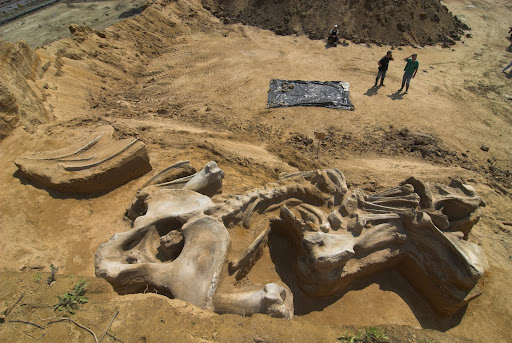
“We are going to use every possible means and devices to remove sand from bones, which will help us learn a lot about the mammoth era,” the scientists say.
Korak said that this site covers an area of 20,000 square kilometers and was once part of an island in the Pannonian Sea, which today houses Hungary's most fertile land, northern Serbia and Croatia.
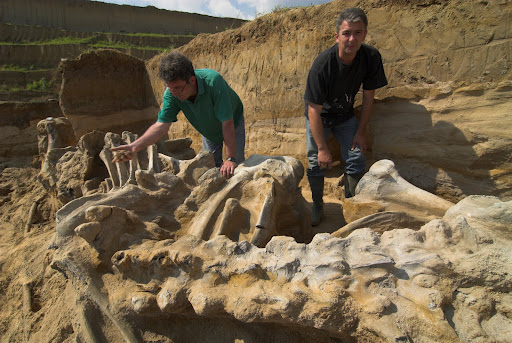
The first prehistoric skeleton was discovered at this site in 2009. The bones belonged to a female mammoth named Vika. Another mammoth skeleton, but from a later period, was found in Serbia, but in a different location, in 1996. This mammoth was nicknamed Kik.
After the bones of these two mammoths were dug up, scientists were able to estimate that their ages could range from 100,000 to 1 million years.
“There's no place like this anywhere else on the planet,” Korak said. He added that such a find is invaluable for science. International teams of paleontologists, archaeologists and paleozoologists will work on this site to learn more about life a million years ago. This area mainly consists of loose sand, which is also a great success, as it can better preserve ancient remains.