
 Events
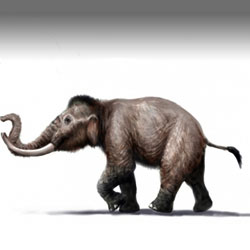
The smallest mammoth known to science lived on the island of Crete millions of years ago, researchers said. Adults of this animal reached the size of modern elephants, that is, they were no more than a meter in height.
The fossilized remains of these babies were discovered more than a century ago, but scientists have been arguing about whether it was a mammoth or an ancient elephant. New studies of the animal's teeth have helped to understand that it belongs specifically to mammoths.
Paleontologists from London's Natural History Museum reported their discovery in the Royal Society's journal Proceedings B.
“Dwarfism is a well-known evolutionary response to large mammals that live on islands,” said Dr Victoria Herridge, one of the study's authors.
This evolutionary phenomenon, scientists suggest, is due to the relative lack of food sources or the absence of dangerous predators on the island.
“The results of our research show that island dwarfism was very pronounced in Crete, so it is not surprising that such small mammoths lived here,” she said.
The teeth analyzed in recent studies were discovered back in 1904 by fossil hunter Dorothea Bate. They were initially mistaken for the teeth of Palaeoloxodon antiquus, a dwarf elephant with straight tusks, which was considered the evolutionary ancestor of all dwarf elephants.
However, comparisons with other ancient elephants and mammoths have shown that this creature was more likely to be related to the mammoth species Mammuthus creticus.
Scientists suggest that this mammoth appeared on the island about 3.5 million years ago. To estimate his size, scientists looked at the size of his front leg.