
 Incredible facts
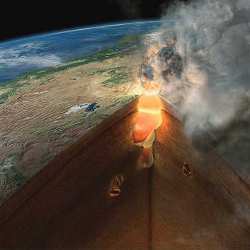
The Yellowstone Volcano is one of the largest known volcanoes in the world and a volcanic system in North America.
One of the strongest earthquakes with a magnitude of 4.8 has recently shook the Yellowstone volcano.
Could a major earthquake be a sign that the Yellowstone supervolcano is starting to wake up?
And if it starts to erupt, could it lead to an apocalypse?
Here are some interesting facts about Yellowstone Volcano.
1. Yellowstone volcano is a supervolcano sitting on a huge magma bubble
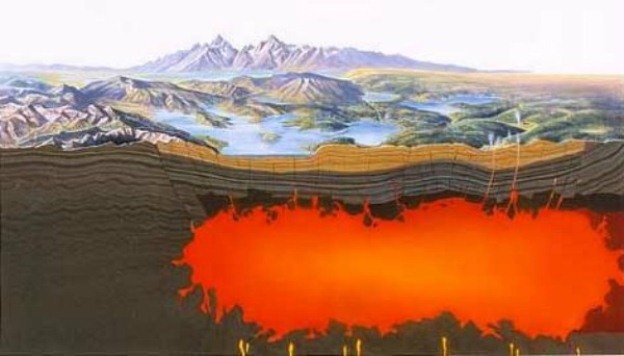
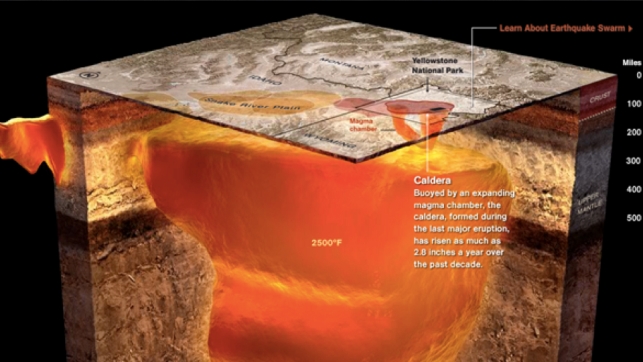
Yellowstone volcano is a supervolcano. A supervolcano is no ordinary cone-shaped mountain. Instead, a supervolcano forms in a hollow in the ground called the caldera. This is a huge basin that was formed after previous eruptions.
Some scientists are even more likely to use the term “living breathing caldera” or “hot spot” to refer to an area of concentrated and active volcanism.
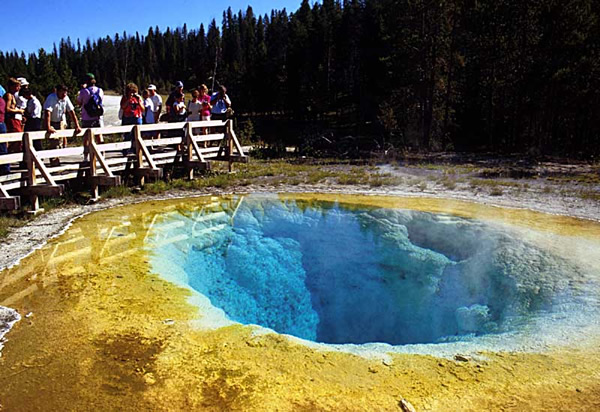
When a normal volcano erupts, lava gradually accumulates in the mountain until it begins to escape. At a supervolcano, when magma approaches the surface, it collects into a huge underground reservoir. It melts nearby rocks and becomes even thicker as pressure begins to accumulate. This could go on for hundreds of thousands of years until it erupts and it explodes to form a new caldera.
Yellowstone is above a hot spot where hot molten rock rises to the surface. There is a reservoir of hard rock and magma about 10 km above the surface.
2. The Yellowstone Caldera is 2.5 times larger than expected
Last year, a study of this super volcano showed that the underground magma storage facility is 2.5 times larger than previously thought.
It measures 90 by 30 km and can hold 300 billion cubic kilometers of molten rock.
3. The eruption of the Yellowstone supervolcano will turn into a global catastrophe
Supervolcanoes are the second biggest global catastrophic event after an asteroid impact. In the past, supervolcanic eruptions have led to mass extinctions, long-term climate changes, and “volcanic winters” when ash blocks sunlight.
Read also: Scientists have compiled a list of scenarios for the end of the world
The last eruption of the supervolcano occurred about 71,000 years ago at the site of Lake Toba on Sumatra Island in Indonesia. This led to a volcanic winter that blocked sunlight for 6-10 years, and a cooling of 3-5 degrees. Anthropologists estimate that only a few thousand people survived, and three-quarters of all plants in Southeast Asia died.
4. The Yellowstone supervolcano erupts approximately every 600,000 years
The first eruption of the Yellowstone supervolcano occurred 2.1 million years ago, then 1.3 million and 640,000 years ago.
Scientists have calculated that the Yellowstone volcano erupts at intervals of about 600,000 years, and we can say that the next eruption is long overdue.
A supervolcano in Yellowstone Park in Wyoming in the northwestern United States last erupted, sending 1,000 cubic kilometers of ash and lava into the atmosphere.
Researchers studied the movement of magma in Yellowstone Park and found that some areas of the earth rose by 74 cm compared to 1923.
Scientists predict that a suprevolcano eruption could cause global temperatures to drop by 10 degrees per decade, changing life on Earth.
5. Volcanoes and earthquakes: Yellowstone's biggest earthquake in 30 years
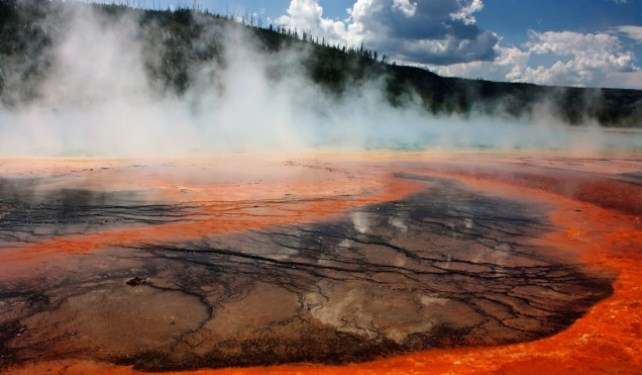
Due to the volcanic nature of this area, the caldera experiences 1 to 20 earthquakes per day. However, they are very weak with a magnitude of no more than 3 points.
The 4.8 magnitude earthquake that occurred on March 30, 2014 near the Noris Geyser Basin in northwestern Yellowstone was the largest in Yellowstone in 30 years. But this did not lead to any serious consequences.
Earthquakes are related to volcanoes in a variety of ways, as they are located along fractures of tectonic plates, and earthquakes often coincide with volcanic eruptions.
6. Are animals leaving Yellowstone National Park in the US?
A recent video of bison fleeing Yellowstone National Park has raised concerns that this could be a sign that the supervolcano is about to erupt.
Animals usually leave a dangerous place before an eruption, and this video was taken 10 days before the earthquake. However, authorities say that this is a normal migration of animals, and they began to leave the park due to lack of food during the winter months.
There is little research into whether animals can predict catastrophic events, although some scientists have recognized that during major events, some animals show strange things behavior.
7. The consequences of the Yellowstone volcano eruption
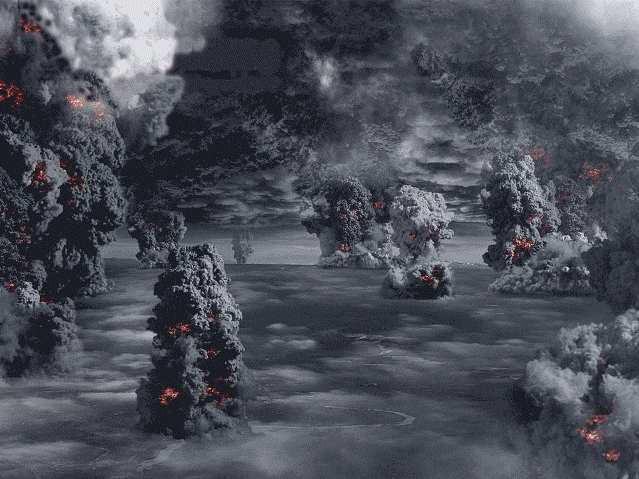
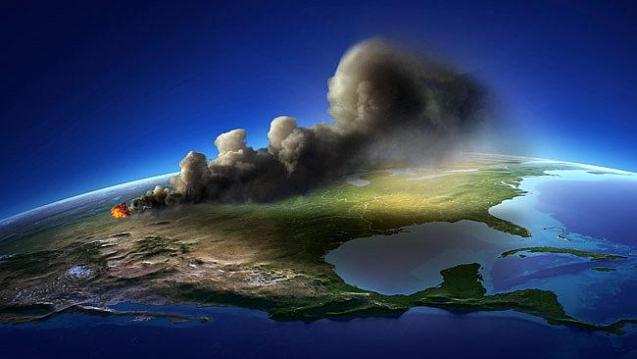
Analysis of the molten rock of the Yellowstone supervolcano showed that the eruption is possible without any external mechanisms. Previous Yellowstone eruptions released more than 1,000 cubic kilometers of magma into the environment.
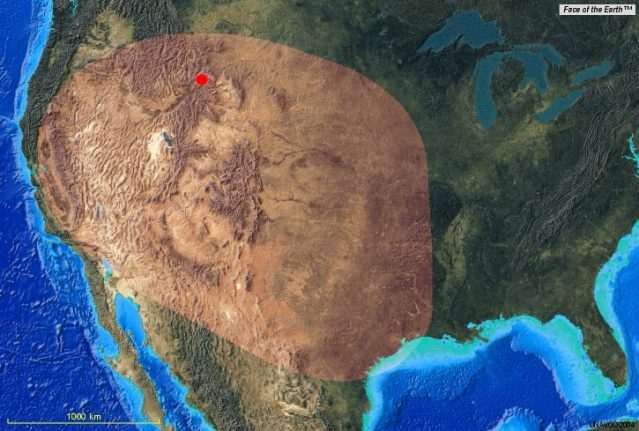
This is enough to cover most of North America with a blanket of ash up to 30 cm thick. Anything within a radius of 160 km will die immediately, and the number of victims could reach 87,000 people.
The ash will stay in the air for several days, causing breathing difficulties, enveloping plants and polluting the water.
The rest of the world is threatened by climate change for several years to come. Volcanic ash in the atmosphere would block sunlight, and global temperatures could drop by 20 degrees. The chemical composition of the atmosphere will change for a decade or more.