
 Science
NASA's Curiosity rover took samples of Martian air using a special instrument on board to identify the concentrations of various gases.
This is the first time that a chemical analysis of the Red Planet's atmosphere has been made directly on its surface since other spacecraft landed on Mars in the 1970s.
A chemical analysis called Sam (Sample Analysis at Mars) will show whether Mars has any signs of methane. This gas was recently seen by satellites and telescopes from Earth, and its presence on the Red Planet is very intriguing to scientists.
Methane is a fairly short-lived gas, and its presence may suggest that there is a source that replenishes its reserves, either biological or geochemical. The researchers hope that Sam will be able to answer these questions of interest to scientists in the near future.
“At its best, Sam can identify trillions of parts of methane when, based on observations from satellites and telescopes from Earth, only 10-20 parts per billion can be calculated” ,” said Joy Crisp, a senior scientist at NASA. Scientists also warned that Sam's analysis is quite complicated and a lot of work is still needed to sort through all the data and draw final conclusions.
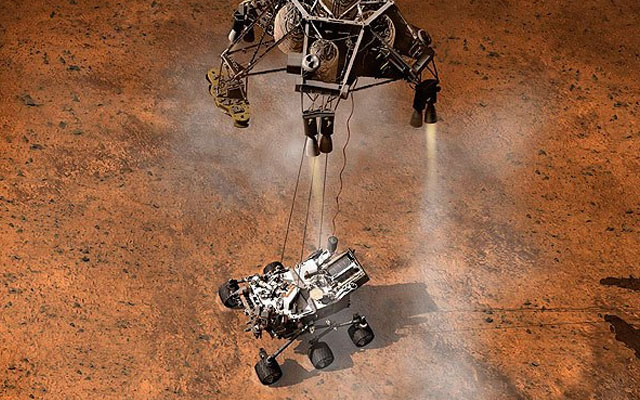
Curiosity is also known as the Mars Science Laboratory, which is now located at the bottom of the Gale Crater, 100 meters from where it landed about a month ago.