
 Science
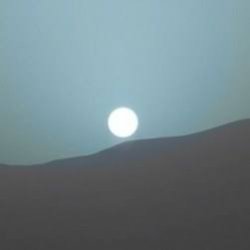
The Curiosity rover recently captured an amazing sunset on the Red Planet.
The images of the Sun disappearing below the Martian horizon were taken on April 15, after three years of waiting by the team that works on the Mars rover's MastCAM system.
After the images were taken, the rover sent them to Earth in black and white, but Damia Bouic from the nongovernmental organization Planetary Society recreated the colors by presenting them to the world these amazing images.
It's also worth noting that NASA has released a short video showing the Sun descending towards the Martian horizon.
This video was made from several images taken by Opportunity Mars.
Photo of Mars from the rover
In the images, you can see the dusty and darker (compared to Earth) sky of Mars.
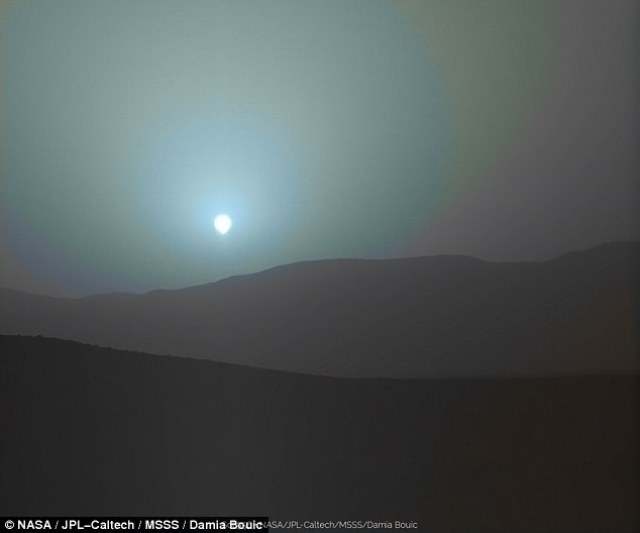
On Earth, sunsets turn the sky reddish, but on Mars, this phenomenon turns the red planet's sky dark blue.
Read also: Curiosity rover results: there was life on Mars!
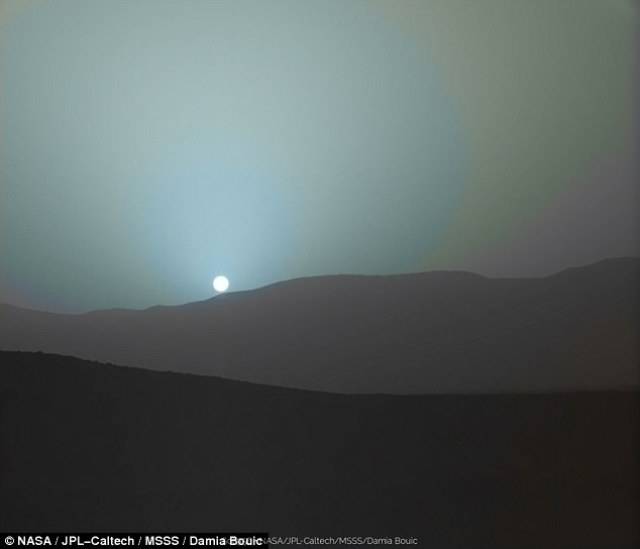
Despite the fact that most of Mars is red, due to a thick layer of dust that rises 40 km, the planet's sky turns blue when the sun sets.
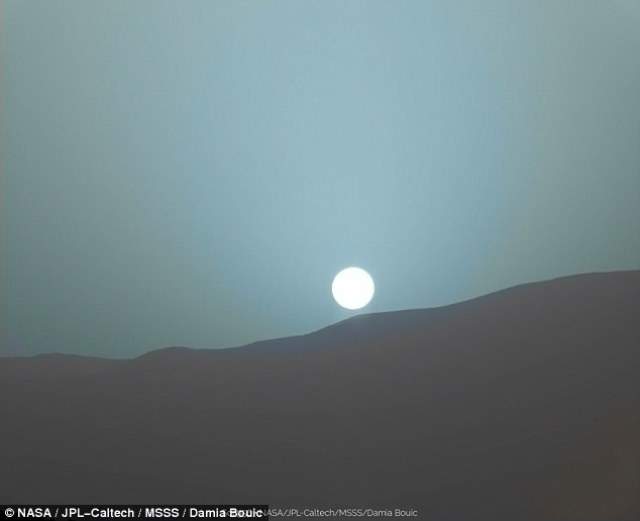
And yet Dr. Dr John Bridges, a planetary scientist who studies Mars at the University of Leicester, warned that cameras on the Opportunity rover could transmit somewhat distorted images from the Red Planet, especially when it comes to color rendering.
What else is interesting, according to the scientist, is how small the Sun looks on Mars compared to Earth.
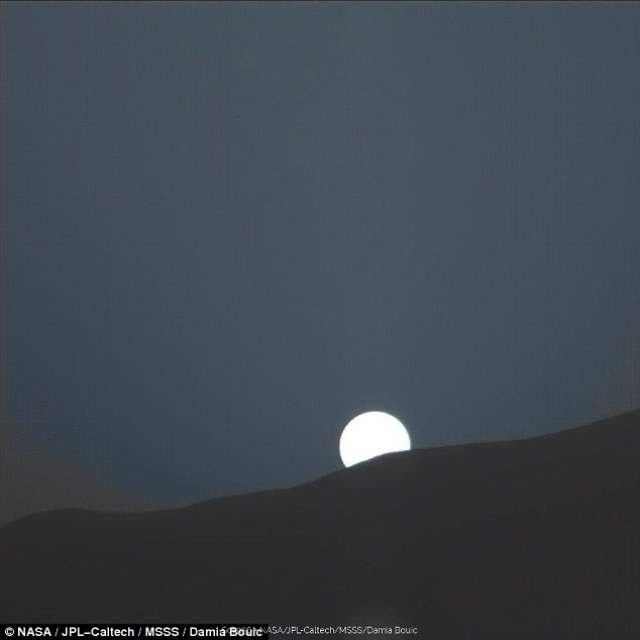
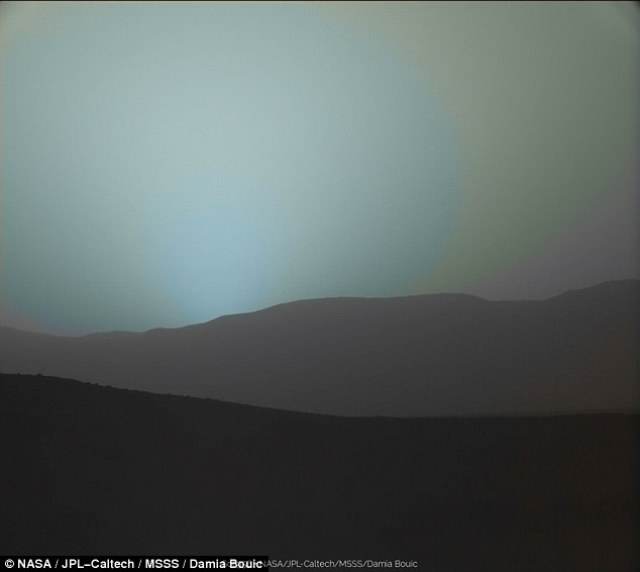
Sunset on Mars
This isn't the first time NASA has shown images of the sun setting on Mars – a video was also released in 2010. From the time of its landing until now, the Opportunity rover has witnessed about 3,940 sunsets.
Since sunlight on the Red Planet makes up about 40% of the sunlight we see on Earth, the sky here gets much darker as the sun goes down.
Read also: The most important discoveries of the Curiosity rover
But twilight on Mars can last up to 2 hours after sunset—much longer than on Earth. This is due to the same high level of dust in the atmosphere.
A day on Mars is approximately 24 hours 37 minutes long. Scientists use images of sunsets on the Red Planet to determine how high the dust rises.
Due to its distance of 227,899,204 km from the Sun, the temperature on the surface of Mars reaches -66 degrees Celsius.