
 Science
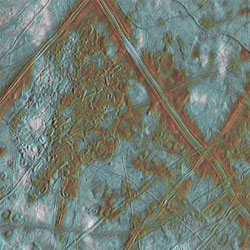
It is not so easy to search for life on one of Jupiter's icy moons, Europe, as the main problem is getting to it. Therefore, scientists were smiled at the idea of finding a place on Earth that would resemble the gray-covered surface of Europe. It seems like a place like this has been found.
In one of Canada's fjords, researchers found a landscape similar to that of Europe. It consists of a frozen hydrogen sulfide environment, where sulfur associated with Arctic bacteria will help an upcoming mission to Europe uncover the mystery of whether life exists there.
It is quite difficult to find a place on Earth where ice and sulfur are together, as scientists assume is the case in Europe, the moon of Jupiter. Nevertheless, such a place exists and is located in the Canadian Arctic. At this point, yellow sulfur deposits flaunt against the white background of the environment, so the landscape resembles the European landscape in the pictures taken.
American scientists have recently confirmed that sulfur, associated with the life cycle of Arctic microorganisms, has some features that can help detect biological traces in Europe. Major space agencies like NASA and the European Space Agency are already working to prepare for future missions.
“We found that elemental sulfur (S) may contain morphological, mineralogical and organic “bioproperties” associated with bacterial activity. If they are found in Europe, it would suggest that living microorganisms may exist there,” explained Damhnait Gleeson, research leader.
“Bioproperties” are associated with needle-like and diamond-shaped forms of sulfur, which contain mineralized residues of microorganisms and intercellular material.
Using an electron microscope and X-ray diffraction technology, it was found that the formation of a rare type of sulfur is associated with organic components — rositskits.
Moreover, small amounts (one part per million) of protein, fatty acids, and other biomolecules appear in this sulfur material.
“We can see evidence of bacterial activity here,” said Gleeson, who wonders if it would be possible to detect these kinds of signs of life using sulfur as a source energies in the ice crust or in the oceans and seas below it in Europe.
The study was published in the journal Astrobiology.