
 Incredible facts
Earth is the only planet that has confirmed life and is home to a variety of ecosystems, unique organisms, and incredible geological phenomena.
There are a lot of things that a lot of people don't know, and most of them don't seem to us what they really are.
Read also: Test: How well do you know planet Earth? 7 multiple choice questions
Facts about Earth
1. The Earth makes a complete revolution around the Sun in 365 days 6 hours 9 minutes and 10 seconds.
2. Earth is the densest planet in the Solar System.
3. Although the North Pole has no land, it is covered with ice.
4. According to geological studies, life on Earth began 3.5 billion years ago, and 99% of all organisms that lived on it have long since become extinct.
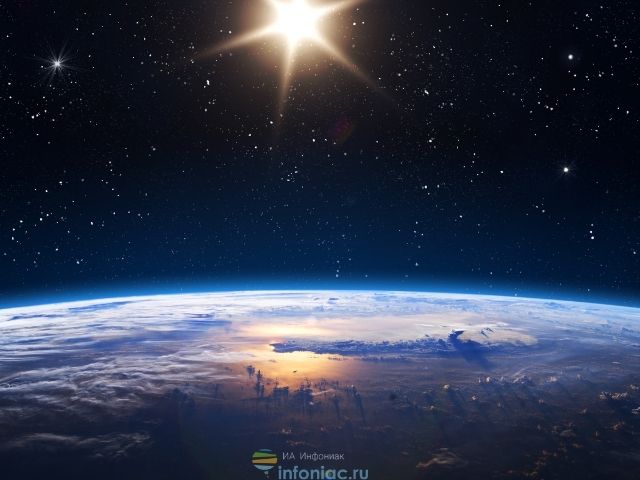
5. The Earth is located in the “Goldilocks Zone” — water on planets in such zones can be in liquid form.
© Getty Images
6. For more than 2,000 years, people believed that the Earth was the center of the universe, but already in 1543, Nicolaus Copernicus announced the heliocentric theory, which claimed to be at the center of the solar system It's the Sun, not the Earth.
7. Earth is the only planet in the Solar System that is not named after mythological Gods.
8. The Earth's inner core is made up of solid and very hot iron and nickel. The core is 2,440 kilometers in diameter, which is comparable to Australia, which is 2,500 kilometers wide.
9. The inner core has a temperature of 5,427 degrees Celsius, which is almost 1,500 degrees higher than diamond's melting point.
10. The highest point on Earth is Mount Everest, 8.8 kilometers above sea level, and the lowest is the Challenger Abyss in the Mariana Trench, 11.022 meters deep.
11. 97% of the Earth's volcanoes are in the oceans, and the mid-ocean ridges are more than 60,000 kilometers long.
12. The greenhouse effect, when heat cannot leave the atmosphere due to accumulated gases, makes it possible to maintain a stable temperature on Earth. Without it, the average temperature of the Earth's surface would not be 15 degrees, but -18 degrees.

©
pixabay
13. Earth is the only planet in the Solar System with tectonic plates. They “float” on the surface of the mantle and periodically collide with each other.
14. Due to its rotating core, the Earth is a giant magnet, with its own magnetic poles, and forming its own magnetic field that protects us from radioactive radiation from space.
15. The Earth has one natural satellite — the Moon. Earth has about 20,000 artificial satellites, but fewer than 3,000 of them are currently operational.
16. The Earth's atmosphere is divided into 5 layers: the troposphere, stratosphere, mesosphere, thermosphere and exosphere and stretches 10,000 kilometers into space, but 98% of the total mass of the atmosphere lies within an altitude of 50 kilometers.
17. Twelve people visited the moon, and people landed on the moon from July 1969 to December 1972.
18. Of the entire Solar System, only on Earth, water is present in three states of aggregation — solid, liquid and gaseous.
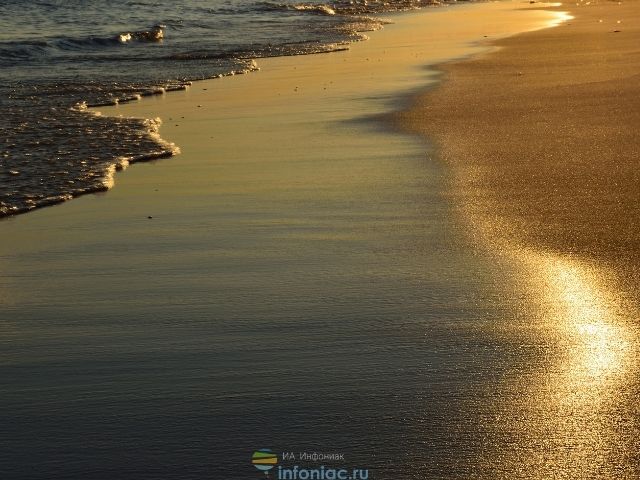
19. The tides are mostly influenced by the Moon, but the Sun is also involved in this process.
© Getty Images
20. Light from the Sun reaches Earth in 8 minutes and 20 seconds, so we can only see the Sun as it was 8.3 minutes ago.
21. More than 9,000 stars can be seen from Earth with the naked eye.
22. There are more than 3 trillion trees on Earth. There are about 425 trees per person.
23. The average distance from Earth to the Sun is 149,598.023 kilometers. At the farthest location, called aphelion, the distance is 152,000,000 kilometers, while at the closest location, called perihelion, the distance is 147,095,000 kilometers.
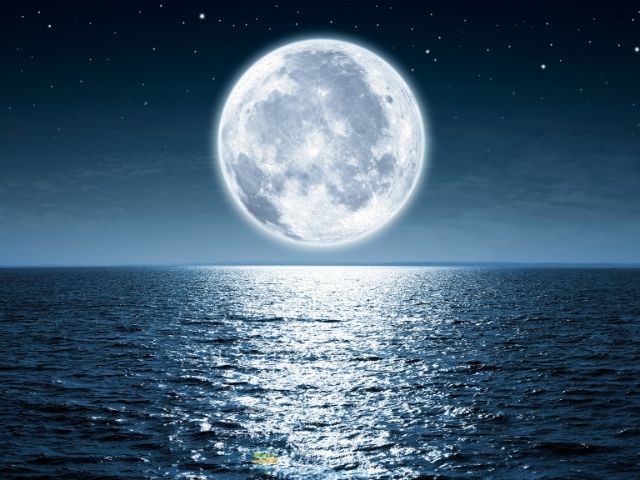
24. The moon was formed when the Earth collided with another planet similar in size to Mars. Immediately after the formation of the Moon, it was so close that it was estimated that tides could rise by more than 100 meters.
© Getty Images Pro
25. 180 million years ago, there was only one continent on Earth called Pangea.
Life on planet Earth
26. Humans have only been on Earth for 500,000 years. If we imagine the entire existence of the Earth (4.5 billion years) as a skyscraper 450 meters high, human history would fit at the top and be 5 centimeters long.
27. People speak about 6,000 different languages.
28. China and India are home to 1.43 billion and 0.37 billion people respectively — more than a third of the world's population.
29. There are about 8.7 million different species of plants and animals on Earth.
30. The strongest earthquake recorded was recorded in Chile on May 22, 1960, with a magnitude of 9.5.
31. The Earth's crust can be 50 kilometers thick on land, and 5 kilometers in the oceans.
32. The Moon is 400 times smaller than the Sun, but also 400 times closer to Earth, which makes the Moon and Sun look the same from Earth.
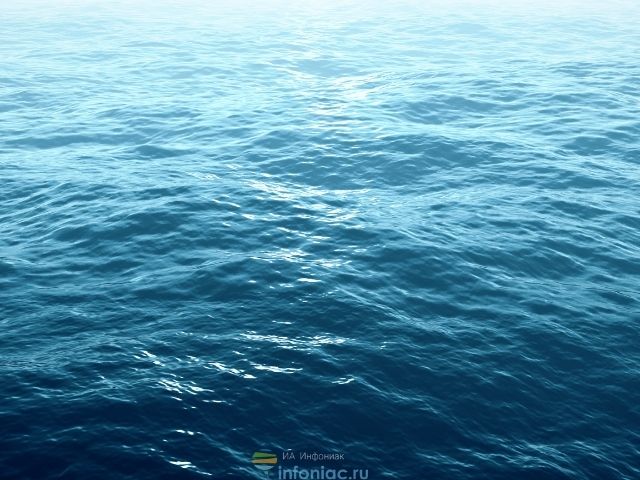
33. The Pacific Ocean is the largest ocean on Earth and is 14 million square kilometers larger than all other oceans combined.
© Getty Images Pro
34. Earth is the largest planet in the terrestrial group, which includes Mercury, Venus, Earth and Mars.
35. 71% of the Earth's surface is water, while land accounts for only 29% of the land area.
36. At the moment, about 7.7 billion people live on Earth and there are 195 independent and sovereign countries, but their number is constantly changing.
37. For over 2,000 years, people have believed that Earth is the center of the universe.
38. The Earth's atmosphere consists of 78% nitrogen, 21% oxygen, and the rest of the gases in our atmosphere are argon, carbon dioxide and others.
39. Almost 250,000 people died from extreme weather events between 1980 and 2000.
40. On April 12, 1961, Yuri Gagarin became the first person to fly into outer space.
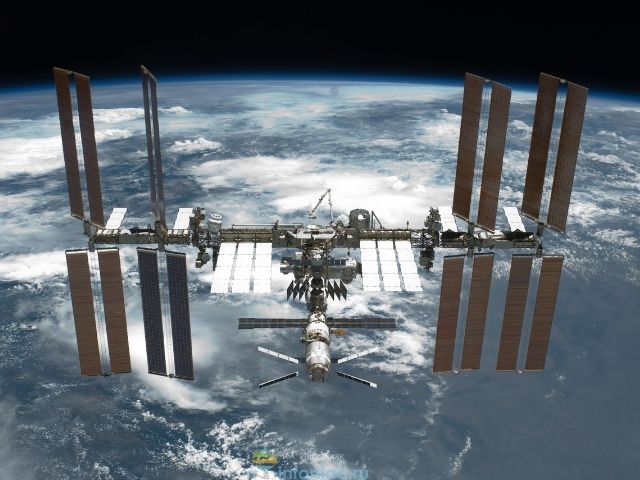
41. The International Space Station is the largest artificial satellite orbiting the Earth.
© pixabay
42. The Earth's orbit around the Sun is not an even circle.
43. The Earth's circumference is 40.075 kilometers, and the Earth's volume is 1.1* 10^12 cubic kilometers.
44. The Earth is 330,000 times lighter than the Sun and is 6,000*10^24 kilograms.
45. The Earth's rotation speed at the equator is 465 m/s.
46. To overcome Earth's gravity, it is necessary to reach a speed of more than 11 kilometers per second.
47. The temperature of the hottest spot recorded on Earth is 56.9 degrees, and the lowest is -89.2 degrees Celsius.
48. Iron and oxygen make up 62% of the Earth's mass, and the Earth's core is 88.8% iron.
49. In about 1 billion years, water on Earth will evaporate due to the increase in the Sun's temperature, and in 5 billion years, the Sun is expected to expand, which will lead to the complete destruction of the Earth.
50. Earth is 28,000 light years away from the center of the Milky Way galaxy.