
 Technology
In the modern world, technologies are developing very quickly, and sometimes they amaze our imagination. But what do we know about the achievements of the ancients?
Modern society owes much to ancient inventors.
Around the world, archaeologists are finding ancient artifacts whose purposes and methods of manufacture still pose a serious puzzle for scientists.
We offer you a guide to the most amazing inventions of antiquity.
Technologies of the past
1. Greek fire

Since the 19th century, researchers have been trying to solve the mystery of Greek fire, and the controversy continues to this day. The prototype of Greek fire appeared presumably in 190 BC, when it was used to protect the island of Rhodes. Most historical sources attribute the invention of Greek fire to the mechanic Kallinikos of Heliopolis. For a long time, Greek fire remained Byzantium's terrible secret weapon. The train was placed in a closed vessel, which was thrown at the enemy by a throwing machine.
Historian Theophanes wrote that vessels with the mixture were thrown catapults at enemy ships during the siege of Constantinople. The liquid broke out when it came into contact with the air, and it was impossible to extinguish the fire: water only increased its burning. Initially, Greek fire was used only in naval battles.
2. Antikythera mechanism
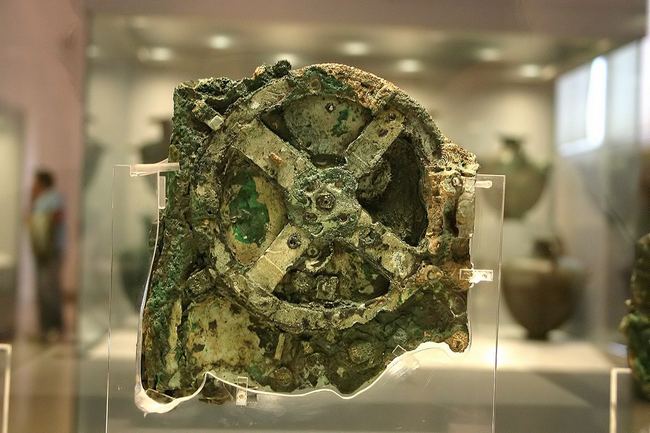
The mechanism was named after the island of Antikythera, where it was discovered in 1901. This strange mechanism contained 30 bronze gears in a wooden case, with bronze dials with arrows on the front and back sides. The Antikythera mechanism was used as an astronomical, meteorological, educational and cartographic device. Bronze dials with arrows, which, as it later turned out, were used to calculate the movement of celestial bodies.
The device was also able to determine the dates of 42 astronomical events, as well as predict the color and size of a solar eclipse, which can be used to determine the strength of winds at sea. The mechanism was driven by turning the handle (now lost), connected by a crown wheel to a large gear. It is considered to be the most complex of the ancient mechanical devices that have survived to our time.
Read also: Top 10 unsolved mysteries of modern science
3. Zhang Heng Seismoscope
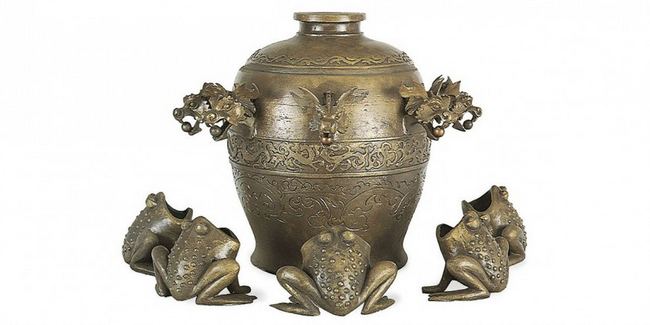
In 132 AD, inventor Zhang Heng presented the first seismoscope in China that is believed to be able to predict earthquakes with the accuracy of modern instruments. The seismoscope was cast in bronze and looked like a wine vessel with a domed lid. The circumference of this vessel housed figures of eight dragons, oriented in eight directions of space: the four cardinal directions and intermediate directions. Inside the copper vessel was a pendulum that would move during the earthquake, even if it happened hundreds of miles away. The pendulum activated a system of levers that opened the mouth of one of the dragons. Each dragon had a bronze ball in its mouth. This ball rolled out and fell into the mouth of a frog under the dragon, making a loud sound.
According to available data, a copy of the seismoscope created in 2005 records earthquakes with the same accuracy as modern instruments. The first earthquake recorded by Heng's instrument occurred on December 13, 134 in Longxi, with its epicenter in Tianshui, and had a magnitude of 7.
Mysterious artifacts
4. Iron column in Delhi

On the grounds of an ancient temple in Delhi, there is one of the most mysterious structures in the world: the famous Iron Column (Indra's Pillar) with a height of 7.2 m, which has not rusted for 16 centuries! The percentage of iron in it is 99.5%. The climate in India is very humid and in 1600 years this pillar should have rusted through and through. Who created the column and the secret of production is unknown. The Sanskrit inscription indicates that the column was built during the reign of Emperor Chandragupta II (376-415).
Why doesn't the column rust? Why hasn't the column been destroyed in 16 hundred years by rust, the same rust that kills many tons of iron in the world every year? Many agree that this pillar was created not by humans, but by representatives of alien civilizations that once visited our planet. This, of course, is unlikely, but the secret has not yet been solved.
5. Fest disc
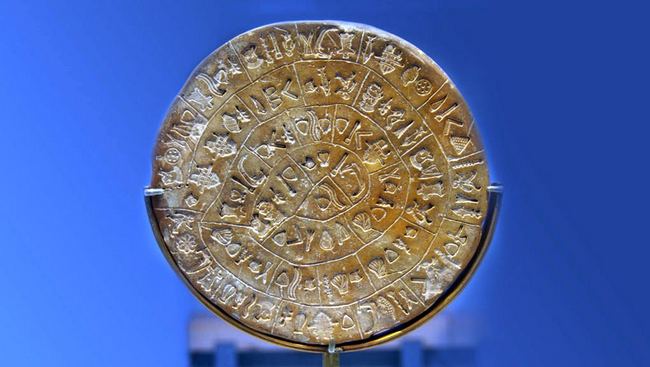
Among the striking complex mysteries of antiquity is the Phaistos disc, which contains 259 mysterious signs, discovered by archaeologists. The disc is made of a type of clay that is not found anywhere in Crete, and the writing on the disc has nothing to do with any of the local ones. This is a small-sized disc made of well-burnt clay, 15.8-16.5 cm in diameter and 1.6-2.1 cm thick, made without the help of a potter's wheel.
In 1908, an Italian archaeological expedition working in southern Crete excavated the royal palace of the ancient city of Festa, where Luigi Pernier discovered the disc. Its exact purpose, as well as the place and time of manufacture, are not known for certain. It is also striking that the text is not printed with a stick, but with special seals.
6. Roman Dodecahedron
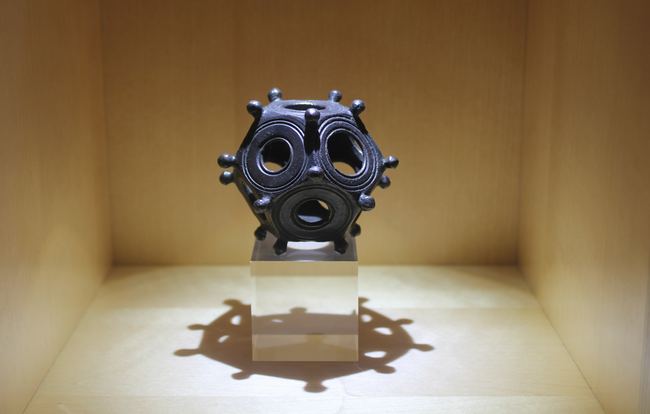
More than a hundred dodecahedrons have been found by archaeologists throughout the ancient Roman Empire. The dodecahedrons range in size from 4 to 11 cm, and they mostly date back to the 2nd-4th centuries AD. They are small, hollow objects made of bronze or dodecahedron stone, twelve pentagonal faces, each with a round hole in the center of different diameters. The tops of the figures are equipped with small balls.
There are other varieties of these bronzes: with rounded edges or with triangular edges. More than two centuries have passed since the first dodecahedrons were discovered, but researchers have not unraveled the possible functions of this mysterious object and have not come to understand its origin and appointments.
Read also: The most significant inventions made long before the wheel
7. Baghdad battery
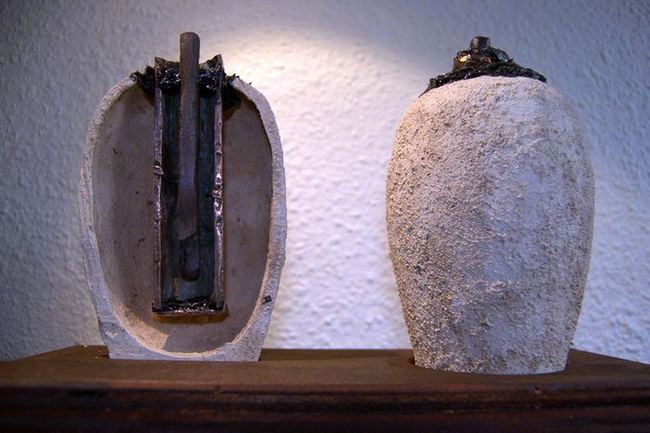
A Mesopotamian artifact from the Parthian or Sasanian periods is sometimes considered an ancient galvanic element created 2,000 years before the birth of A. Volt. The find was discovered by Austrian archaeologist V. By Kening on the outskirts of Baghdad in 1936. It is an oval jug made of bright yellow clay 13 cm high with a rolled sheet of copper, an iron rod and several pieces of bitumen inside. The upper and lower edges of the copper cylinder were sealed with bitumen. This sealed connection suggests that the jug once contained liquid.
The same hypothesis is confirmed by traces of corrosion on copper, which were caused by acid, presumably vinegar or wine. Artifacts similar to the Baghdad Bank were also found near the cities of Seleucia and Ctesiphon. Scientists are still unable to answer exactly what these vessels were intended for.
8. Roman concrete
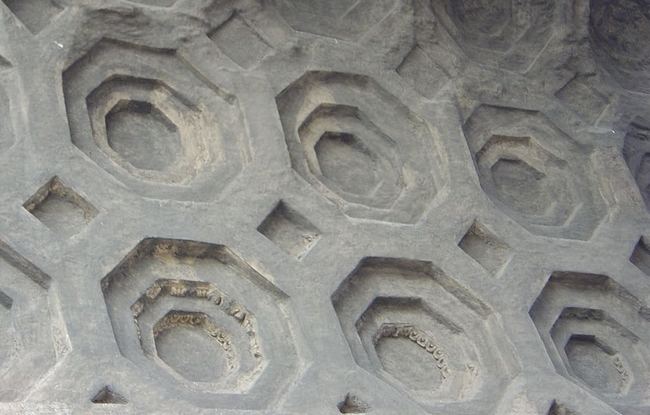
Surprisingly, the ancient cement recipe, which was created more than 2000 years ago, turned out to be better than the modern one. In ancient Rome, the concept of “concrete” did not exist. This term appeared in France in the 18th century. They called masonry with stone filler by the Greek word “emplecton”. The use of concrete in the territory of the ancient Roman state began around the end of the 4th century BC and lasted about 700 years. The Romans were not the inventors of concrete; they learned it from the Etruscans, Greeks and others. However, it was in ancient Rome that all this was widely used, or as they say today, introduction.
Scientists found that the Romans used much less lime in their cement recipe and produced cement at 900 degrees Celsius. The point is that Roman builders produced cement by mixing lime and volcanic rocks. A special cement was used for offshore structures: a mixture of lime and volcanic ash. And many Roman ports have remained in excellent condition for more than 2,000 years, despite the effects of waves and chemical effects from sea water.
9. Sabu CD
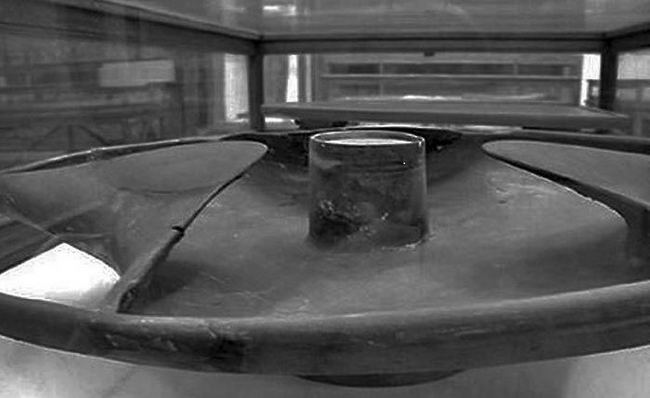
In 1936, Egyptologist Walter Brian Emery discovered a disc divided into three parts during the excavations of Mastaba Sabu (3100-3000 BC) in Saqqara. Scientists still cannot explain the origin of the mysterious disk. According to one version, a prehistoric artifact may be part of an unknown mechanism made by an ancient highly developed civilization. The disc is a round plate of stone with several unusual blades, the diameter of which was seventy centimeters. In the middle, you can see an unusual bushing.
It is made of very fragile material, and requires a lot of craftsmanship, which even today is available only to a few. Masters of ancient Egyptian civilization usually used a chisel to work on stone, but creating such a complex shape from fragile material required highly developed technology. Many researchers believe that a stone disc is nothing more than a propeller with hydraulic ribs.
10. Nimrud lens
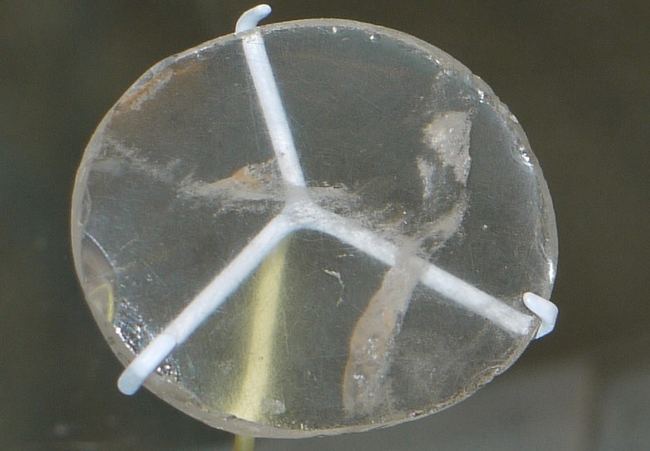
The lens was discovered by English archaeologist Austin Henry Layard in 1853 during excavations in Nimrud, one of the ancient capitals of Assyria. The Nimrud lens (its second name is Layard lens) is believed to have been made between 750 and 710 BC from natural rock crystal and has a slightly oval shape. There is no consensus among the scientific community regarding the initial purpose of the lens.
According to one version, the lens served as a magnifying glass. The famous Italian professor Giovanni Pettinato proposed his version, according to which the lens was used by the ancient Assyrians as part of a telescope, and this supposedly explains where the Assyrians came from knew so much about astronomy. There are also alternative hypotheses – for example, this crystal disc could serve as part of a piece of jewelry or a ritual item.

Our world is full of mysteries that defy science. The more scientists find artifacts from the past, the more questions they have. Perhaps the ancient world was much more complicated than we used to think.