
 Incredible facts
Contents:
Where perfumes are made
The best perfumes What they are made
of and how perfumes Fragrance
composition
Production of essential oils
Types of essential oils
Fragrances — pleasant and not so pleasant — play a huge role in our lives.
We owe our pleasant fragrances to global cosmetics manufacturers.
We can say that well-known world brands of perfumes and other perfumes have been dictating their will to our noses for many decades.
Where do they make the most perfumes? Which countries produce the best perfumes? How and what do you get the world's best fragrances that win the hearts and noses of billions of people?
Where perfumes are made
By and large, perfumes are made everywhere. In almost all countries, there are large and not so large perfume manufacturers whose product range includes concentrated perfumes or eau de parfum (toilet perfumes), that is Parfum (Perfume) or Eau de Parfum (Parfum de Toilette).
Another thing is that small producers are well aware that they cannot act as full-fledged competitors to major global manufacturers of perfumes. Therefore, such enterprises produce a small range of perfumes for a narrow category of consumers (usually in their own country).
Perfume production in the world
There are not so many countries that produce the best perfumes in such a volume that they can be purchased all over the world. Here is a list of the main perfume manufacturers:
– France;
– Germany;
– Spain;
– United States of America;
– Italy;
– Great Britain, Belgium, China, Japan and others. There are quite a few large producers in Latin America and the Middle East.
The global perfume market is estimated at more than $40 billion. At first glance, this does not seem like such a large amount, but the first five countries listed above contribute to the bulk of this market.
The French can rightfully be called the largest exporters of perfumes. French perfumes account for almost 30 per cent of exports. Other major players in this market barely reach 10 percent (except Italy, which accounts for only 7 percent).
Japanese perfumes
Japan is also worth mentioning. Yes, this country is not even among the top ten manufacturers of perfumes, but it is in Japan that they make very high-quality and popular brands all over the world. Japan, as a perfume country, is recognized by brands such as Shiseido, Masaki Matsushima, ISSEY MIYAKE and others.
German luxury perfumes are a fairly new phenomenon. However, perfumes from Germany were in second place among all European exports because this country was able to offer the world something original, unlike the usual French or American flavors.
The United States, as one of the leaders in the field of perfumery, established itself back in the 1920s. The perfume manufacturers of this country have thundered all over the world, offering this very world very strong and bright fragrances. At the same time, the quality of perfumes produced in the USA always remains at the highest level.
It is not by chance that Italians and Spaniards were among the top five. Let's start with the fact that back in the Renaissance, Italians were famous for their ability to produce high-quality perfumes. Now their perfumes are appreciated for their very deep, sometimes quite sweet and spicy aromas.
Chinese perfumes
It is noteworthy that the country with one of the most developed industries in the world (that is, China) contributes only just over one percent to the share of world perfume exports. And this is despite the fact that in 2017, exports of these products from China increased by almost 100 percent.
It turns out that it makes no sense to pronounce the phrase “cheap Chinese fake” in relation to perfumes, since this country with a huge population simply does not have a developed culture of mass production and use of perfumes. But the United Arab Emirates is considered to be a world-famous supplier of fake brands.
See also: Perfume — how to distinguish an original from a fake and avoid becoming a victim of fraud
Thus, Europe is the center of world exports of perfumes, providing in total almost two-thirds of the export market for this type of perfume. Just over 12 percent of the market was conquered by Asian countries, with the United States in third place.
The best perfumes
Many people think that the best perfumes are made, of course, in France. For good reason, this country has been the largest producer of perfumes since the 16th century, becoming the world's true centers for the production of this type of perfume.
The oldest perfumes
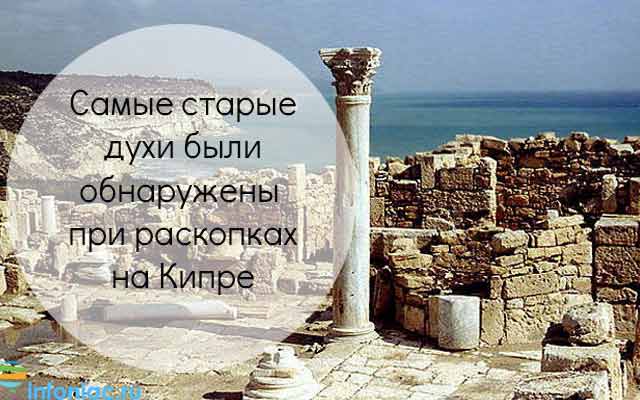
In addition, many people think that this is where the first perfumes began to be produced, but this is absolutely not the case. Today, it is known that the oldest perfumes (or what can be called perfumes) were found in Cyprus. They are over four thousand years old.
In fact, we should not belittle the importance of other European and global manufacturers of high-quality perfumes, and most importantly, perfumes. We bring to your attention a small top of the world's most famous perfume brands, which, of course, are opened by French brands.
Since manufacturers are constantly updating their collection, adding new fragrances, eliminating less popular old ones, data on the number of fragrances may differ from the current ones at the time reading this article by each of you. However, this difference will be insignificant.
Some of the most famous French perfume brands are:
– CHANEL — 132 popular fragrances are produced under this brand. The first fragrance was created in 1921;
– NINA RICCI — 96 popular fragrances are produced under this brand. The first fragrance was created in 1946;
– GIVENCHY — 235 popular fragrances are produced under this brand. The first fragrance was created in 1956;
– DIOR — 210 popular fragrances are produced under this brand. The first fragrance was created in 1947;
– YVES SAINT LAURENT — 201 popular fragrances are produced under this brand. The first fragrance was created in 1964;
– Paco Rabanne — 85 popular fragrances are produced under this brand. The first fragrance was created in 1969;
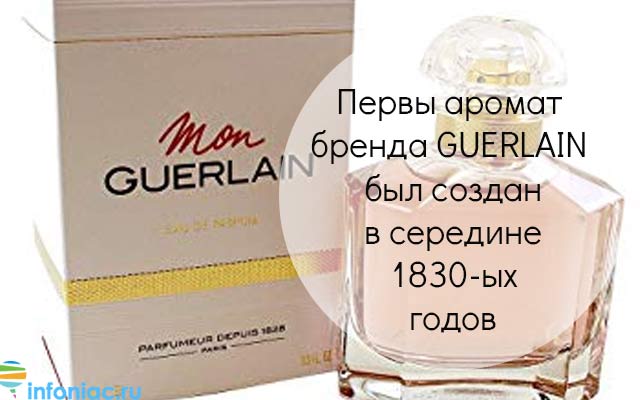
– GUERLAIN — 422 popular fragrances are produced under this brand. The first fragrance was created in the mid-1830s;
– KENZO — 128 popular fragrances are produced under this brand. The first fragrance was created in 1988;
– LACOSTE — 59 popular fragrances are produced under this brand. The first fragrance was created in 1968;
– LANCOME — 144 popular fragrances are produced under this brand. The first fragrance was created in 1935.
The most famous German perfume brands are:
– HUGO BOSS — 93 popular fragrances are produced under this brand. The first fragrance was created in 1985;
– Escentric Molecules — 11 popular fragrances are produced under this brand. The first fragrance was created in 2006;
– ESCADA — 68 popular fragrances are produced under this brand. The first fragrance was created in 1990;
– Baldessarini — 16 popular fragrances are produced under this brand. The first fragrance was created in 2002;
– Adidas — 16 popular fragrances are produced under this brand. The first fragrance was created in 2002;
The most famous American perfume brands are:
– Calvin Klein — 159 popular fragrances are produced under this brand. The first fragrance was created in 1981;
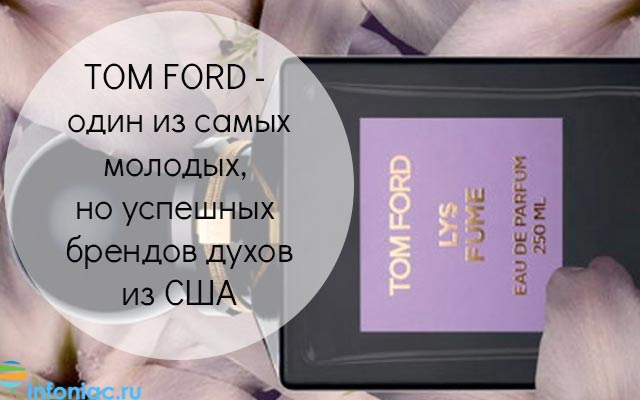
– TOM FORD — 101 popular fragrances are produced under this brand. The first fragrance was created in 2006;
– Elizabeth Arden — 102 popular fragrances are produced under this brand. The first fragrance was created in 1910;
– Estee Lauder — 125 popular fragrances are produced under this brand. The first fragrance was created in 1953;
– Carolina Herrera — 120 popular fragrances are produced under this brand. The first fragrance was created in 1988.
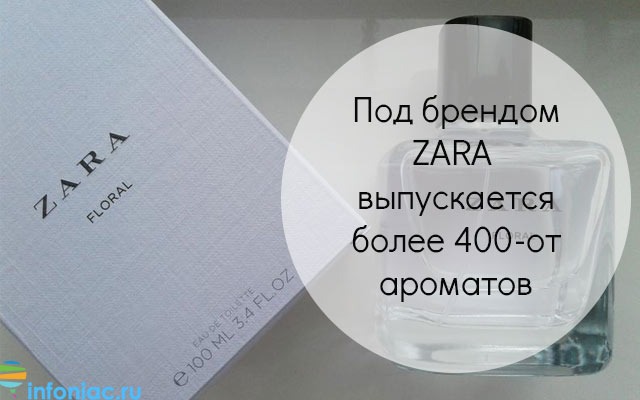
The most famous Spanish perfume brands are:
– ZARA — 406 popular fragrances are produced under this brand. The first fragrance was created in 1999;
– Armand Basi — 22 popular fragrances are produced under this brand. The first fragrance was created in 1999;
– Ramon Molvizar — 30 popular fragrances are produced under this brand. The first fragrance was created in 1999;
– Balenciaga — 29 popular fragrances are produced under this brand. The first fragrance was created in 1998;
– Loewe — 89 popular fragrances are produced under this brand. The first fragrance was created in 1972;
The most famous Italian perfume brands are:
– Dolce & Gabbana
— 83 popular fragrances are produced under this brand. The first fragrance was created in 1992;
– Giorgio Armani — 173 popular fragrances are produced under this brand. The first fragrance was created in 1984;
– GUCCI — 85 popular fragrances are produced under this brand. The first fragrance was created in 1974;
– Bvlgari — 95 popular fragrances are produced under this brand. The first fragrance was created in 1992;
– Versace — 61 popular fragrances are produced under this brand. The first fragrance was created in 1992;
What and how are perfumes made
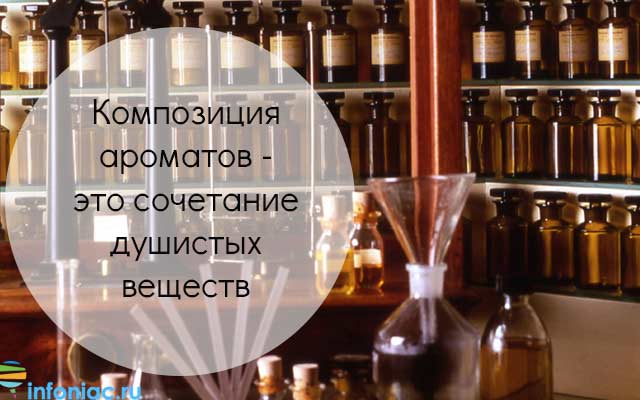
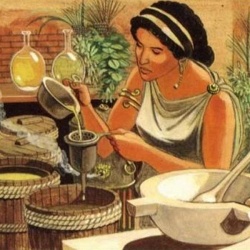
Making perfumes is more of an art than just chemistry. It is quite logical that special artists, who are called perfumers, are creating new fragrances for perfumes. The task of these people is to combine thousands of well-known fragrances into perfume compositions.
In addition to creating completely new compositions, the task of perfumers is to find new components that would allow them to reproduce already known fragrances. This is a very delicate job that requires at least a fine sense of smell. It is no coincidence that the main perfumers in production are called “noses”.
Fragrance composition
New perfume fragrances are a composition that is formed by combining fragrances. These substances may be of natural or synthetic origin. Usually, new flavors are the result of a combination of several dozen or even hundreds of fragrances. The most serious compositions may include three hundred or more fragrant substances.
What are fragrances (organic-based compounds) obtained from, which are the basis for the aromatic compositions of any perfume? There are only three sources:
– vegetable raw materials;
– animal raw materials;
– chemical raw materials.
Vegetable raw materials
Essential oils, dry raw materials, fragrant resins and balms — all these are, in fact, vegetable fragrances. The source for their creation is various herbs, fruits, leaves and plant roots, from which resins, essential oils, etc. can be extracted by, for example, pressing. And it is in perfumes that the highest concentration of essential oils is found.
Animal raw material
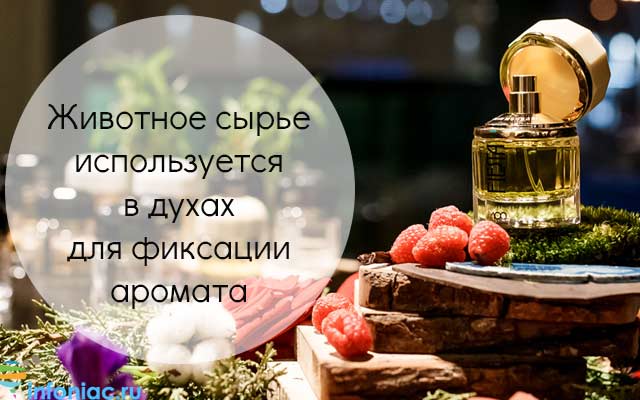
To obtain aromatic substances that are of animal origin, 4 natural substances are used: musk, amber, cibet, castoreum. All these substances are the result of the activity of certain animals. As a base for perfumes, animal-based raw materials are the most expensive, so they are used only to fix the aroma.
Here it is, the basis of the most expensive and long-lasting perfumes in the world:
– Musk is a product that is formed as a result of the secretion of the musk glands of some animals (musk rat, musk deer, etc.).
– Cibet is an anal secretion of some species of viverr (predatory mammals that, by the way, eat coffee berries. By the way, it is from their waste that Kopi Luwak coffee is made).
Read also: The most expensive coffee in the world is made from elephant excrement
– Amber is a substance that forms in the gastrointestinal tract of sperm whales. We can say that such expensive raw materials for perfumes appeared due to sperm whale indigestion.

– Castoreum is a substance produced by the so-called odorous glands of a beaver that marks its territory (in fact, that's why it is also called a beaver stream).
Chemical raw materials
Thanks to the constant development of the chemical industry, scientists are able to create analogues of plant and animal components, resulting in synthetic fragrances. This opens up a wide range of activities in terms of inventing completely new fragrances that do not exist in nature.
Obtaining essential oils
Essential oils are extracted only from raw materials of plant origin, that is, from so-called essential oil plants (there are just over two hundred of them). At the same time, the distribution of essential oil over all parts of the plant is very uneven. Three methods are used to produce essential oils for perfume production:
– Pressing or mechanical method. The essence of the method is clear — some liquid is squeezed out of certain parts of the plant, from which essential oil is extracted on the separator.
– Steam distillation. The essence of this method is that vegetable raw materials are exposed to steam, as a result of which fragrant substances (being volatile substances) also pass into steam. The essential oil is then condensed and the water is separated.
– Infusion or maceration. When the content of essential oils in vegetable raw materials is low, the method of obtaining them by infusion on alcohol is used.
– Extraction.
This method involves the extraction of volatile fragrances using so-called volatile solvents.
These are the main methods for producing essential oils, each with its own advantages and disadvantages. There is also the method of anfleurage and dynamic sorption, but it is very complicated and expensive, so it is rarely used.
Read also: How to choose perfumes, eau de toilette and cologne
To obtain aromatic substances of animal origin, only infusion is used. The resulting infusions are used in microscopic volumes to create the best perfumes (mostly French) that are especially pleasant to our sense of smell.
Finally, as for synthetic fragrances, the number of methods for their synthesis is so large, and these methods are so complex that we will not consider them in this article. However, it is precisely these methods that allow scientists to create completely unique new fragrances.
Types of essential oils
The essential oils obtained as a result of the above methods are the basis for composing a perfume composition. With all the variety of these fragrances — at least three thousand — only a few basic types of essential oils are used to create perfumes and other perfumes.
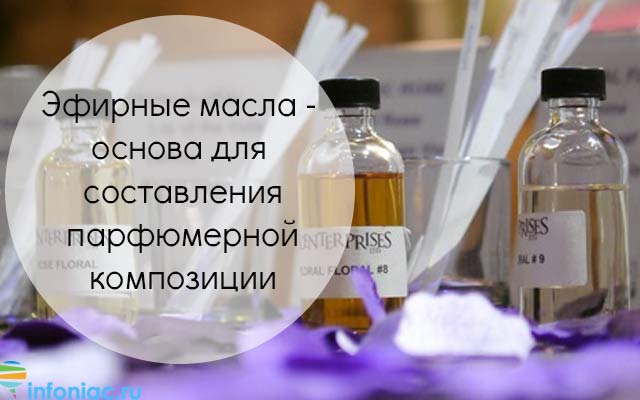
Popular types of essential oils used to make perfumes
Anise oil, clove oil, bergamot oil, azalea oil, oak moss resinoid, geranium, lemon, iris, coriander, lavender, rose, clary sage oil, patchouli oil, oil snakehead, peppermint essential oil, cumin, fennel, eucalyptus and many other types of oils.
Essential oils are most widely used in the production of perfume cosmetics. Also, for some types of perfumes (for example, for chypre), dry fragrant plants (or rather their parts) are used. The most popular dry vegetable raw material is oak moss.
Resins such as frankincense, galban, myrrh, styrax are used to make perfumes in the form of infusions. Actually, these are the first fragrances that were used thousands of years ago to create the first cosmetics. Along with resins, their solutions are used in essential oils called balms.
The composition of all perfumes
After receiving the perfume composition, routine work begins to create the actual final product — perfumes, eau de toilette or other perfume products. Moreover, the composition of each unit of perfume — from expensive selective perfumes to the simplest cologne — is the same: alcohol, water, and aromatic composition.
This is true, although there is a difference in proportions. According to the General Specifications, which are brought into line with the International Standards for Liquid Perfumes, the following types of perfumes are produced:
– Concentrated perfumes, in which the sum of the mass fraction of fragrances is at least 30 percent, and the volume fraction of ethyl alcohol is at least 55 percent.
– Extra group perfumes: the sum of the mass fractions of fragrances is at least 15 percent, and the volume fraction of ethyl alcohol is at least 70 percent. There are also just perfumes and eau de parfum, which contain even fewer fragrances — 10 percent.
Some perfumes also contain dyes that do not affect the aromatic properties of the product in any way. That, in fact, is all that every man in the street should know about how, where and what perfumes are made of.