
 Health
Virtual reality, which is created using technical means, can be used not only for entertainment purposes. It has recently been revealed that virtual games can also help patients regain their health after a stroke. Research results have shown that such virtual games can improve patients' arm muscle strength.
It is easier for patients to improve hand strength when they play virtual games than when they do standard physical exercises, which include bending their elbows, wrists and thumbs.
About 55 to 75 percent of stroke patients have mobility problems, which makes life difficult for them. These studies suggest that virtual games can help rehabilitate these patients.
Virtual world
A stroke happens when the brain stops getting enough blood. This happens when a blood vessel bursts or becomes blocked. Without adequate oxygen, which the brain receives through the blood, brain cells begin to die within 3-4 minutes, according to the American Heart Association.
Stroke survivors have problems with leg and arm mobility when parts of the brain that are responsible for movement have been damaged.
Rehabilitation exercises help the brain create new connections between nerve cells. “Standard therapy has had very modest positive results,” says researcher Dr. Gustavo Saposnik from the University of Toronto.
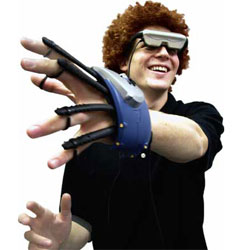
Virtual computer games have been specifically adapted to help stroke patients. In these games, they get into virtual reality. Patients are immersed in the virtual world using a special display that is worn over their eyes, or they can use a regular computer display or TV screen while playing regular video games. Virtual games are characterized by various tasks that the player must complete. For example, some games require the patient to manipulate virtual objects, while other games require the patient to bend his arms and wrists.
Saposnik and colleagues reviewed 12 studies that tested the effects of virtual reality on stroke patients.
In five studies, patients were divided into two groups, one doing standard exercises and the other playing with toys. As a result, it turned out that patients who visited the virtual world improved upper limb strength 4.9 times faster than those who did normal exercises.
The remaining 7 studies tested patients before and after they started playing games. It was noted that games improved compression strength by an average of 14.7 percent and improved the ability to perform standard tasks by 20 percent.
Better than reality?
Virtual games activate different areas of the brain, which is not observed during normal exercise, says Saposnik. This may explain why there is such a difference between patients who play games and those who do not.
Games can also activate “mirror neurons” — neurons that are triggered when a person watches someone perform certain movements. When patients see someone doing something in the virtual world, their mirror neurons are activated. Perhaps the work of these mirror neurons helps create new connections in brain cells and contributes to the body's faster recovery.
Moreover, virtual games provide visual and sensory feedback, which is important for patient rehabilitation.
However, Saposnik noted that so far there have been no in-depth and large-scale studies of the impact of virtual games on the rehabilitation of stroke patients. It is necessary to conduct a number of more studies to accurately say about the positive results.