
 Technology
Imagine that instead of emitting a harmful mixture of carbon dioxide, carbon monoxide, hydrocarbons, benzene and various particulates, your car's exhaust pipe only emits water.
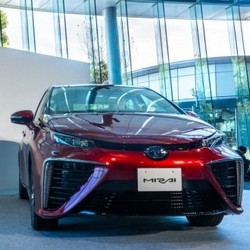
This may sound like a science fiction story, but it's actually a real new car called Toyota Mirai that will hit the streets this year.
Hydrogen-powered cars
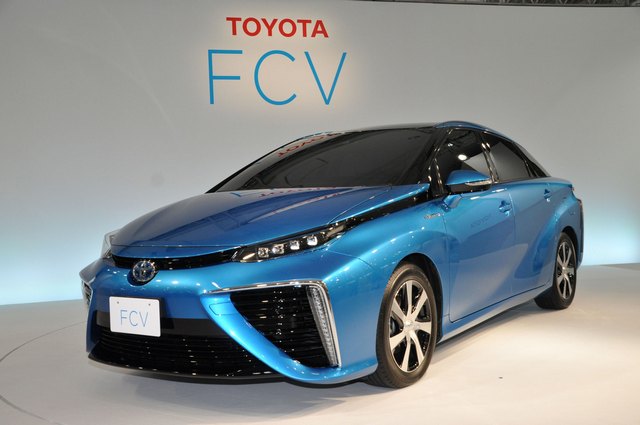
While we're used to filling our car with gasoline or diesel, the new “Japanese miracle” Mirai runs on the most abundant element in the universe, hydrogen.
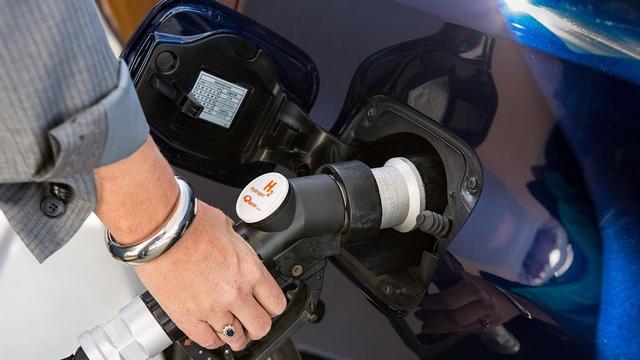
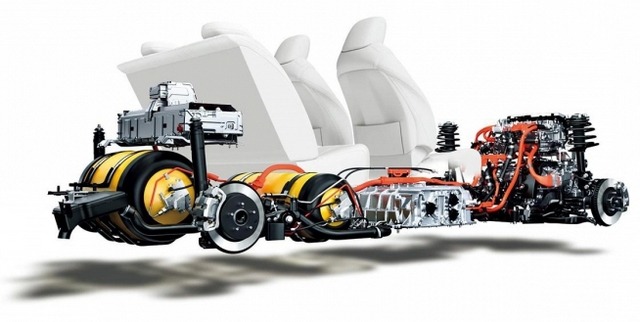
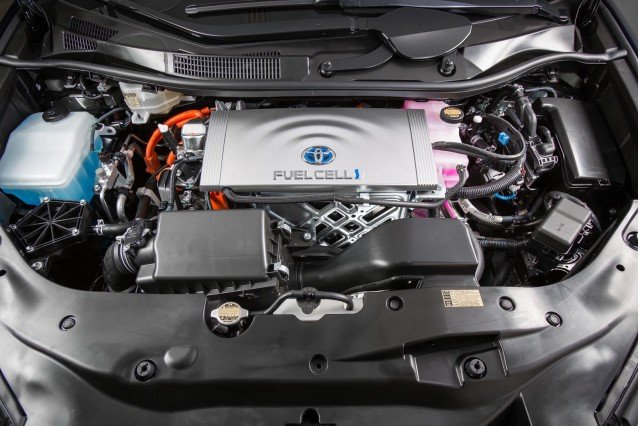
Hydrogen gas is filled into the car tank in the same way as gasoline, and then a special fuel cell that reacts chemically due to hydrogen and oxygen converts electricity, which is the driving force of the machine. Surprisingly, the only by-product of this process is water.
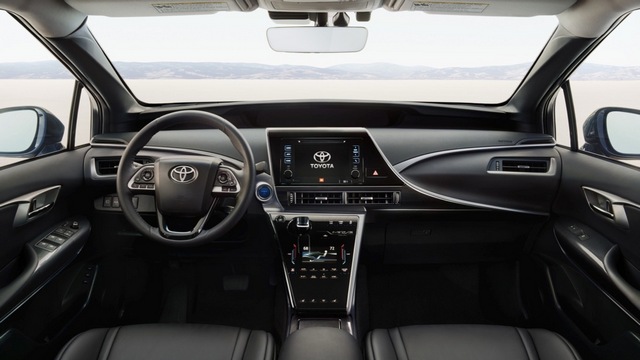
Undoubtedly, you've already heard about electric cars that can't go far without recharging, and their maximum speed varies between 70 km/h. However, Mirai is out of competition on alternative fuel.
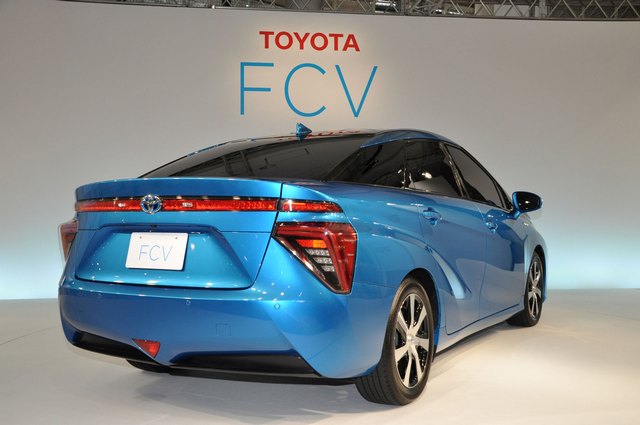
This car can accelerate to 179 km/h, accelerates to 100 km/h in 9.6 seconds and, most importantly, it can travel 482 km without additional refueling. Cutting-edge carbon fiber tanks fill up in about ten minutes.
Read also: Nuclear-powered car: 8 grams of thorium per millions of kilometers
When referring to hydrogen as fuel, some people may recall the German Hindenburg airship that burned down over New Jersey, USA in 1937.
However, Toyota Mirai designers assure that this situation has been “nullified” on this car due to bulletproof tanks that contain hydrogen fuel cells. Therefore, an ordinary gasoline tank is much more likely to be blown up as a result of an accident.
In general, the car has ambitions to conquer the whole world. But Toyota needs to hurry, because Honda, Ford and Nissan plan to launch cars with similar technologies on the market next year.
If all cars ran on hydrogen, the air in our cities would be much cleaner. In addition, everyone knows the fact that the planet is running out of oil, and, therefore, sooner or later gasoline will be extremely expensive (although it is not cheap anymore).
It turns out that if all people switch to such cars, then humanity can take a step towards getting rid of problems related to environmental pollution.
Disadvantages of a hydrogen car

But, of course, not everything is as rosy as we would like it to be. There are serious problems that can become a stumbling block on the way to an alternative to gasoline engines.
1. Currently, hydrogen cars are very expensive. The Mirai, a four-door sedan, is set to go on sale for $99,700. At the same time, the cost of a car with a gasoline engine of the same class is approximately $30,000.
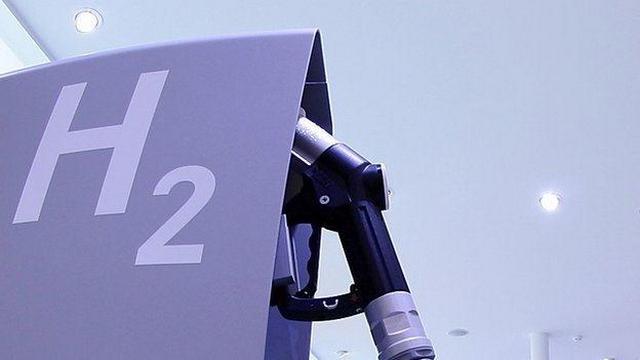
2. The next problem is refueling the car of the future. You'll need to find the nearest hydrogen gas station to drive after the tank is empty, and there are currently only a few such gas stations in some European countries and the US, while most countries do not have hydrogen gas stations at all. Presumably, by 2020, the number of hydrogen filling stations will increase significantly, but this will not be enough at all.
3. Refueling a full Toyota Mirai tank will cost about $103, which is about twice as much as refueling a car with a petrol engine of the same class that travels the same 482 km.
Subsidies for hydrogen cars

Of course, infrastructure costs can be partially addressed by governments that are able to create incentives: provide customers with various discounts or even provide people with gas free of charge with hydrogen.
This is already happening in Japan, a country that is concerned about its energy security (especially after the Fukushima nuclear disaster).
The Japanese government is helping the population a lot with subsidies for the purchase of hydrogen cars (the subsidy is almost $27,000) as part of a program that will allocate $400 million from state budget.
With the help of this program, it is planned to help the Japanese population purchase 6,000 private vehicles that run on hydrogen.
Meanwhile, in the US, the California Energy Committee has pledged $205 million to provide nearly 70 gas stations with hydrogen fuel by the end of next year. California also pays $12,000 to people who buy hydrogen cars.
But in the UK, such cars will cost more, for the simple reason that tech companies tend to “inflate” prices there. In foggy Albion, people are traditionally willing to pay more for such goods than residents of other advanced countries.
The British government, for its part, has pledged $17 million to build 15 more hydrogen plants in the country's Southeast.
Hydrogen production
Another problem with such machines is the production of hydrogen, as this is a rather problematic undertaking.
The most common method is called steam reforming. It consists in mixing steam with natural gas, then heated to a certain temperature, followed by the addition of a catalyst, such as nickel, resulting in hydrogen and carbon monoxide (toxic gas). About 95% of the world's hydrogen is produced this way.
Unfortunately, this is not an environmentally friendly process because by-products are also the result. Thus, although hydrogen in a car does not pollute the environment by itself, the production of this fuel will pollute our air.
As a result, even advocates for hydrogen-powered cars admit that hydrogen production will pollute the environment at best like gasoline-powered cars and at worst much more.

Scientists are now developing “green methods” for producing hydrogen, such as extracting hydrogen from corn husks or using wind turbines to supply water electrolysis.
Currently, environmentally friendly and sufficiently efficient methods for producing hydrogen fuel for refueling millions of cars every day have not been invented.
Of course, fans of cars that run on hydrogen fuel are adamant: they believe that we must move forward, because our future depends on the performance of vehicles that will not to cause damage to our planet.
The problems of hydrogen cars

Toyota claims that Mirai releases only 100 ml of water over about 2 km. It is estimated that in the UK, for example, all cars drive about 488 billion kilometers per year. This means that if every car were a Toyota Mirai, all cars would leak 3 billion liters of water and water vapor every year.
Read also: Hydrogen-fueled cars — the future is getting closer
By comparison, such an enormous amount of water would be enough to fill about 12,000 swimming pools dedicated to the Olympic Games.
Of course, water itself is a harmless substance for all of us, but not for our roads during frosts. Imagine a highway with heavy traffic in the middle of winter, and every vehicle pours 1 liter of water every 20 km. After all, all this water will turn into an ice rink in a matter of minutes. And if water is released in the form of steam, the predictable result is fog.
In Reykjavik, Iceland, passengers on hydrogen-powered buses are reportedly worried about the amount of water vapor coming from only one bus out of many.

Thus, although hydrogen cars have many advantages (for example, silence and environmental friendliness), there are many problems with them that need to be addressed, otherwise such cars will not are in demand.
It is possible that hydrogen fuel cells will be successfully used, for example, by forklifts operating in enclosed spaces where gasoline or diesel smoke is particularly undesirable.
So it remains to be seen if we're all going to enjoy hydrogen family cars in the next decade or not…
Car on the water (video)