
Lonja de la Seda
Lonja de la Seda (Silk Exchange) is one of the most famous architectural monuments of Valencia. This landmark is a collection of buildings in which the silk trade was conducted in the Middle Ages, and is rightly considered a magnificent work of art by Spanish architects.
Oceanographic Center of Valencia
It is definitely worth visiting the largest Oceanographic Center of Valencia in Europe, where representatives of flora and fauna from all over the world are gathered. Each ecosystem is located in a separate building: sea lions rest in one, bright tropical reptiles swim in flocks in the other, birds make noise.
Botanical Garden of Valencia
In the middle of the 15th century, the Valencian University opened a medical faculty — and medicinal plants began to be planted on the banks of Turia for the needs of teachers and students. The Botanical Garden of Valencia is a living museum, a descendant of that modest apothecary’s garden.
City of Arts and Sciences
For centuries, spring floods flooded Valencia, from time to time becoming a real natural disaster. At the turn of the new millennium, the waters of the Turia River were diverted to the side, and a park stretching through the whole city was laid out in the drained channel.
Aguas Palace
One of the most interesting tourist sites in Valencia is the Aguas Palace, which is not far from the town Hall. In the 14th century, it was the ancestral home of the rich but not noble Rabassa family. Having intermarried with the counts of Toulouse, the former merchants received the baronial status and the surname Dos Aguas, that is, “Two Rivers”.
Valencia Cathedral
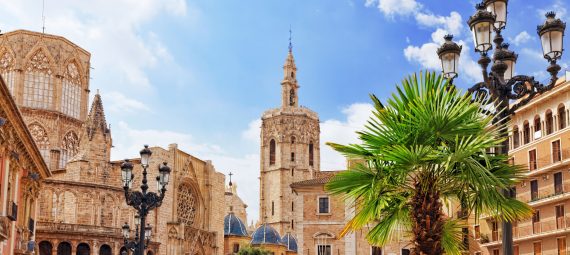
This beautiful cathedral, consecrated in honor of the Assumption of the Virgin Mary (aka the Cathedral of the Virgin Mary) is the main church of the Christian community of Valencia. Despite the fact that this is a functioning church, not a museum, many visitors are eager to see it from the inside.
Crypt of the Holy Martyr Vicente
During the reconstruction of an old building near the Cathedral, the walls of a house built in the 4th century AD, when the Visigoths ruled Valencia, were found under it. Archaeologists found out that the prison, crypt, baptistery, that is, baptismal chapel, chapel alternated in the room.
Valencia Museum of Fine Arts
The Museum of Fine Arts, built in the early 17th century and served as an educational institution for the clergy, provides a unique opportunity to get acquainted with the culture and history of the city, visit the halls of archaeological finds, furniture and household items from different historical eras.