
Bambarakanda (Bambarakanda Falls)
Bambarakanda is considered to be the highest waterfall in Sri Lanka. With a height of 263 meters, it ranks 299th among the highest waterfalls in the world. Bambarakanda is located in a pine forest in Kalupahana in Badulla district, it can be seen driving along the A4 highway. The waterfall originates from the Kuda Oya River, which in turn flows from the Valave River. The best months to visit Bambarakanda are from March to May. During this period, the probability of rain is very low, and the paths around the waterfall are not so slippery. From June to September it is usually very dry and windy, but from November to February it often rains.
Laxapana (Laxapana Falls)
Laksapana Waterfall (126 meters) is the 8th highest waterfall in Sri Lanka and the 625th in the world. It is located in the Hatton area of Nuwara Eliya. It is formed from the Maskelia Oya River. Two hydroelectric power plants, which generate 50-100 MW of electricity, are named after this waterfall. The name of the waterfall comes from the Sinhala word “Laxa”, which means “hundreds of thousands” and “Pahana” or “Pashana”, meaning “rocks”.
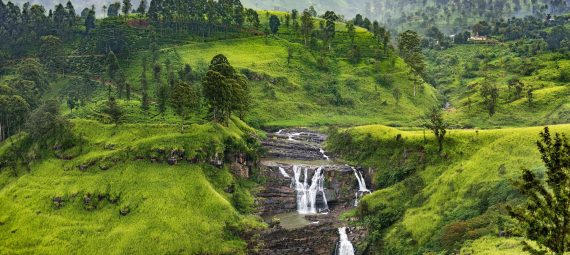
St. Clair’s Fall
St. Clair Waterfall (80 m high and 50 m wide) is located in Nuwara Eliya, 1.5 km from Talawakele, and consists of two segments known as “Big St. Clair” and “Little St. Clair”. The waterfall originates from the Kotmale River, which is a tributary of the Mahaveli River, and flows downhill through tea plantations.
Kirindi Ella
This waterfall is located in Ratnapura district. Its height is 117 meters. The water begins to fall from Mount Kuttapitiya and originates from the Kirindi Oya River. A deep pool called Diyagathwala has naturally formed at the foot of the waterfall.
Dunhinda (Dunhinda Falls)
Dunhinda Waterfall is located about 5 kilometers from the city of Badulla and is one of the most beautiful waterfalls in Sri Lanka. Its height is 59 m. The Dunhinda flows from the Badulu Oya River, which flows through the town of Badulla. The foot of the waterfall is always shrouded in haze, and the vegetation is covered with dew, which is why the waterfall got its name — Dun means “fog” in Sinhala.