
Aquarium of two oceans
The Cape Town Aquarium is the largest in the Southern Hemisphere. There are over 30 pools (one per 2 million liters), in which more than 300 species of fish, crustaceans, pinnipeds and invertebrates live in two oceans — the Indian and Atlantic. In one of the pools there is a whole forest of kelp, in the other, with sharks, you can go scuba diving. There is also a hall with jellyfish and a small “coast” where penguins and seals go out to lie down and walk.
Puppet shows are organized for children in the aquarium, master classes are held, adults can get environmental education and absolutely everything – have a snack in a cafe or see how penguins, predators and other animals are fed.
Table Mountain
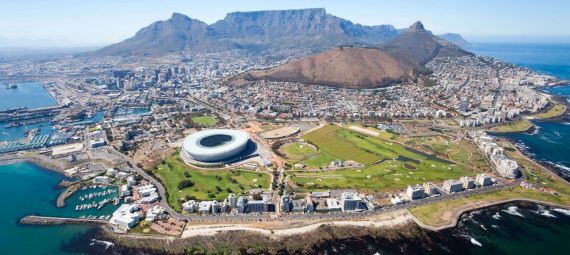
Table Mountain is one of the seven new wonders of nature and a symbol of Cape Town, which was given a place of honor on the city’s flag. You can’t confuse it with anything: it’s like someone cut the top horizontally with a knife. The result is a surface similar to a table — hence the name. The height of the mountain is 1087 m, the length of the plateau is 3 km. You can climb up on the cable car, the cabins of which rotate around the axis, or on foot.
The surroundings of the mountain and it itself are a national reserve. Up to 9,000 species of plants are represented here, all kinds of birds, lizards, rodents live. The site offers panoramic views of the city, the surrounding area and two oceans. If you’re lucky, you can see whales.
The mountain is considered a place of power, and interesting legends are associated with it.
Bo-Kaap
Bo Kaap, also known as the Malay Quarter, sprawls at the foot of Signal Hill. This is one of the best places for photo shoots in Cape Town: the houses here are painted in bright blue, green, pink, yellow colors and today serve as the perfect backdrop for pictures. Historically, the quarter was decorated so that Malay slaves, who were brought here before the abolition of apartheid, could better navigate the place. Or, according to another legend, the locals did it themselves, protesting against the greyness and dominance of white in the city.
In Bo-Kaap there is a mosque, a museum (an 18th-century building with 19th-century interiors), national shops and cafes.
In the evenings, it is better not to walk here — the area is considered criminal.
Victoria and Alfred Embankment
The main city promenade is named after representatives of the British royal family — Queen Victoria and her son Alfred, who visited here in the years when South Africa was a British overseas colony. The popularity of this attraction is provided by an excellent view of Table Mountain, a variety of shops, cafes, restaurants, and original sculptures. You can soar above the embankment on a Ferris wheel, go on an excursion — on a pleasure boat or a double-decker tourist bus.
The place is very crowded, but quite safe. It is better to visit it on weekdays.
Kirstenbosch
This obscure name hides the magnificent National Botanical Garden — the main one in Cape Town and one of the most beautiful in the world, included in the UNESCO list of World Heritage Sites. It is more than 100 years old, the total area is over 500 hectares, the garden itself occupies almost 40. There are plantings both in the open air and in the greenhouse. It is simply impossible to list everything that grows, crawls, runs and flies here, there are 7,000 species of plants alone, there are endangered ones, and a lot of birds.
The garden blooms and smells fragrant all year round. For the convenience of visitors, paths are laid, you can lie on the grass and even have picnics, but you can not play active games. There are cafes and souvenir shops.