
 Unbelievable facts
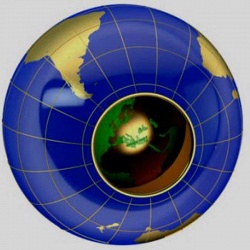
Human history remembers a lot of strange theories about our planet. However, one of the most durable was the theory that there is emptiness inside the Earth.
More specifically, it's not exactly emptiness, but a cavity, a piece of paradise that can be inhabited by animals and people. Perhaps the easiest way to believe in this theory is for those who want such a utopian place to exist somewhere on our planet in principle…
Judging by the number of followers, many would like to escape from the routine of our lives to this very place to lead a more enlightened life full of fantastic discoveries. However, modern scientific facts do not support the theory of a hollow Earth.
Be that as it may, many people are still willing to believe that there is a world within our world. Although some of the ideas that support the theory of the existence of a habitable cavity inside our planet are clearly out of this world…
Hollow Earth Theory
Pole holes
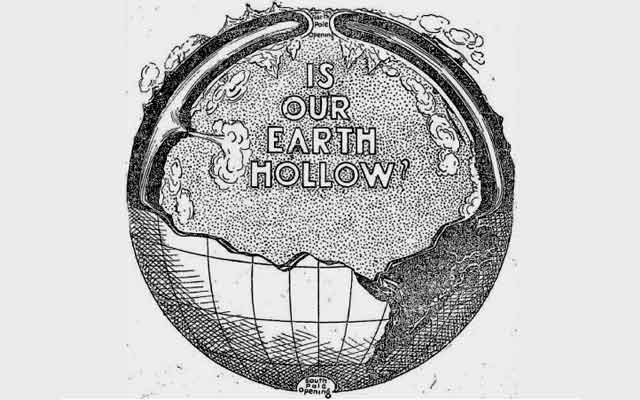
In 1906, a writer named William Reid published his book The Phantom of the Poles. In this book, the author shared his personal feelings about the evidence of the flat Earth theory, which he considered irrefutable.
In an interview with a newspaper, Mr. Reid said that this theory provides “the most natural way to explain the flattening of the Earth around the poles.”
Also read: Amazing facts about the moon
Reid genuinely believed that the cavity ran right across the poles. Reid also stated that “the sunlight that passes through the hole… appears among icebergs and snows, illuminating them like real gemstone crystals.”
Perhaps due to the poetic nature of this image, Reed's ideas have found many like-minded people. At least, his books are still considered a classic teaching among those who believe in the possibility of a cavity in the center of our planet.
Nine icebergs from the center of the Earth

One of the most extravagant theories presented to us by supporters of the idea of a hollow Earth is that icebergs come to this world from the center of our planet. And while many people were struggling to pull this idea over their heads, the same William Reid said that it was absolutely sound.
This is what he once told The Sunday Times: “Icebergs form inside the Earth; then they sail away from the poles, moving in circles, and then they pop up outside in the ocean.”
It seems that today modern adherents of this theory would give a lot to admire this grandiose event! If it weren't for the conspiracy of scientists and the government to hide from everyone the existence of another world inside Earth…
Cell cosmogony
By 1908, newspapers around the world had already covered the subject of a flat Earth enough. At the same time, American herbalist and alchemist Dr. Cyrus Teed came to the attention of readers, who spoke in such a way that scientists fooled people's heads.
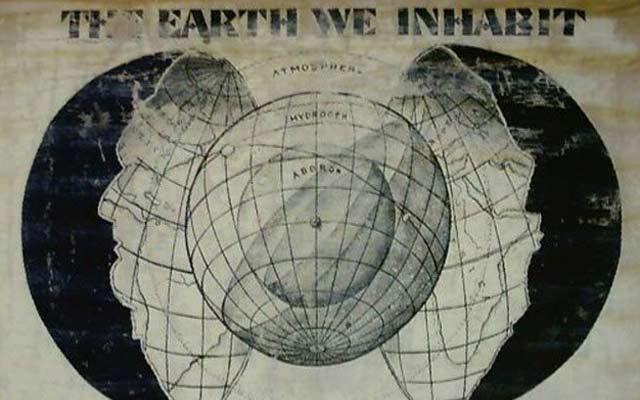
According to Teed, people did not live on the outside of the planet at all. In fact, the Earth was supposedly more like a cell (meaning a living organism), and we humans lived inside this cell.
The world inside this cell is everything that surrounds us. There is absolutely nothing around our planetary cell. The sun, of course, is in the middle of the cell, about 6,400 kilometers away from us.
Three atmospheric environments surround our Sun, including the one made of hydrogen. So we can't observe the fiery disc by itself. We see only a local cluster of solar energies, which are about 1400 kilometers away from us.
The center of the Earth is inhabited
The idea of a hollow Earth was vividly discussed until the 1900s. A newspaper article in 1884 announced that Americus Simms, the son of John Cleeves Simms Jr., an American army officer and hollow Earth theorist, was about to give a lecture. about this theory.
In the early 1800s, his father published a short pamphlet detailing exactly how things work there, inside the Earth. John Simms Jr. passed away in 1829, but his son not only continued his father's work, but also moved on.
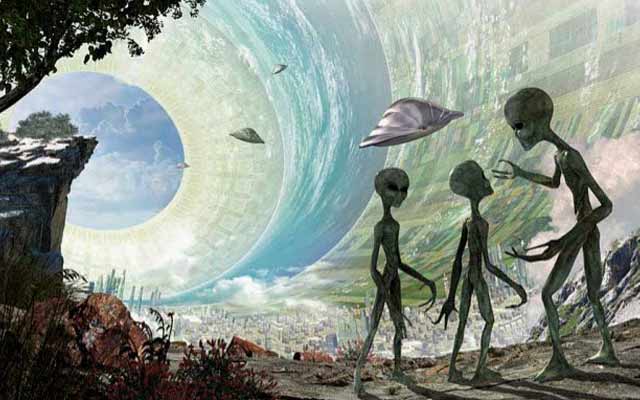
In that same lecture, Americus named three people who allegedly had already visited the center of the Earth, met people living there; they also discussed the language they speak, and peculiarities of agriculture in this inner world.
Because the globe is hollow…
While arrogant scientists disdained the theory of the hollow Earth, which was buzzing in the newspapers, some religious people nurtured their belief in possibility the existence of a cavity inside our planet.
In an article in 1893, one such interpreter of the theory stated that the Lord God does nothing in vain. And that, they say, for the divine beginning, it made little sense to create a solid Earth.

In order for this deep idea to reach readers, the author asked: “If the Earth were solid, and more solid to its center, wouldn't the insides of animals on Earth be denser than their shell? What was the point of strengthening it with ribs, unless to protect it from enormous external pressure?”
And although the flat Earth theory should have fit into religious theory, it seems that the author made a mistake when he added in his hearts: “Don't globe manufacturers understand that a hollow globe is is it preferable to solid? And if they don't understand, then why do they make it hollow?!”
Solid Earth is too heavy for its orbit
Many of those who supported the theory of a hollow Earth used only one valid “scientific” conclusion to support their arguments, which challenged the possibility of solid Earth to orbit around the Sun.
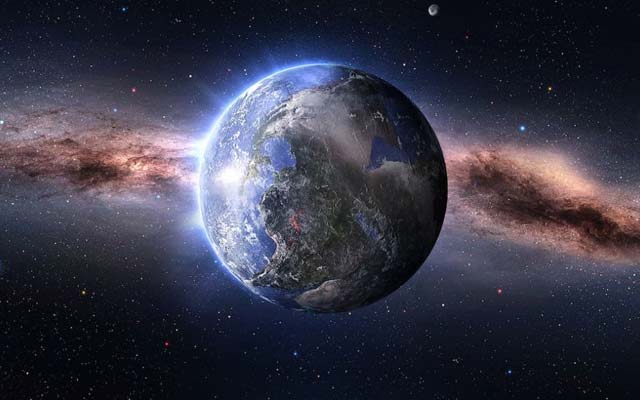
For example, in 1905, George Ipson, a well-known supporter of the theory of the hollow planet, argued in one of his lectures on the alternative structure of the Earth that if the Earth were not hollow, then it would be impossible for her to “maintain its position in the heavenly space”.
Ipson also believed that there are huge holes at the poles through which sunlight passes, illuminating the inner world. He believed that in order to get there, you only need to “go down by air transport under the strict control of the pilot and then you will get to the desired place.”
What's at the center of the Earth
Now the aurora borealis makes sense
Some of the scientific theories that emerged at the dawn of the 1900s were logical enough to fool adherents of the idea of a hollow Earth. Take as an example the theory that reveals the secret of the origin of the aurora borealis.

According to those who in those years unconditionally believed in the existence of a cavity in the center of our planet, the aurora borealis is nothing more than “reflected lights from the Earth's interior”.
The logic is simple: the interior of the planet is filled with crystals that reflect sunlight towards the cavity. Accordingly, the assumption that the lights of people living inside the Earth are also reflected back in such a way that we can observe them in the sky also makes sense.
German theory
It will not be news to many that there is numerous evidence of the commitment of Adolf Hitler (and many other German “figures” of World War II) to the
theory of the hollow Earth (for example called the Hollow Earth Doctrine).
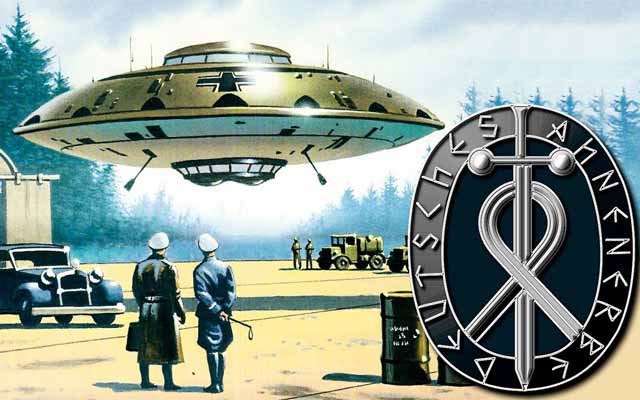
Nowadays, another, equally crazy theory has appeared (you can learn a lot about it on the Internet). According to this theory, Hitler even escaped to this very cavity, where he actually lives happily ever since.
The truth, most likely, is that the leader of the Third Reich simply did not underestimate the significance of this theory. Like many other fantastic ideas. A 1954 article published by a Sydney newspaper reported that “Hitler accepted this theory, as did divination, astrology, and the ability to locate enemy ships on a map with using a pendulum.”
In other words, the authors wanted to show that it was common for Adolf, obsessed with mysticism, to believe various theories, even the craziest ones. For true adherents of the idea of a flat Earth, mixing this theory with divination played down its significance.
The theory is still popular today
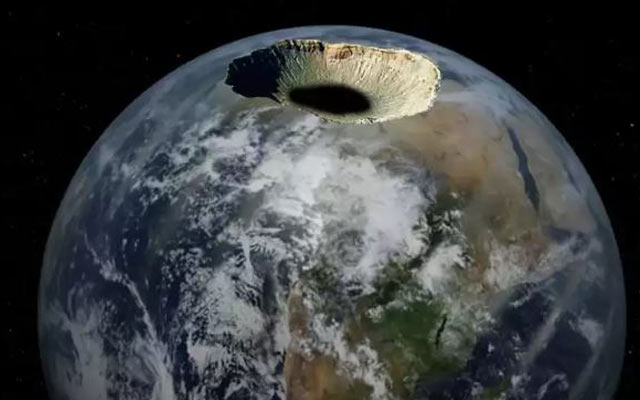
Even today, many people continue to believe unconditionally that a hollow Earth is possible. In this context, the relatively recent story of Dallas Thompson, the so-called flat Earth explorer and former sports coach from Hawaii, is interesting.
In 2002, Dallas appeared as a guest on the most popular North American radio talk show of the year, Coast to Coast AM. In an interview, he said that he had experienced clinical death, as a result of which he learned about a flat Earth.
Thompson spoke about his plans to launch an expedition to a hole in one of the planet's poles in 2003. At the end of July 2002, a man published a book called Cosmic Manuscript, in which he shared many of his theories with readers, and then… disappeared without a trace.
Read also: The planet is supported by three elephants
It is also known about other followers of the so-called half-earth theory who moved to Alaska in an effort to find their way to the center of the planet. Optimists hope that the desired hole will be found closer to the North Pole. Apparently they haven't found it yet…
It's all Halley's fault
Yes, the same Edmund Halley, after whom the well-known comet was named, to which this English scientist devoted much time to studying. Halley was a versatile man. So versatile that at the end of the 17th century he defended his theory of a flat Earth, in which our planet was represented in the form of several concentric shells.
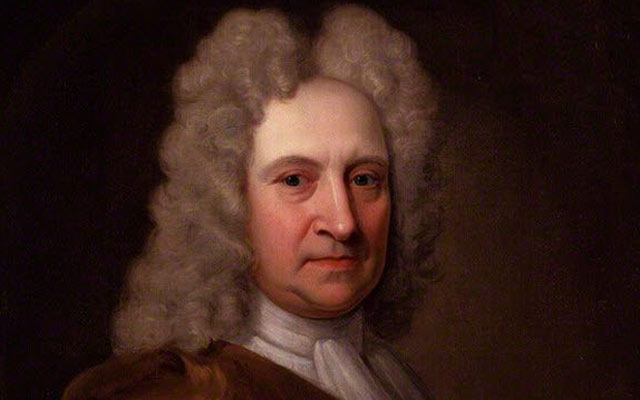
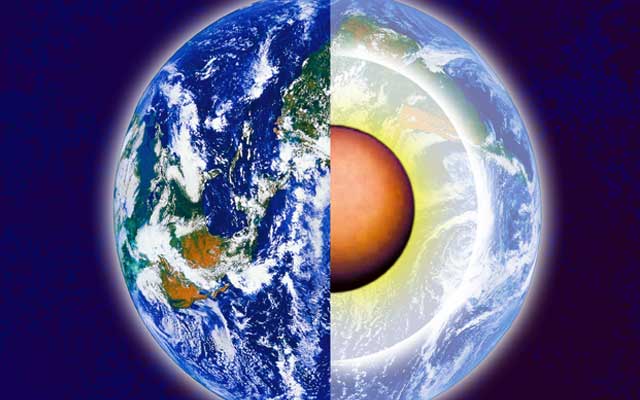
Humans and animals live on the outer shell. Under the crust of this shell, “there's an empty space that's filled with air, and then another shell, another shell, air again, and eventually comes the Earth's core.” Thanks, in no small part, to Halley's authority, the theory of flat Earth received many supporters at the time.
Halley believed that these three hollow spaces filled with air (i.e. atmosphere) were perfectly habitable. The scientist also believed that these cavities are constantly illuminated by “glowing air”. That is, the luminescent atmosphere is the cause of the aurora borealis. Of course, all three spaces are populated by humans and animals…