
 Events
NASA scientists observed an amazing event — a bright flare on the moon's surface two months ago.
The explosion was so powerful that it could be seen by the naked eye from Earth.
As it turned out, a 40-kilogram meteorite, moving at a speed of 90,000 km per hour, collided with the Moon's surface, creating a crater 20 meters wide. The collision was visible even without a telescope, like a bright flash of light to anyone watching the Moon at the time.
“On March 17, 2013, an object the size of a small boulder hit the lunar surface in the Sea of Rain area,” said NASA spokesman Bill Cooke. “It exploded, causing a flash that was 10 times brighter than any we've seen before.”
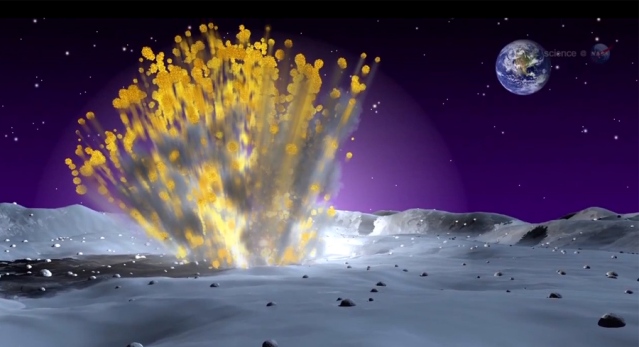
Although such falls are not uncommon, and the Moon's craters formed this way, it was the largest explosion, with an energy of 5 tons of TNT.
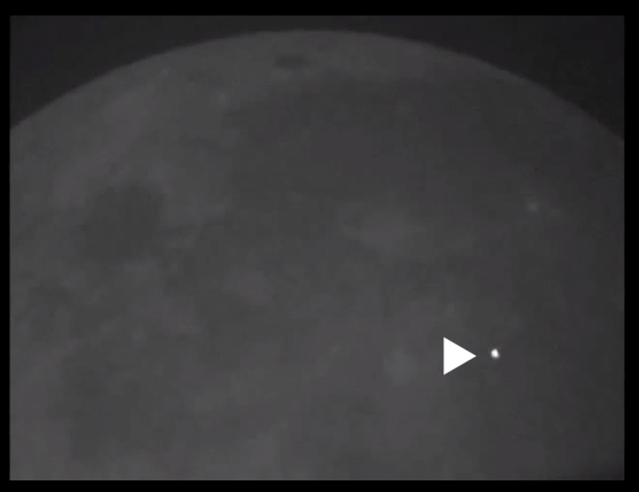
The photo shows a bright flash of light that was the result of a meteorite colliding with the moon's surface.
Unlike our carefully protected planet, the Moon doesn't have an atmosphere to protect it, and meteoroids don't burn up when they approach the planet's surface. Over the past 8 years, scientists have been able to observe more than 300 such explosions.
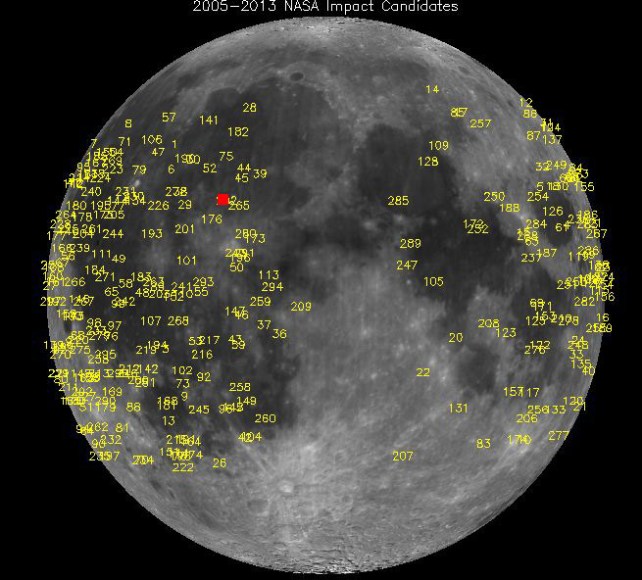
The largest meteorite impact on the Moon on March 17, 2013 in the Sea of Rain area is marked with a red square.
As experts explain, lunar meteors hit the surface with such kinetic energy that even a small pebble can create a crater several meters wide. The flash of light does not appear due to fire, but due to the thermal glow of molten rock and hot steam at the crash site.
Meteorite falls on the Moon (video) Moon
surface (photo)
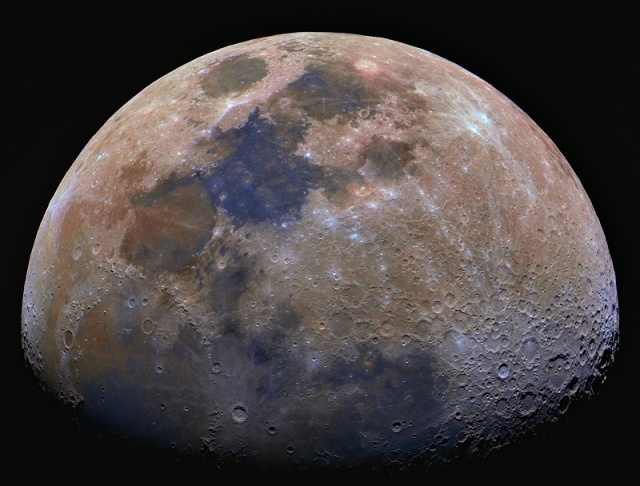
From anywhere on Earth, the clearest object in the night sky is the Moon, Earth's only natural satellite and its closest celestial object, which is 384,000 km away.
The first thing you notice when looking at the Moon are dark and bright areas. Dark areas are called seas, which consist of frozen basaltic lava. The most famous of these are:
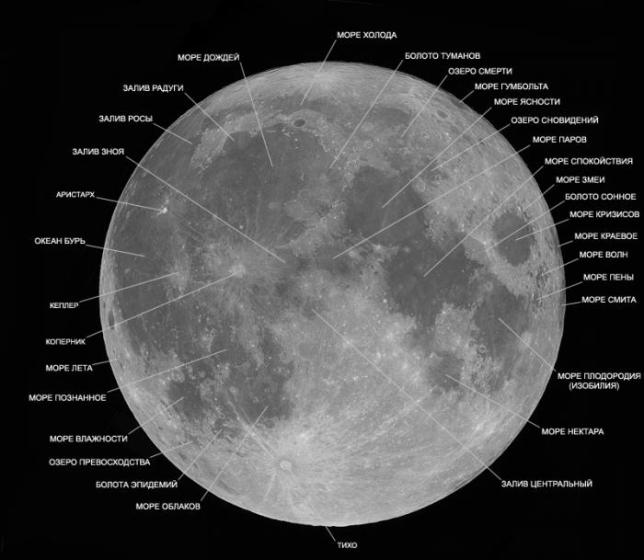
Mare Tranquilitatis — where the first astronauts first landed
Mare Imbrium is the largest sea with a diameter of 1100 km
Sea of Plenty (Mare Fecunditatis) — where was the first sample of lunar soil taken
Sea of clarity (Mare Serenitatis)
Sea of clouds (Mare Nubium)
Nectar Sea (Mare Nectaris)
Ocean of Storms (Oceanus Procellarum)
The lunar seas make up about 15 percent of the Moon's surface.
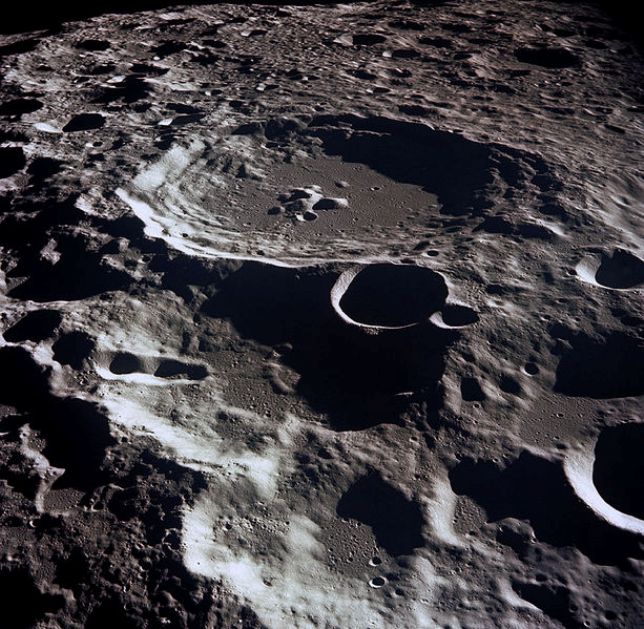
The rest of the moon's surface consists of lighter mountains on the continent with a large number of craters located 4-5 km above the average height of the lunar surface. At the same time, the seas are located 2-3 km below the surrounding area.
The Moon has many craters that formed when meteors collided with its surface. In addition, geologists have noticed volcanoes, lava tubes and ancient lava flows on the surface, which indicate that volcanic activity was once observed on the moon.