
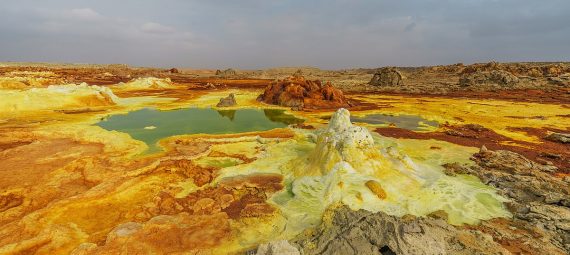
Earth is home to some incredibly diverse climates, ranging from freezing polar regions to scorching deserts. The hottest places on our planet can reach extreme temperatures, making them almost inhospitable for human life. These locations are often characterized by vast deserts, little to no rainfall, and minimal vegetation. Here’s a look at some of the hottest places on Earth, where the heat is relentless and record-breaking.
1. Death Valley, California, USA
Death Valley, located in the Mojave Desert of California, is widely known as the hottest place on Earth. In July 1913, a temperature of 134°F (56.7°C) was recorded at Furnace Creek, which still stands as the highest air temperature ever recorded. The summer temperatures here frequently soar above 120°F (49°C). Death Valley’s extreme heat is due to its below-sea-level basin, which traps heat, and its surrounding mountain ranges that block the cool air. Despite the harsh conditions, the valley is home to some plant and animal life that has adapted to survive in the heat.
2. Lut Desert (Dasht-e Lut), Iran
The Lut Desert in southeastern Iran is one of the hottest and driest places on Earth. Satellite data from NASA has shown that ground temperatures in this desert can reach an astonishing 159°F (70.7°C), making it one of the hottest surfaces on the planet. The desert is known for its unique landscape, including vast salt flats, towering sand dunes, and rocky plateaus. The Lut Desert’s intense heat is mainly due to its dark surface, which absorbs more solar radiation.
3. Kebili, Tunisia
Kebili, a town in Tunisia, is known for recording some of the highest temperatures in Africa. In 1931, a temperature of 131°F (55°C) was recorded here. Kebili is an oasis town in the Sahara Desert, where the intense heat is a daily reality during the summer months. The area is known for its date palm plantations, which provide some respite from the blistering sun. The dry, desert climate and clear skies contribute to the extreme heat experienced in Kebili.
4. Wadi Halfa, Sudan
Wadi Halfa, located in northern Sudan near the border with Egypt, is one of the hottest places in Africa. The town experiences extremely high temperatures during the summer months, with records reaching up to 127°F (52.8°C). Wadi Halfa is situated on the shores of Lake Nubia, yet the heat remains relentless due to the arid desert environment that surrounds it. The combination of hot winds, low humidity, and clear skies creates a scorching atmosphere in this part of Sudan.
5. Dallol, Ethiopia
Dallol, in the Danakil Depression of Ethiopia, is one of the hottest inhabited places on Earth. It is known for its consistently high year-round temperatures, with average daily highs often exceeding 104°F (40°C). Dallol also holds the record for the highest average temperature for an inhabited location, with an average annual temperature of 94°F (34.4°C). The area is characterized by its otherworldly landscapes, including colorful hydrothermal springs, salt flats, and active volcanic features. The geothermal activity contributes to the high temperatures and harsh living conditions in Dallol.
6. Kuwait City, Kuwait
Kuwait City is one of the hottest metropolitan areas in the world, with summer temperatures frequently exceeding 122°F (50°C). In July 2016, a temperature of 129.2°F (54°C) was recorded in Mitribah, Kuwait, one of the highest temperatures ever recorded on Earth. The city’s location in the Arabian Peninsula, coupled with its desert climate, contributes to the extreme heat. Air conditioning is a necessity in Kuwait City, where the scorching temperatures can be dangerous for those who spend prolonged periods outdoors.
7. Tirat Zvi, Israel
Tirat Zvi, a kibbutz in the Jordan Valley of Israel, holds the record for the highest temperature ever recorded in Asia, which was 129°F (53.9°C) in June 1942. The region experiences intense summer heat due to its location below sea level, which creates a low-lying basin that traps hot air. The combination of arid desert conditions and the low elevation contributes to the extreme temperatures in Tirat Zvi, making it one of the hottest places on the continent.
Conclusion
These hottest places on Earth demonstrate the incredible extremes that our planet can reach. While these regions may be challenging to inhabit, they offer unique landscapes and environments that have adapted to survive the relentless heat. Understanding these extreme climates helps us appreciate the diversity of our planet and the resilience of both human and natural life in the face of such harsh conditions.