
 Helpful tips
You can't change yourself—you shouldn't even try. Yes, various seminars and self-improvement courses are trying to convince you otherwise. But you don't have to pay attention to them. Why? Because they're all wrong. At least in the wording.
You can't change. And all your attempts to change are nothing more than an attempt by a thirsty person to keep up with his mirage in the hot desert. All in all, this is all empty. So don't try to chase mirages. You'd better do something else.
But why can't you change? Because the very idea that you need to change is a conditional construct. This is something you need to do to feel better. But you might feel worse.
We offer you the most in-depth analysis of what we mean by “change yourself”. Analysis without deception and false calls. An analysis that will answer the main question — how to change your life for the better and why you should not try to change yourself for this?

We change lives without changing ourselves
Changing yourself and changing something about yourself are two different things
You didn't get a chance to read this article yesterday. You're going to read it today. Does this mean you're going to change? Both yes and no answers are correct.
But it all depends on what you mean by the verb “change”.
Technically speaking, you're always changing and you're not changing at the same time. That depends on how you look at it. Because your conclusion that you have changed or haven't changed only exists in the form of thoughts in your head.
Some might think that “changing yourself” means making a billion dollars. And then you can spend the rest of your life beating yourself up and blaming yourself for not being able to “change”. Therefore, this is not the best use of the verb “change”.
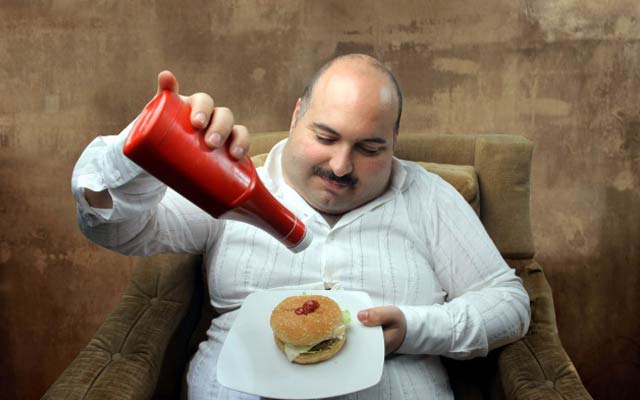
Someone else might decide to “change themselves” by stopping mayonnaise over roasted potatoes. In this example, trying to change yourself looks ridiculously simple and quite doable. But does this mean that such a person has changed himself? Of course not.
We are constantly told that in order to improve our lives, we need to change ourselves, change something about ourselves. The mistake of this question is that “changing yourself” and “changing something about yourself” are two completely different things. Take this as a basis and let's move on.
So what are changes?

You get the feeling that this is just an empty play on words: change yourself or change something about yourself — what difference does it make? Far from it. If you think about it, in the first case we are offered empty ephemerality, while the second advice is more like a practical task. An example will help you understand this better.
Imagine a person who constantly lies to their friend, therapist, or ex-life partner, claiming that they have finally decided to change themselves and that this is about to happen. His promises are imaginary and artificial.
And if that person lied before and then suddenly stopped doing it, does that mean they've changed? Does this mean that such a person has completely and irrevocably changed? What are the chances he won't lie again?

And even if that person doesn't lie anymore, what does it matter? Especially for the hundreds of people lied to by this man. The main idea is that we don't know what it means to change ourselves because we don't know who we really are!
For example, if you get up tomorrow morning and don't do what you usually do every morning, does that mean you've changed? Or are you going to be the SAME PERSON just trying to do things differently?
And this raises a very important question: who can confirm that you have changed? Or they haven't changed… And here's the main problem with using the “change yourself” concept: any change requires your personality to be involved in this process.
Is it possible to change a person's personality?
The need to change your personality is the wrong way

When you involve your personality in the process of changing, you become really emotionally attached to something that doesn't actually exist. You easily get hysterical, blame yourself and others for everything, and eventually come to the conclusion that you are an empty place that is worth nothing in this world.
Another example: promising yourself that you'll change and go to the gym every week is one thing. And it's completely different to say to yourself, “It's time to finally change and become that person who goes to the gym every week.”
Read also: 10 habits that improve quality of life
It's very easy to say the first thing to yourself. You want to go to the gym. And you're going (or you're not going). The second phrase you say to yourself implies that in order to go to the gym, you need to completely rethink yourself.

And this raises a storm of emotions. If you succeed (which is unlikely, I'm sorry), you get an amazing feeling that you've become a “new person”. This feeling will be with you until you feel insignificant again and want to “change” again.
And if you suddenly fail, you will again punish yourself morally for your incorrigible laziness. And that's the whole problem with involving your personality in this process.
If (or when) things don't work out for you, you start thinking, “Maybe I'm kidding myself? Maybe I'm not fit for sports? Could it be that none of this is mine? Then why should I even try?”

As you decide that this impermanence is a characteristic of your character and YOUR PERSONALITY, you begin to evaluate it in terms of your own inability to kick yourself in the ass and go to training.
You're starting to hate yourself. And then your motivation to “change yourself”, or even do anything in the near future, disappears. On the other hand, if you succeed, you start to feel emotionally uplifted, losing your sense of yourself for a while.
But soon this sense of uplift fades away. And then you have another need to identify new “changes” for yourself that you will need to achieve. And you're once again starting to self-blame yourself in an effort to achieve these changes.

You again become a person who is “hooked” on the need for personal change, just like some people get addicted to drugs, others get addicted to drinking, and still others become addicted addicted to gambling.
But here's the most important secret — there is no such thing as a person fit for sports. It's just that there are people who go to the gym and exercise.
Similarly, there is no such thing as a very “productive” person. It's just that there are people who very often spend their time productively. There is not even such a thing as a sympathetic person. It's just that there are people who don't act like selfish egoists.
Altered human behavior
Changing yourself is just making a different choice

Take care of your real identity. When we involve our identity in the processes described above, when we decide that our value as a person is determined by how we behaved or what events happen to us, we are overwhelmed by a storm unnecessary emotions.
And when we're overwhelmed by a storm of unnecessary emotions, we act like the last idiots. Instead, we should look at our lives as a long series of actions and decisions.
And then we'll understand that “changing ourselves” means making a slightly different choice, making a different decision, or doing things differently than usual. Here's another example: imagine someone who hates getting up early in the morning. This is not difficult considering the fact that many of us go to bed very late…

Such snowball behavior affects many aspects of such a person's life. For example, this affects his productivity during the day. Perhaps he often has to sit at his desk at night.
After that, the next day, this person feels even more tired, being under constant stress. But the next night, the same thing happens: he has to work again at night, going to bed even later than usual.
At the end of the week, such a person feels completely overwhelmed. And then, to unwind, he goes all bad, trying to relieve stress by drinking, trying to unwind in nightclubs. But this behavior only makes him even more tired — his fatigue will go with him next week.

This is how many of us live. At the same time, we manage to do business and build our careers. With horse doses of coffee, it's probably… It's hard for us. And instead of assessing the correctness of this rhythm, we begin to identify our bad habits and our irrational behavior with our personality.
Essentially, this behavior becomes part of our personality. And we think this is our real identity. And we say to ourselves, “Yes, I'm that kind of person! I can't get up early in the morning and I can't go to bed on time. I don't want this! Because I can work at night, even all night long!”
And we really can while we're still quite young and full of energy. But as we grow older, we suddenly realize that we can't do it the way we used to. There is a problem related to realizing a decrease in one's own productivity.

And then, instead of realizing their bad habits, some people keep saying to themselves, “I'm just not cut out to get up early in the morning.” Or, “I'm just not physically ready to do what other people usually do in the morning.”
To think that way is to give up before you try anything. We fight against ourselves by forcing ourselves to get up early in the morning, go for a run, or make a healthy breakfast. And when we lose this fight, we say to ourselves: “Well, I said/said that morning is not my time.”
And yet, we have to overcome ourselves. And this happens because we understand that we don't really know ourselves. But it doesn't matter either! After all, the most important thing is to understand that doing the right thing is right! It is good to wake up early in the morning, start the day with simple things to do, and eat a healthy breakfast.

This requires separating your identity from what you're doing, and just doing what you're supposed to do is the best course of action. Does this mean you'll feel like you're “designed” to wake up early in the morning? Who knows! And who cares more than yours?
Take your “me” away from your decisions, because most likely your decisions are not always you. Just ask yourself the following question: Is what I want to do good for me? If the answer is yes, then just go ahead and do it.
Did you fail? But do you still think it's good for you? Then do it again! Finally, if at some point you feel like it's really not for you, then stop doing it. That's the whole secret.
Change what you do but not yourself

Many of us feel like we're stuck in certain bad habits. In fact, we're just emotionally “addicted” to the wrong behavior. Take a smoker: he doesn't just smoke cigarettes. His whole personality is built around smoking.
Smoking changes his social life, his diet and his sleep patterns; it also changes how he feels about himself and others. He becomes a “smoker” for his friends and family. He, so to speak, builds relationships with cigarettes — just like people build relationships with pets or children with a favorite toy.
When someone decides to change themselves by giving up cigarettes, they are essentially trying to change their own personality — to change all their habits, attitudes, attitudes, and culture of consumption . Everything that happened to him for years. It's no wonder that few people are able to quit smoking.

The secret to quitting smoking (like the secret to quitting any other habit) lies only in realizing the fact that the person within which the smoker placed his mind and called “himself” doesn't actually exist.
This is just a convention. An ordinary facade, if you like. And it can be reinforced or destroyed as you wish. Because you're not a smoker. You're a person who just chose to smoke.
Read also: To be happier, STOP torturing yourself with THESE things
And you're not an owl. You're a person who just decided to be active at night and sleep a little longer in the morning. And you're NOT unproductive! You are a person who has just made a choice at this point in time — to do things that are not the most useful.
This logic can be safely applied to other aspects of life. You could say you're NOT unattractive! You're just a person who feels unloved at this point in time.

To change that, to stop acting the way it is, is as easy as… to stop doing something else. One action comes after another. And you should not say it, do it in an argument or together. In fact, research shows that sharing your goals with others often has the opposite effect.
Often, your personality is something you invented yourself and then emotionally “attached” to it. This is a mirage in the desert. This is something you shouldn't be chasing. That's why the best way to change is to realize that the entity you think it's important to change may not actually exist.