
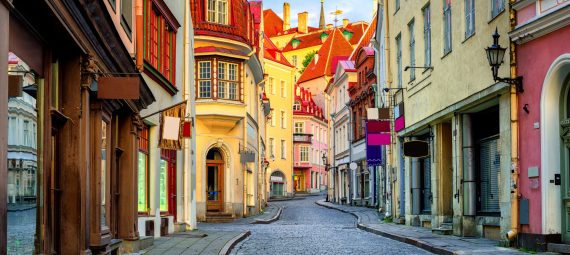
1. Tallinn Old Town
If you decide to visit the capital of Estonia, Tallinn, with an excursion tour, then first of all it is worth taking a leisurely walk along the main attraction of this Baltic city, the Old center of Tallinn. Tallinn received the status of a city back in 1248, when the Danes settled in it. The old Town is high church spires, cobblestone pavements and narrow streets with merchant houses of the 15th century, preserved city walls, old shopping malls and an excellent atmosphere of the Middle Ages in which you can plunge completely without a trace.
2. Toompea Castle
Built on top of a limestone plateau, the medieval Toompea Castle has great historical significance for Estonia, it is believed that its construction laid the foundation for the statehood of Estonia. The first fortress was built on this site in 1050, it was from this fortress that the entire medieval Tallinn began to grow. The stone castle was built in the 12th century by the Danes. Now almost nothing remains of the original Danish castle, but three of the four corner towers are believed to have been built by the Danes, sometime between 1227 and 1229. Each subsequent ruler significantly changed the castle, and the current pink facade in the Baroque style belongs to a large reconstruction of the 18th century of the time of Catherine the Great. Now the Estonian Parliament is located in the castle.
3. Tallinn Town Hall (Town Hall)
Another attraction of Tallinn is one of the oldest buildings in the city – the Old Town Hall. Built between 1402 and 1404, Tallinn’s Gothic Town Hall is the only Gothic Town Hall in Northern Europe. Initially, the building was used as a meeting place for rulers, today it hosts visiting meetings of the President of Estonia. At the top of the spire of the town hall there is a weather vane called Old Thomas, which has been a symbol of the city since 1530.
4. Tallinn City Wall
The fortress wall around the city of Tallinn was first built in 1265 and was about 7 meters high, 2.5 meters thick and almost 2 kilometers long. The walls were expanded and strengthened in the 14th century, when citizens were required to perform guard duty to protect against invasion. Large sections of the city fortress wall have been preserved to this day in excellent condition, also 26 of more than 50 defensive towers have survived to this day. The longest section worth visiting starts from Vyayke-Kloostri Street, along the Laboratory, to the northern end of Lai Street, 9 defensive towers have been preserved on this segment.
5. St. Catherine’s Passage
St. Catherine’s Lane is probably the most atmospheric place in the old town of Tallinn, here you can feel the breath of the Middle Ages every second. Cobblestone pavement and ancient stone walls make an indelible impression. In the alley there are many small souvenir shops where you can buy crafts by local craftsmen, and if you’re lucky, then interesting and unique antiques.