
 Ecology
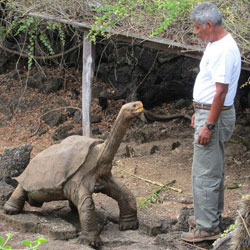
The recent death of the last member of the Galapagos tortoises, Lonely George, has led many experts to think even more seriously about how to save other animals on the edge disappearances.
Cloning is one option, they believe. Lonely George didn't have time to be cloned. The cloning methods developed for reptiles are not as advanced as they are for mammals, and scientists have reported that they face other incredible obstacles.
“Even if we can clone one male tortoise of this subspecies, we'll get another male, maybe even several, but how do we get a female?” — asks Martha Gomez, chief scientist at the Nature Institute in Audubon, which is home to one of the few “frozen zoos”.
Frozen zoos accumulate biological material from a huge number of rare and endangered species. Usually this material is gametes (sperm and oocytes), embryos, skin samples, blood serum, and so on. Plus, they are a repository of irreplaceable genetic information that can be stored for hundreds of years or more. In most cases, these materials are stored in special containers filled with liquid nitrogen.
A team of researchers from the San Diego Zoo was about to travel to the Galapagos Islands to take skin samples from Lonely George and other rare turtles. “We had to act very quickly,” the scientists say. “We were planning to meet in the Galapagos Islands to discuss how to preserve turtles. Ironically, Lonely George passed away before we could even plan it all. This event underscores the importance of preserving these animals.”
Although scientists face some logical hurdles, they don't want to constantly look back and say, “What if…” New decisions on the conservation of species should not be long in coming.
As for the cloning of Lonely George, this issue will be discussed for now. To do this, you should learn more about the physiology of these turtles and its reproduction. A study of George's remains may also help us learn how these animals manage to live so long, perhaps this information will one day teach scientists how to extend human life.
Scientists say that in order to clone an animal, it is necessary to understand its biological breeding system well. For this reason, animals whose reproduction was well known — cats, dogs, mice — were the first to be cloned. Scientists are now trying to clone relatives of these animals that are in danger of extinction so that clones can increase the number of populations in the wild.
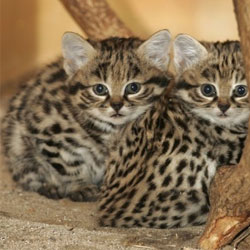 A few months ago, Gomez and her colleagues successfully cloned rare African black-footed cats. Clones also appeared in rare wild bulls — gaurs and bantengs. Research is underway to clone other animals in order to increase their population, such as Sumatran rhinos, which today number 200-300 individuals in the wild.
While one healthy clone may be just an interesting specimen, they still retain the ability to reproduce, so the population will grow. Gomez reported that several kittens from clone parents of the wildcat died due to some problems, but their other siblings were doing fine.
Scientists regret that we are losing many species of animals every year. What is clear is that we should act faster and try to save those who are still alive.