
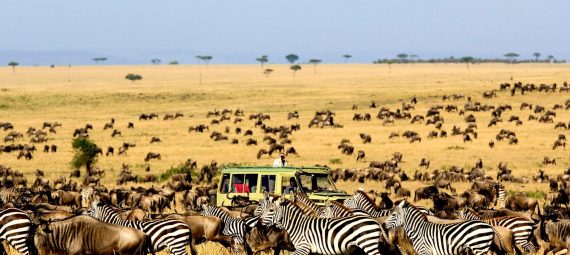
Serengeti Park (from the Maasai “siringet”, “endless plains”) is famous for the richest wildlife: here you can find about five hundred species of birds and three million individuals of large animals. In the north, the park borders the Maasai Mara Nature Reserve, in the southeast – Ngorongoro.
In the summer of 2009, the Serengeti celebrated its fiftieth anniversary. In connection with this date, the management decided to introduce new rules to protect the park from an increase in tourist flow and illiterate development. Recently, in the east of the Serengeti, in the area of the Olduvai Gorge, which is also called the “cradle of humanity”, traces of an ancient man were found. Archaeologists claim that uncontrolled access to the excavation site can seriously damage research. Therefore, this part of the park was closed to tourists for an indefinite period.
How to get
From Arusha to Serengeti is five hours by car or 1.5 hours by plane from Kilimanjaro International Airport.
Weather in Serengeti
The climate of the Serengeti is dry and warm. The rainy season is from March to May, and there are also light rains from October to November. The best time to visit: December — July (wildebeest watching), June — October (predators).
Entertainment and attractions of the Serengeti
The endless plains, savannas, rivers and lakes of the park are inhabited by more than 35 species of animals: three thousand individuals of lions, wildebeest, elephants, rhinos, leopards, buffaloes, crocodiles, hyenas, giraffes, jackals, baboons, big-eared foxes and many others. The reserve is considered one of the best places on the planet to observe the life of lions, cheetahs and giraffes.
The park hosts a hot air balloon safari, a trip to the neighboring Serengeti crater, the Oldo Lengai volcano, as well as watching flamingos on Lake Natron. Among the attractions of the park, it is impossible not to mention the ancient Masai rock paintings and musical rocks
Animal migration
One of the features of the park is the migration of animals. Every year during the dry period of October and November, millions of wildebeest and more than two hundred thousand zebras move from the northern hills to the southern plains, where at this time there are short tropical downpours. With the onset of the rainy season, in April-June, the animals migrate to the west and north. Thousands of tourists come to watch this amazing procession every year.