
 Ecology
You've probably heard more than once that many animals feel an impending earthquake and go to safe places in advance. So far, there has been no scientific explanation for this phenomenon. However, it seems that scientists have understood how animals can anticipate earthquakes. It is assumed that animals receive information about the upcoming earthquake through changes in the chemical composition of groundwater.
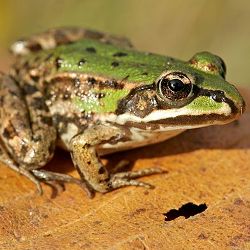
This assumption was made by experts from NASA and The Open University, whose research was published in the International Journal of Environmental Research and Public Health. The thing is that groundwater interacts with elements that appear when rocks are squeezed in the earth's crust. Frogs and other animals that live in water are very sensitive to changes in water chemistry. Feeling the approach of an earthquake, animals leave the dangerous place.
For example, in 2009, a few days before the famous devastating Italian earthquake in L'Aquila, toads disappeared from the local pond a few days before the earthquake. In 1975, a month before the major earthquake in the Chinese city of Haicheng, snakes began leaving their burrows en masse.
Laboratory experiments conducted by NASA specialists have shown that the earth's crust affects the chemical composition of the water in which frogs and other animals live. On the eve of an earthquake, rocks are subjected to tectonic pressure and release charged particles that come into contact with air molecules and convert air molecules into ions. Positively charged air ions cause malaise in humans and an increase in stress hormone in the blood of animals. In addition, ions convert water molecules into hydrogen peroxide, making water toxic to animals living in it.
Scientists recognize that a lot of research is needed to fully study this complex mechanism. Researchers believe that animal behavior can be used in predicting earthquakes.