
 Science
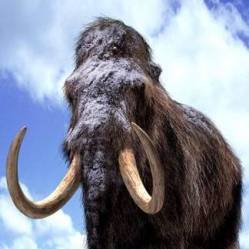
The remains of a mammoth, which were found near the village of Batagay in northern Yakutia, are likely to help scientists clone a prehistoric animal. Scientists were able to find well-preserved elements of mammoth bone marrow.
The remains of a mammoth were found in August 2011, and more recently a group of Russian and Japanese scientists have discovered genetic material that is quite suitable for cloning prehistoric animal. Scientists from the Mammoth Museum in Yakutia and Japan's Kinki University have been studying the possibilities of cloning this creature for two years.
Experts said that bone marrow, as a rule, in ancient organic remains is always damaged due to prolonged exposure to permafrost. Such material cannot be used to produce biologically active substances. The findings in Yakutia are extremely successful from a scientific point of view.
If researchers do manage to obtain the necessary genetic material, mammoth cloning will become a reality. Experts must implant a mammoth bone marrow cell nucleus into the egg of the animal's closest relative, an elephant.
The special technology was developed by scientists from Kobe University in Japan. It has already proven its worth in conducting a series of experiments. For example, in 2008, scientists cloned a mouse that died 16 years ago.