
 Science
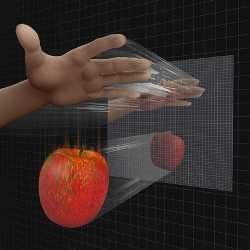
Our universe is a hologram, and everything we see is just a projection, scientists say.
The idea was first formulated by physicist Juan Maldacena in 1997. His theory has not been tested so far, but recent mathematical models support it.
According to Maldacena's theory, gravity in the universe is generated by thin vibrating strings. These strings are holograms of events that take place in a simpler flat space.
Professor Maldacena suggested that the universe consists of nine dimensions of space and one time.
The Holographic Universe
Japanese scientists decided to take up this theory and provide mathematical proof that the holographic principle is correct.
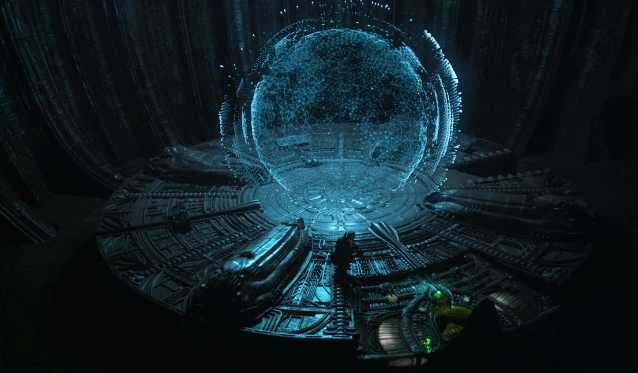
The holographic principle can be explained using the example of a hologram on a credit card, where a two-dimensional surface contains information that is needed to describe a three-dimensional object. But in this case, this is how our universe works.
Read also: 6 incredible scientific theories about our existence
In fact, this principle states that data describing the volume of space, such as a person or a comet, is hidden in a flat “real” version of the universe.
In a black hole, for example, all objects that fall there are trapped in surface oscillations. This means that objects are stored almost as memories or pieces of data, rather than as a physical object that exists.
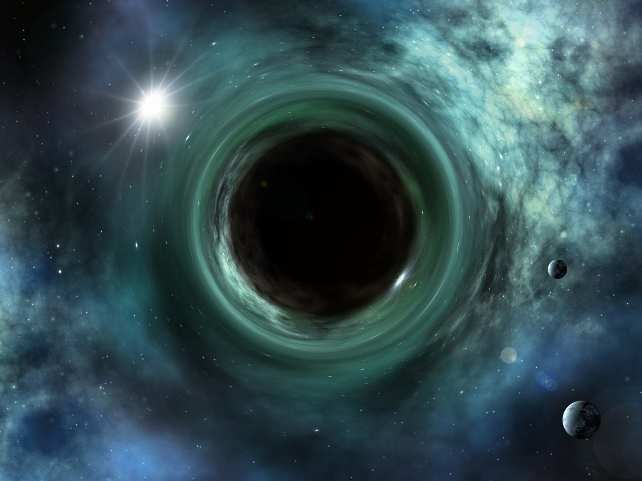
More broadly, the theory states that the entire universe is a 3D projection of a two-dimensional version of the universe.
Scientists led by Yoshifumi Hyakutake from the University of Japan calculated the internal energy of a black hole and energy inside space of smaller dimensions, and these calculations coincided.
Researchers consider this to be strong evidence of the dual nature of the universe.
The end of the universe
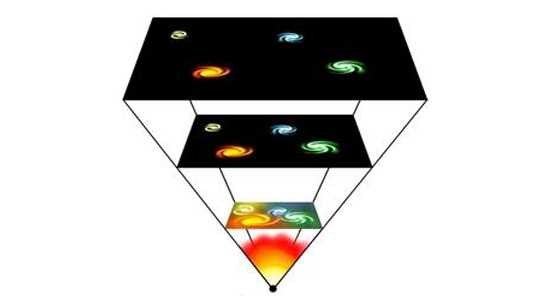
In addition, physicists have recently stated that the universe is likely to end. Scientists have long assumed that one day the universe will collapse, when all particles become so heavy that all matter will shrink into a small, very hot, and very heavy ball.
This process, known as “phase transition,” is similar to how water turns into vapor or a magnet heats up and loses its magnetism. This will happen if the Higgs field associated with the Higgs boson reaches a different value than the rest of the universe.
See also: “God Particle” — the Higgs boson found
This will result in less energy and the bubble will expand at the speed of light in all directions. Eventually, all the particles will become much heavier, and this will pull them together to form a supermassive center.
According to the Big Crunch theory, at some point, the expansion of the universe will stop, and all matter will begin to attract each other and merge into a small region.
Scientists at the University of Southern Denmark believe this could start somewhere in the universe in billions of years, or it may have already begun, but we don't know it.