 Ecology
Basic:
Penguins are one of 40 species of flightless birds, including ostriches, ramies, cassowaries, emus and kiwis. Penguins are neither the biggest nor the smallest in this group, but they are considered by many to be the most adorable.
These birds are known for their gait, their original color with a white abdomen and dark back and wings. The tuxedo was probably invented after peeking on the “outfit” of penguins. This color, according to biologists, helps the penguin escape from the enemy at sea. The penguin's body is ideally built for swimming due to its shape, small fin-like wings and webbed legs.
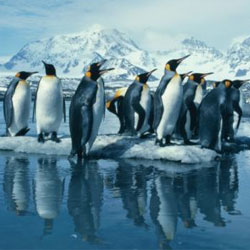
The largest penguin subspecies is the emperor penguin. The average individuals of this subspecies reach a height of about 114 centimeters and weigh 41 kilograms. The smallest subspecies is the little penguin, which is only 25 centimeters high and weighs about 1.1 kilograms.
Penguins feed on marine animals: small sea crustaceans such as krill, squid and various types of fish. Since they don't have teeth, penguins swallow their food whole. Penguins use their pointed beaks and rough tongues to catch prey.
Penguins spend 75 percent of their time in the ocean, but they breed on shore or on ice floes.
Habitat:
Penguins are found in the Southern Hemisphere, Antarctica, New Zealand, southern Australia, and even southern Africa and South America. The only exception is the Galapagos penguins, which are native to the Galapagos Islands, located in the equatorial Pacific Ocean, so penguins periodically appear in In the northern hemisphere, they swim across the equator, but they do not live further north of these islands.
Penguins prefer to live on islands or isolated areas where there is minimal threat from terrestrial predators.
The ideal climate for these birds depends on the species, for example, Galapagos penguins prefer tropical islands, while emperor penguins and Adelie penguins live on ice in Antarctica.
Environmental status: in danger of extinction
Of the 17 penguin species, 13 are either endangered or seriously endangered. Several species are in critical danger.
Penguins, whose numbers are rapidly declining, include the following subspecies:
— A large crested penguin, native to New Zealand. Over the past 20 years, it has lost about 70 percent of the population.
— Galapagos penguin. Since the 1970s, the number of these birds has fallen by 50 per cent.
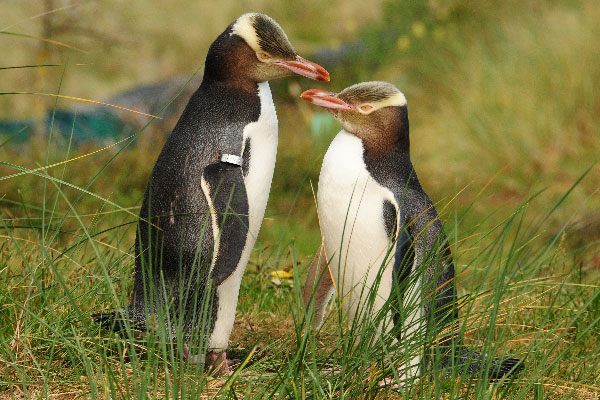
— The magnificent penguin or Hoiho penguin is common on the islands of New Zealand. There are about 4,000 individuals left in the wild. In 2004, he suffered from an epidemic of unknown origin.
— The Rockhopper penguin, which lives on the islands of Tristan da Cunha and Goff in the South Atlantic.
— The spectacled penguin, common in South Africa and Namibia. Due to the collection of eggs, the number of penguins decreased many times over the 20th century.
Many penguin species are suffering from population growth and human intervention in their environment, as well as due to the emergence of predatory mammals such as dogs, cats and ferrets that were brought in by a person in the area where these birds live. Another problem is commercial fishing. Penguins are often caught in fishing nets, suffering from oil draining and algae growth.
Added to this is climate change, which plays an important role in reducing penguin populations everywhere. As temperatures rise, the ice on which penguins nest melts, so they don't have enough space to breed.
Interesting facts:
— The stereotypical roles of parents are seen among emperor penguins. The male incubates the eggs while the female goes in search of food. When a baby hatches from an egg, the father feeds it with “milk” that is produced in its esophagus.
— To keep warm in icy conditions, penguins have a thick layer of fat and their bodies are covered with water-repellent feathers.
— Penguins shed their feathers, which are replaced by new ones, every year during the molting period, which lasts 2-3 weeks. Penguins spend a lot of time looking after their appearance in order to have a beautiful view all year round.
— The Magellan penguin is named after Fernand Magellan, who first discovered it in 1520 and whose name is given to the strait on the southern edge of South America that separates Tierra del Fuego from the mainland. This is where Magellanic penguins live.
— Although most female and male penguins are not very different in appearance, during the mating season, female penguins can be distinguished from males by the dirty spots they leave on their backs male during mating.