
 Health
Watch video, If you're too lazy to read
Watch videos, If you're too lazy to read
Content:
How the keto diet works
History
Types of keto diet
Signs of ketosis
Benefits of the keto diet
Side effects
Keto flu
Who shouldn't follow a ketogenic diet?
Allowed and prohibited foods Weekly
menu
Recommendations for women
Many people cannot lose weight because they cannot withstand strict diets with careful calorie counting and constant hunger. Now, if there was such a diet to lose weight and eat your fill at the same time… We hasten to make you happy! This diet does exist: the keto diet has no portion size restrictions at all, and no calorie counting. And most importantly, it really helps you lose weight!
How the keto diet works
The essence of the ketogenic diet

© SonercDEM/Canva
The keto diet is low carb. It involves an almost complete rejection of carbohydrates in the diet, a moderate intake of protein and an increased intake of fats. And now more details.
Like any diet for weight loss, the ketogenic diet is practiced to get rid of excess body fat. The essence of the keto diet is that a person puts their body into ketosis. Ketosis is a special state of the body that occurs in any person when there is a shortage of carbohydrate foods. In this state, the body, deprived of its usual source of energy, begins to actively break down fats. Ketone bodies are synthesized from fats in the liver, which serve as a source of energy for various organs and tissues. In other words, by depriving your body of carbohydrates, you are encouraging it to break down fats from food and use up its own fat reserves. This diet inevitably leads to weight loss.
When fats are broken down, large amounts of ketone bodies are released into the blood, which are used by the body's cells as an energy source instead of glucose. But what are these bodies, how do they appear and how do they turn into energy? We'll discuss this in more detail in the next section. If you're only interested in the practical aspects of a ketogenic diet and don't want to go into biochemistry, you can skip the next section.
What causes the body to break down fats
© Ugreen/Canva
When a person starts a keto diet, the body is deficient in carbohydrates, which are a source of glucose, from which they get energy. At the same time, the level of the hormone insulin, which is responsible for the utilization of glucose, falls in the blood. At the same time, the level of the glucagon hormone associated with the following processes increases:
1. The overwhelming amount of carbohydrates stored by the human body is stored in the liver in the form of glycogen. The hormone glucagon stimulates the process of glycogenolysis — the conversion of glycogen stored in liver cells into glucose. Thus, this hormone triggers the process of using carbohydrate stores.
2. Glucagon stimulates gluconeogenesis, the process of glucose formation from non-carbohydrate compounds (in particular, from amino acids contained in proteins).
3. Glucagon stimulates lipolysis (the breakdown of fats into fatty acids and glycerol) and ketogenesis (the formation of ketone bodies).
Glycogen stores in the liver are rapidly depleted, and the mechanism of gluconeogenesis (the formation of glucose from non-carbohydrate compounds) is not able to fully provide a person with energy. In such a situation, the body begins to actively and massively break down fats, and they become the main “fuel” for most organs and tissues.
Read also: What is the keto diet and why is it so popular (plus a weekly menu)
How the body converts fats into energy and why ketone bodies are needed
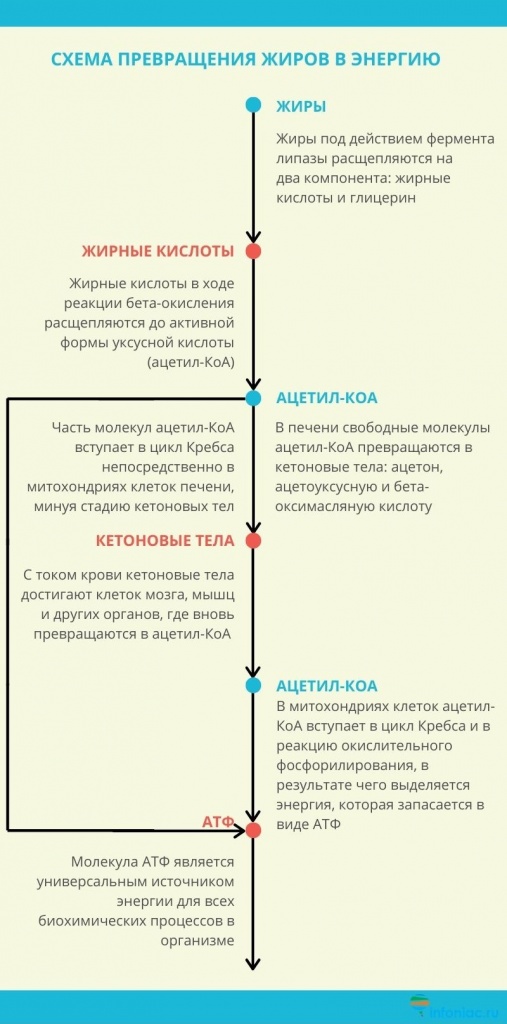
The sequence of conversion of a fat molecule into energy is shown in the following diagram:
Let's consider the algorithm for converting fats into energy in stages:
1. The breakdown of fats.
Under the action of the lipase enzyme, fats are broken down into two components: fatty acids and glycerol.
2. The breakdown of fatty acids. Fatty acids released during the breakdown of fats are broken down during beta-oxidation to the active form of acetic acid (acetyl coenzyme A, or simply acetyl-CoA).
3. The Krebs cycle and energy release. Acetyl-CoA molecules formed during the breakdown of fatty acids in the mitochondria of liver cells undergo a series of successive biochemical transformations, combined under the names “Krebs cycle” and” oxidative phosphorylation”, as a result of which ATP (adenosine triphosphate) is synthesized, a universal source of energy and, one might say, the basis of the life of the human body.
The question is: what do ketone bodies have to do with it? After all, fatty acids can be directly converted into energy.
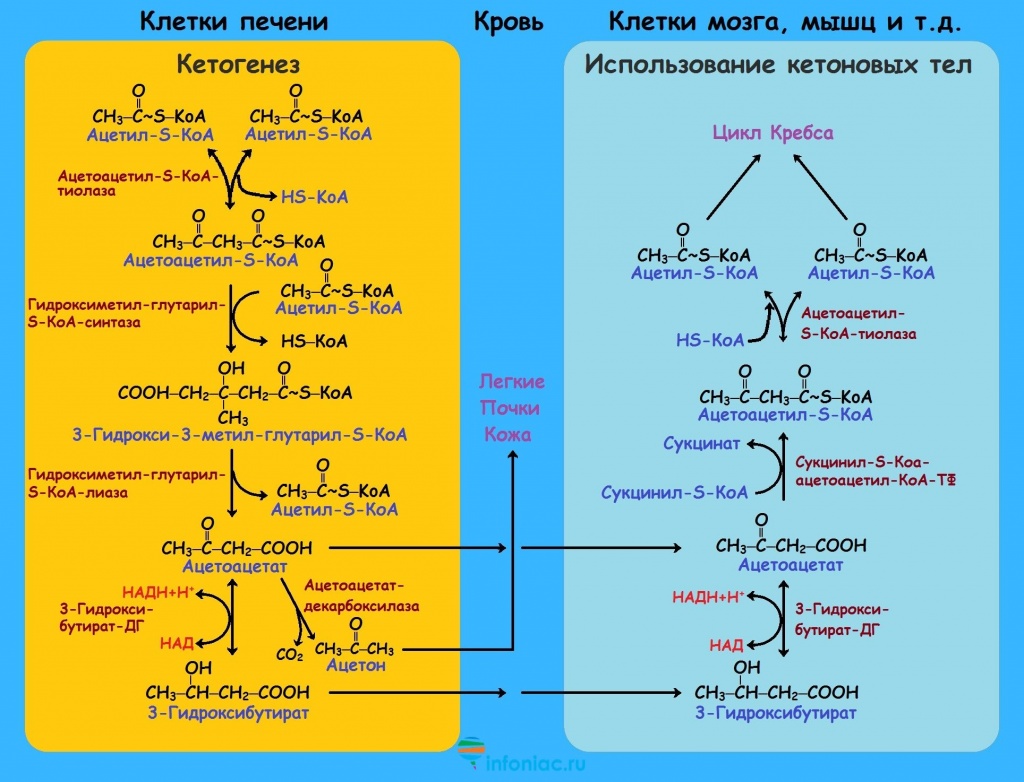
4. Ketogenesis. In order for the acetyl-CoA molecule to enter the Krebs cycle, it must first react with oxaloacetic acid. But the liver has a limited amount of this acid, so excess acetyl-CoA that is not absorbed by the liver is converted into three types of ketone bodies – acetoacetic, beta-hydroxybutyric acid and acetone.
5. Transport and breakdown of ketone bodies. Since the liver is unable to break down ketone bodies on its own, they enter the bloodstream. With blood, ketone bodies reach the cells of organs that can absorb them — muscles, brain and nervous tissue, heart, kidneys, etc. Once in the mitochondria of these cells, ketone bodies break down again to acetyl-CoA molecules, which, in turn, enter the Krebs cycle and are converted into energy.
Thus, ketone bodies are essentially a transport form of acetyl-CoA.
Below is the sequence of chemical conversions of acetyl-CoA to ketone bodies in liver cells, and the subsequent use of ketone bodies in tissue cells:
The history of the keto diet
The ketogenic diet was first used in the 1920s, and not for weight loss — it was successfully used at the Mayo Clinic (USA) to treat children with epilepsy. However, since obesity was not a global problem 100 years ago, the weight loss benefits of diet have only recently been used. Today, the keto diet is at its peak in popularity, especially in the US and Western Europe. At the same time, the ketogenic diet is still used to treat epilepsy.
Read also: 6 habits that help you lose weight in your sleep
Types of keto diet
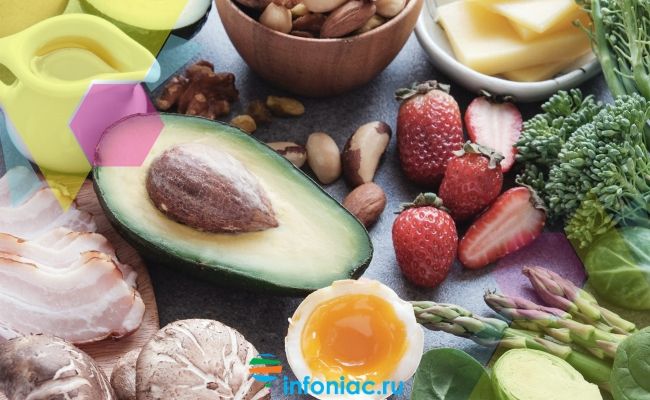
© ThitaReesArmkasat/Canva
Standard ketogenic diet
Since this type of ketogenic diet is most often recommended for weight loss, this is what we will talk about later. The standard keto diet provides the following distribution of macronutrients in the diet:
Fats — 70-75%;
Proteins — 15-20%;
Carbohydrates — 5-10%.
Very low carb keto diet
It differs from the standard ketogenic diet only in that the proportion of carbohydrates in the human diet does not exceed 50 grams per day.
Cyclical ketogenic diet
It involves eating high-carb foods at regular intervals (for example, 6 days of a standard keto diet and 1 day of a high-carb diet.
Targeted keto diet
This type of keto diet is used by athletes. It involves eating high-carb foods before or after exercise. The rest of the time, the standard ketogenic diet is followed.
High protein keto diet
It differs from the standard one by a higher proportion of protein in the diet (at least 35%). It is practiced by people who have difficulty getting rid of excess body fat.
Signs of ketosis

© SIPhotography/ Canva
The ketogenic diet will only begin to bear fruit when you reach ketosis. This condition can be determined by the following characteristics:
Acetone odor from the mouth;
Rapid weight loss in the first week (due to fluid loss);
Keto flu (read more about it in the Keto flu section);
Energy;
Decrease appetite.
The most accurate method for determining ketosis is to test blood, urine, or exhaled air for the level of ketone bodies. Such tests can be carried out independently using special testers.
The advantages of the keto diet

© jpfotograaf/Canva
Guaranteed weight loss. The popular belief that fatty foods lead to obesity is not true. The truth is that carbohydrates are the main culprits for excess weight, and low-carb high-fat diets are the most effective for weight loss.
The feeling of satiety lasts longer. Keelen Bogden, a certified American nutritionist and expert in functional medicine, states that ketosis achieved on a keto diet is characterized by a longer feeling satiety. In addition, a person on a ketogenic diet needs much less food to be fully satiated. This is because fats, which are the main macronutrients on a keto diet, have a high energy value. You will find a link to the publication at the end of the article in the “Sources of Information” section.
Improving brain function. People who practice the ketogenic diet report increased mental clarity, concentration, and improved cognitive abilities.
In addition, the ketogenic diet has a beneficial effect on people with nervous system diseases, including:
Alzheimer's
disease; Charcot's disease;
autistic disorder; CNS
cancer; brain and spinal cord
injuries; Parkinson's
disease;
headaches ;
insomnia.
Improved energy tone and sleep. Most people report an increase in energy and an improvement in sleep quality after a week of following a ketogenic diet. This is due to the fact that fats, compared to carbohydrates, provide more energy to brain cells.
The indicators in patients with diabetes mellitus are improving. When following a keto diet, insulin and blood sugar levels stabilize, which has a beneficial effect on the health of people with diabetes mellitus.
Prevention of heart diseases. Stabilizing blood sugar levels improves blood pressure and blood triglyceride levels. In addition, following a ketogenic diet improves cholesterol levels.
Keto diet and epilepsy. Today, the keto diet is used in patients with epilepsy who are insensitive to anticonvulsants. As practice shows, the ketogenic diet really helps with epilepsy — patients have a marked decrease in the frequency of seizures. The exact biomechanism of preventing seizures is not yet fully understood, but scientists suggest that a ketogenic diet stabilizes nerve cell function and activates mitochondrial brain enzymes brain. You will find a link to the publication in the “Sources of Information” section.
Read also: 6 types of intermittent fasting to lose weight fast. Choose yours
Side effects of the keto diet
© Image Team/ Canva
The ketogenic diet has a number of side effects. Moreover, some of them are inevitable, while others occur when the diet is not properly prepared. Anyone who is going to stick to a keto diet in the long run should know about them:
Constipation is the result of avoiding carbohydrate-containing foods rich in fiber (legumes, grains, fruits). To prevent constipation on a keto diet, you should enrich your diet with low-carb sources of fiber (for example, avocados, flaxseeds, almonds, chia seeds, etc.).
Vitamin deficiency on a keto diet may occur due to dietary restrictions on fruits, vegetables, and other foods. To prevent this, it is necessary to think through a nutrition plan in advance. For example, try the meal plan presented in this article in the Weekly Menu section.
Loss of muscle mass.
Edwina Clark, a nutrition expert (San Francisco, USA), states that muscle loss on a keto diet is inevitable, even when a person is exercising. This is because protein in the absence of carbohydrates is less effective for muscle growth. You will find a link to the publication at the end of the article.
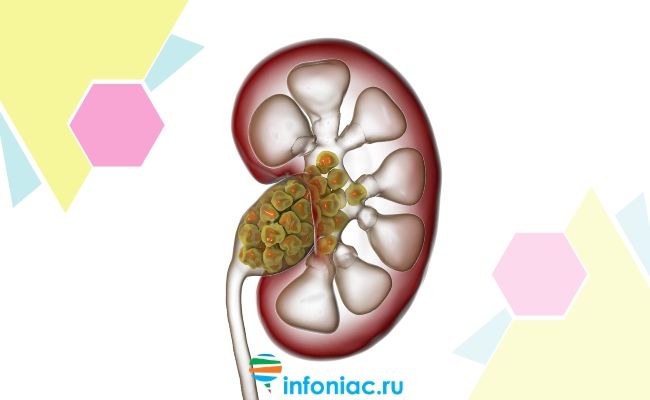
Kidney stones and gout. The increased intake of animal proteins that inevitably occurs on a keto diet increases calcium and uric acid levels in the urine, as well as increases its acidity. Over time, this leads to kidney stones and gout.
It's important! The longer you stick to the keto diet, the more likely you are to develop side effects. To prevent them, it is recommended to visit a doctor regularly and undergo examinations.
As you can see from the list of side effects, the ketogenic diet is far from safe and should not be taken lightly. In addition, many nutritionists and nutrition experts consider it unhealthy and recommend choosing safer methods to lose weight.
Keto flu

© fizkes/Canva
Among the side effects of the ketogenic diet, the keto flu should be mentioned separately. During the first week of the ketogenic diet, some people develop flu-like symptoms:
fatigue, weakness;
blurred consciousness;
dizziness;
nausea, vomiting;
diarrhea.
To this is added an unusually strong desire to eat sweets.
The keto flu is due to the fact that the body cannot instantly adapt to energy from fats. After a week (rarely 2-3 weeks) of the ketogenic diet, these symptoms go away.
To reduce the unpleasant symptoms of keto flu, follow these guidelines:
Drink plenty of fluids.
Avoid heavy exercise.
Sleep at least 7 hours a night.
Eat foods rich in micronutrients.
Enrich your diet with fats.
Who shouldn't follow a ketogenic diet?

© Pexels/Canva
The keto diet is contraindicated in the following cases:
Pregnancy, lactation;
Childhood and adolescence;
Diabetes mellitus; Liver, kidney and pancreas
diseases;
Metabolic diseases.
In certain situations, a ketogenic diet is possible even if there are contraindications, but only as directed and under the supervision of a physician.
Read also: Why do we regain weight after losing weight?
Allowed and Prohibited Foods on a Keto Diet
© vaaseena/ Canva
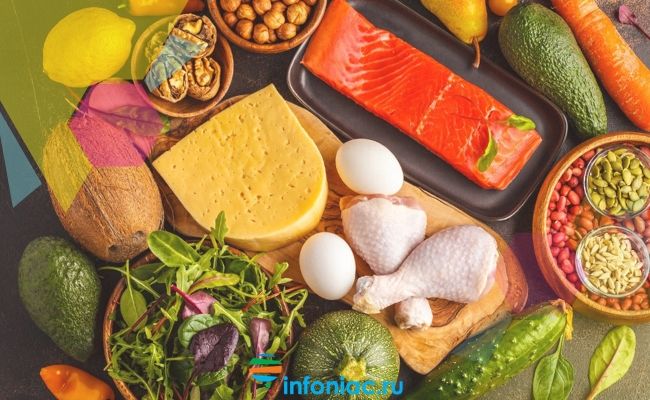
The keto diet is based on low-carb foods that are rich in fat. Here's a chart to help you find the right foods for your keto diet:
Low-carb foods
Carbohydrate-rich foods
Meats
Semi-finished products with carbohydrate additives
Fish (salmon, carp, herring, eel, etc.)
Squid, oysters
Low-carb vegetables: cabbage (garden cabbage, cauliflower, broccoli, Beijing), zucchini, cucumbers, tomatoes, asparagus, celery, green beans, bell peppers, spinach, radishes
High-carb vegetables (potatoes, artichoke, beets, rutabaga), cereals (wheat, rye, barley, oats, rice), buckwheat, legumes (peas, beans, etc.)
Dairy products (natural butter, cheeses, dairy products)
milk
Walnut, hazel, macadamia, pecan, peanuts
Cashews, pistachios
Berries (raspberries, blackberries, strawberries, blueberries)
Cherries, cherries, grapes, raisins
Avocado, coconut, lemon, melon, watermelon
Banana, pomegranate, pear, fig, prune, nectarine
Clean water, coffee, tea, meat broths
Sweet juices and compotes
Dark dark chocolate
High-sugar milk chocolate
Stevia, erythritol
Sugar, confectionery, muffins, sweets
Mushrooms
Fast food
Chicken eggs
Olive oil
High-carb foods can also be eaten on a keto diet, but should be kept to a minimum to achieve ketosis.
Weekly menu
To prepare meals that are appropriate for the ketogenic diet, you will have to use specific ingredients. For example, MCT oil (medium chain triglyceride is the medium chain triglyceride oil that is most energetically valuable for a person in ketosis) or liquid stevia (sweetener, not containing carbohydrates). If you're planning to stick to a ketogenic diet for a long time, we recommend that you stock up on these ingredients — they're often used in keto cooking.
Warning! Since the keto recipes below are written by American nutritionists, you will need a 0.25 liter cup to properly dose the ingredients. Also prepare kitchen scales.
Monday
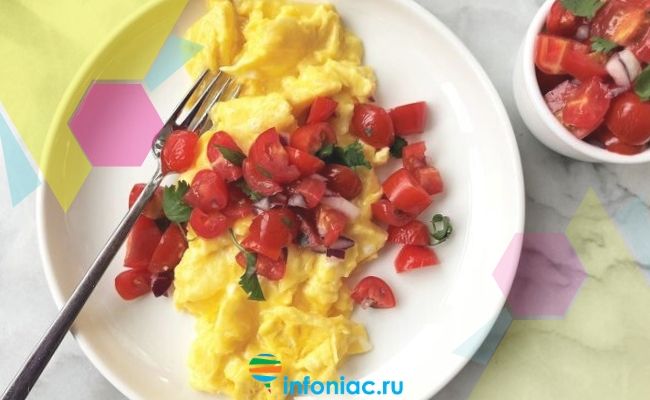
Breakfast: Scrambled eggs (4 servings)
© LiveStrong
Ingredients:
Tomato and green onion salad — 1 1/3 cups Vegetable
oil — 1 tbsp
Eggs — 5-6 pieces
Salt — 1/8 tsp Grated
Cheddar — 120 g
Instructions:
1. Heat the oil in a skillet. Add the eggs and bring them to a point where they set but are still soft.
2. Remove the pan from the heat and sprinkle the scrambled eggs with cheese.
3. Serve with a salad. You can add a slice of avocado or sausage to the dish.
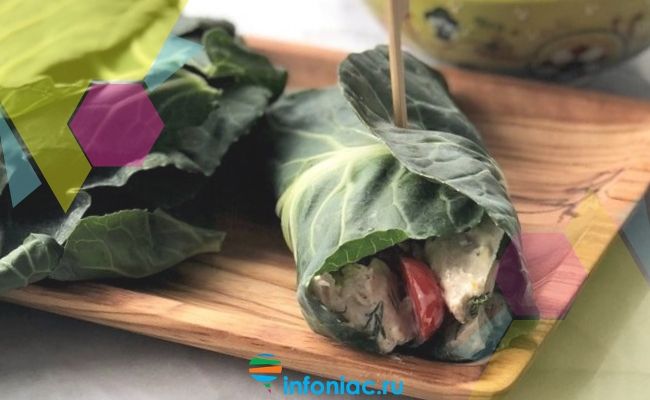
Lunch: Tuna cabbage rolls (4 servings)
© LiveStrong
Ingredients:
Greek yogurt — ¼ cup
Mayonnaise — ¼ cup
Mustard — 1 tbsp
Lemon peel — 2 tsp
Sea salt — ¼ tsp Ground
black pepper — ½ tsp Crushed fennel
root — 2/3 cups Cherry
tomato — 2/3 cups
Yalta onion — half an onion
Tarragon — 2 tbsp
Canned tuna — 300 g Crushed
almonds — 1/3 cup Cabbage
leaves — 1 kg.
Instructions:
1. In a large container, combine yoghurt, mayonnaise, mustard, zest, salt, and pepper.
2. Add tuna, onion, tomatoes, fennel and tarragon, and mix.
3. Add the almonds.
4. Wrap half a cup of lettuce in each cabbage leaf.
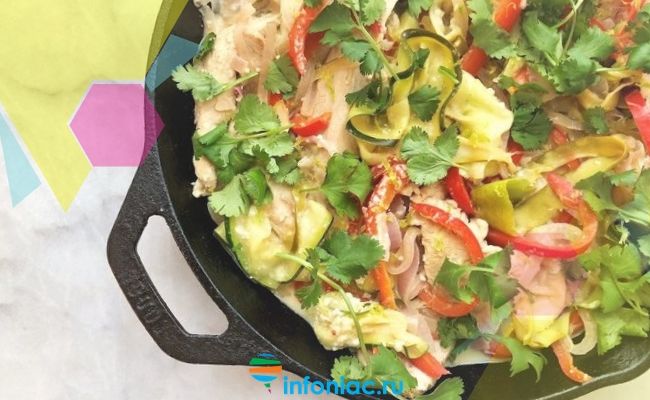
Dinner: Chicken in cream sauce (3 servings)
© LiveStrong
Ingredients:
Lime — 1 piece
Zucchini — 1 piece
Chicken breast — 400 g Avocado
oil — 1 tbsp
Red onion — 1 piece
Whipped cream — ¼ cup
Sea salt — ¾ tsp Grated
Parmesan — ¼ cup
Cilantro — ¼ cup
Bulgarian pepper — 1 piece Sliced
Jalapeno — 1 tbsp
Instructions:
1. Remove the peel from the lime, squeeze 2 tablespoons of juice from the pulp.
2. Cut the zucchini into long strips like noodles.
3. Cut the breast into 12 to 15 long strips.
4. Heat the oil in a pan. Add the breast, onion and jalapeno and sauté for 8 minutes.
5. Add the bell pepper, fry for about a minute.
6. Add the zucchini and lime juice and simmer for another 4 minutes.
7. Add cream and salt and simmer for another minute.
8. Remove from heat, let the dish walk for 5 minutes.
9. Sprinkle with cheese, cilantro, and lime zest.
Tuesday
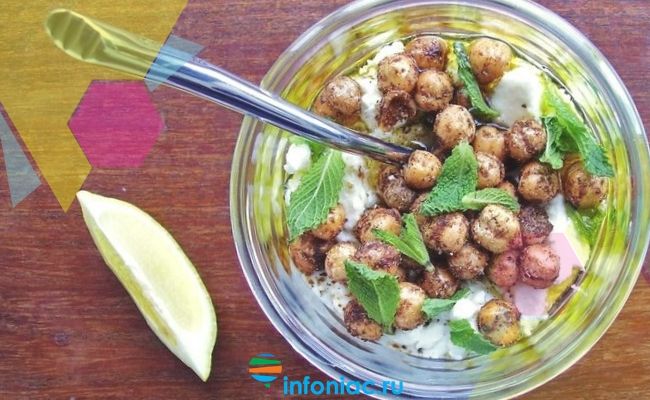
Breakfast: Spicy yoghurt (2 servings)
© LiveStrong
Ingredients:
Greek yogurt — 2 cups
Olive oil — 2 tbsp
Sea salt — ¼ tsp Ground
black pepper — ¼ tsp Crushed feta
cheese — ¼ cup Roasted
pine nuts — 30 g Fresh
mint — to taste
Lemons — 2 pieces, cut into slices.
Instructions:
1. Pour the yoghurt into two small containers.
2. Top with oil, sprinkle with salt, pepper, cheese and nuts.
3. Garnish with mint. Serve with lemon.
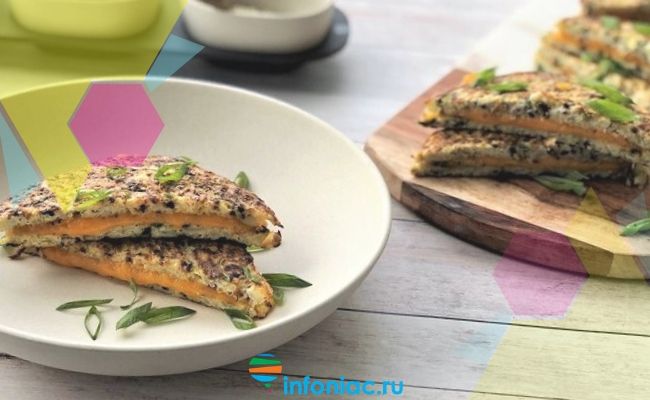
Lunch: Cauliflower sandwiches (4 servings)
© LiveStrong
Ingredients:
Cauliflower inflorescences — 0.5 kg
Olive oil — 1.5 tbsp
Hemp kernels — ¼ cup
Chia seeds — 1.5 tbsp
Sesame — 1.5 tbsp
Green onions — 2 pieces
Salt — 1 tsp
Eggs — 2 pieces Grated
cheese — 150 g
Garlic — 1 clove.
Instructions:
1. Place the cabbage in a saucepan with water, bring to a boil and cook for 12 minutes. Drain the water.
2. Heat the oven to 250°C and cover 2 baking sheets with parchment paper.
3. In a large container, combine cabbage, oil, hemp kernels, chia, sesame, onion, garlic, and salt. Stir and set aside for 15 minutes. Then add the eggs.
4. Place on baking sheets, forming 1/3 cup of the mixture into a 10 cm diameter cake (8 pieces in total).
5. Bake the tortillas for 15 minutes, then turn them over and bake for another 8 minutes. Sprinkle the cheese over the tortillas and bake for 2 more minutes.
6. Make sandwiches by combining 2 tortillas each with the cheese sides. Cut each one diagonally. Done!
Dinner: Grilled curry thighs (2 servings)
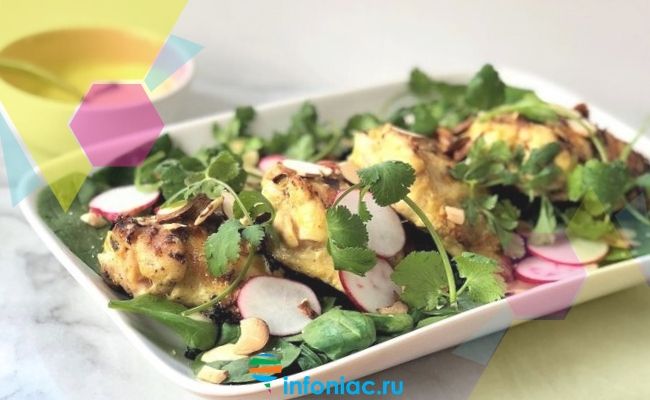
© LiveStrong
Ingredients:
Coconut milk — ½ cup
Ginger — ¾ tbsp
Curry — ¾ tsp
Salt — ½ tsp Skinless and boneless
chicken thighs — 450 g
Spinach — 150 g
Radish — 2 pieces
Almonds — 2 tbsp
Cilantro — 2 tbsp
Instructions:
1. Sauce: Combine milk, ground ginger, curry and salt in a bowl. Pour half into a plate.
2. Put the chicken in a bowl, cover it with sauce.
3. Roast the chicken in a grill pan for about 8 min. on each side.
4. Put the spinach in another pan, fry on medium heat for 2 minutes.
5. Place the spinach on the dish, place the chicken on top. Sprinkle with radish slices, almonds and cilantro. Serve with a sauce.
Wednesday
Breakfast: Blueberry muffins (9 servings)
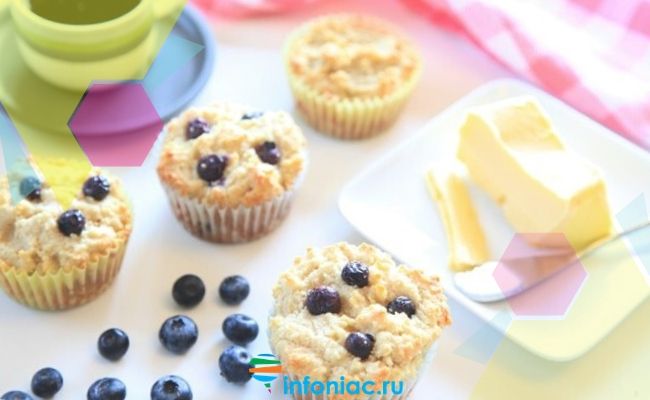
© LiveStrong
Ingredients:
Almond flour — 2.5 cups
Baking powder — ¼ tsp
Salt — ½ tsp
Butter — 4 tbsp
Heavy cream — 170 g
Imitation almond extract — ¼ tsp
Liquid stevia — 4 drops
Soda — 1 tsp
Egg — 1 piece
Blueberries — half a cup
Instructions:
1. Preheat the oven to 190°C and prepare a 9-cell muffin tin.
2. Combine flour, baking powder, and salt in one bowl.
3. In another bowl, mix butter, cream, egg, almond extract, stevia, and baking soda until smooth.
4. Mix the contents of the bowls.
5. Fill the muffin cells with dough.
6. Bake the muffins for about 16 minutes. Then cool them for 10 minutes without removing them from the mold. Keep it in the fridge.
Lunch: Chicken enchiladas (4 servings)
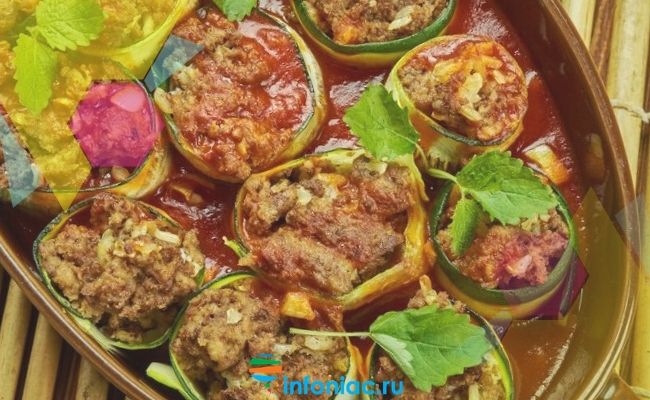
© LiveStrong
Ingredients:
Olive oil — 5 tbsp
Flour — 2 tbsp
Chopped chili pepper – 1 tbsp
Tomato sauce — 220 g
Water — 400 ml Ground
cumin — ½ tsp Garlic
powder — 1 tsp Onion
powder — ½ tsp
Salt — ½ tsp
Zucchini — 4 pieces
Chicken breast — 2 pieces
Ground black pepper — ½ tsp Grated
cheese — ½ cup
Cilantro — ¼ cup
Coconut oil.
Instructions:
1. In a large skillet over medium heat, heat 60 ml of olive oil, add flour and chili. Bring to brown while stirring.
2. Add tomato sauce, water, cumin, ½ tsp garlic powder, onion powder, ¼ tsp salt. Bring the sauce to the boil and cook for 5-7 minutes, stirring constantly.
3. Cut the chicken into small pieces, roll in the remaining garlic powder, salt and pepper.
4. Heat the pan, pour 1 tbsp of olive oil into it and add the chicken.
5. Roast the chicken for 6-8 minutes while stirring.
6. Brush a baking dish with a little coconut oil. Heat the oven to 180°C.
7. Cut the zucchini into wide thin strips with a vegetable slicer. Place 3 slices in a row so that they overlap, place a spoonful of chicken on top. Roll into a roll and put it in a dish. Repeat with the remaining chicken and zucchini.
8. Pour 1 tbsp of sauce into each roll, sprinkle with cheese.
9. Bake in the oven for 14 minutes. Remove from oven and garnish with cilantro.
Dinner: Cauliflower rice (3 servings)
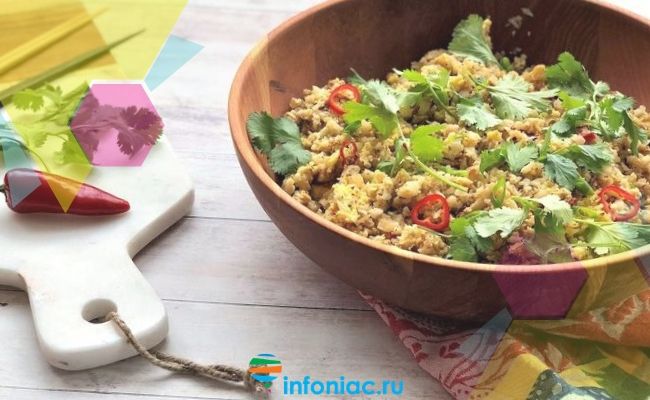
© LiveStrong
Ingredients:
1 medium-sized cauliflower head Avocado
oil — 2 tbsp
Green onions — 3 pieces Minced ginger
root — 1.5 tsp Tamari
sauce — 1.5 tbsp
Sesame oil — 2 tsp
Eggs — 220 g
Half chili pepper
Cilantro — ¼ cup
Instructions:
1. Crush the cabbage in a combine to the consistency of rice.
2. Heat the avocado oil in a deep pan. Add cabbage, green onion, ginger and sauté for 6 minutes. Add tamari and sesame oil and sauté for 1 more minute.
3. Press the contents of the pan against its walls, place the shaken eggs in the center, cook for 2 minutes. Then mix the eggs with the cauliflower mixture. Remove from heat, add chilli, salt and cilantro, stir. Serve.
Thursday
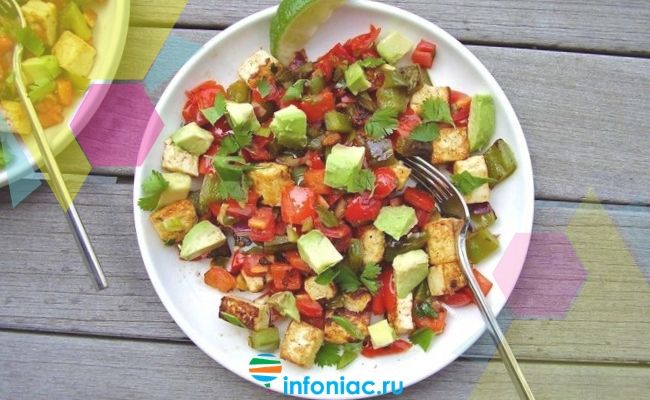
Breakfast: Tex Mex (2 servings)
© LiveStrong
Ingredients:
Tofu — 200 g
Grape oil — 1.5 tbsp
Red bell pepper — 1 piece Green
bell pepper — 1 piece
Green onion — 3 pieces Ground
cumin — ½ tsp
Salt — ½ tsp Pico de Gallo
sauce — 2/3 cups Hass
avocado — half of the
Cilantro fruit – 1 tbsp
Instructions:
1. Cut the tofu into cubes.
2. Heat the oil in a pan. Add tofu, bell pepper, white onion, cumin, and ¼ tsp salt and stir-fry for approx. 8 minutes.
3. Add the sauce and the green part of the onion, cook for another 1 minute.
4. Transfer to plates, sprinkle with crushed avocado, remaining salt and cilantro.
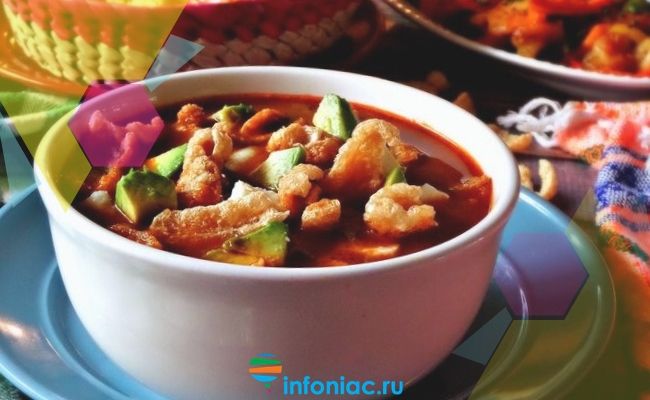
Lunch: Savory keto soup (4 servings)
© LiveStrong
Ingredients:
Diced tomatoes — 1 cup
Chili ancho dried — 3 pieces Guajillo
chili — 3 pieces
Water — 3 cups
Garlic — 3 cloves Chicken
broth — 2 cups
Chicken breasts without skin and bones — 2 pieces
Cilantro — ¼ cup Queso Fresco
cheese — 120 g Crushed
avocado — 1 cup
Pork skins — 30 g
Lime — 4 slices.
Instructions:
1. Put water in a saucepan, add tomatoes, ancho and guajillo, bring to a boil and cook on low heat for 5 minutes. Take it off the fire.
2. Pour the contents of the pan into the blender, add the garlic, whisk until smooth.
3. Pour the mixture into a roasting pan, add the broth and finely chopped chicken meat.
4. Bring to a boil, cover and cook on low heat for 13-15 minutes.
5. Remove from heat, pour the soup into plates. You can add cheese, avocado, pork and lime juice.
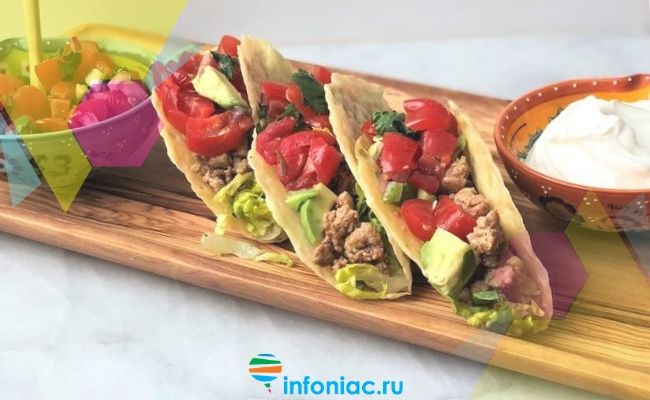
Dinner: Turkey tacos (2 servings)
© LiveStrong
Ingredients:
Salsa sauce — 1/2 cup Grated
cheese — 170 g Avocado
oil — 1.5 tsp Turkey
minced meat — 230 g Chili
powder — ½ tsp Lime
peel — ¼ tsp
Salt — ¼ tsp
Lettuce romaine — ½ cup
Half avocado fruit
Sour cream — 2 tbsp
Instructions:
1. Preheat the oven to 180°C and cover a large baking sheet with parchment paper.
2. Strain the salsa sauce through a mesh colander.
3. Put three slices of cheese on a baking sheet, and compress them so that you get three cakes with a diameter of 9-10 cm each. Place the pan in the oven and bake for 12 minutes, then remove the pan. Cool for 3 minutes.
4. Use a spatula to take each tortilla and wrap it around a thin rolling pin to form a taco body. Cool for another 5 minutes.
5. Heat the avocado oil in a pan. Spread the minced meat, chili powder, lime zest and salt on it. Simmer for 5 minutes while stirring, then put the filling in a bowl.
6. Fill each tortilla with lettuce, toppings and salsa sauce. Serve with sour cream.
Friday
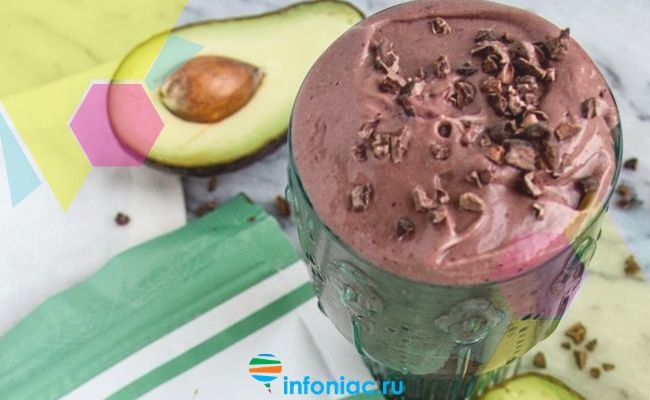
Breakfast: Chocolate smoothie (2 servings)
© LiveStrong
Ingredients:
Coconut milk — 1 cup
Half of the avocado fruit without skin and seed
Cocoa — 2 tbsp
MCT oil — 1 tbsp
Cherries — ¼ cup (can be replaced with raspberries) Himalayan
salt — ¼ tsp
4 ice cubes
Crushed cocoa beans — 1 tbsp
Instructions:
1. Put all ingredients in a blender.
2. Whisk until smooth.
3. Pour into a glass or cup.
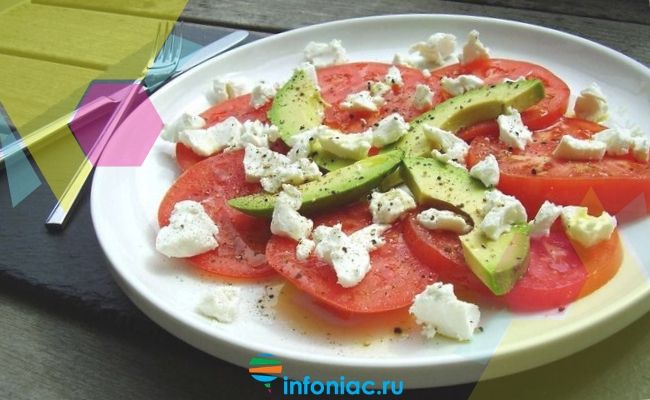
Lunch: Tomato, Avocado, and Goat Cheese Plate (2 servings)
© LiveStrong
Ingredients:
3 large tomatoes, sliced; Hass
avocado — a third of the fruit Crushed
goat cheese — 85 g
White balsamic vinegar — 2 tsp
Olive oil — 2 tsp
Marine oil salt — ¼ tsp Ground
black pepper — ¼ tsp
Instructions:
1. Arrange tomato and avocado slices on two plates, sprinkle with goat cheese.
2. Sprinkle with vinegar, olive oil and sprinkle with salt and pepper. Serve.
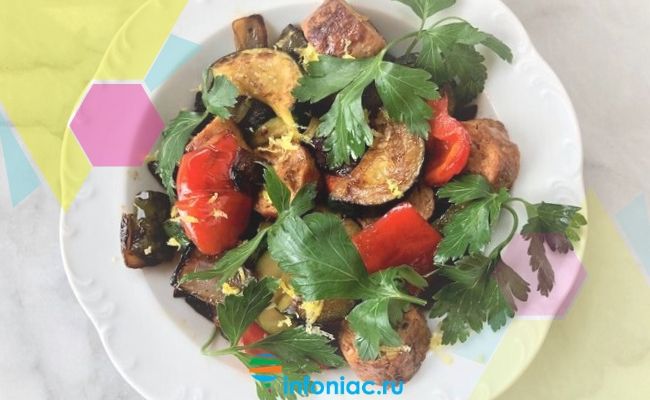
Dinner: Chicken sausage with zucchini (4 servings)
© LiveStrong
Ingredients:
Zucchini — 2 pieces
Chicken sausages — 4 pieces Avocado
oil — 2 tbsp
Red bell pepper — 1 piece
Green bell pepper — 1 piece
Red onion, diced — 1 piece
Salt — ¼
tsp Lemon peel — 1
tsp Parsley — ¼ cup
Instructions:
1. Cut each zucchini in half, then across into 1-1.5 cm thick pieces. Cut the sausage into 1-1.5 cm thick slices.
2. In a skillet, heat the oil over medium heat. Add zucchini, bell pepper, and onion. Roast for 10 minutes while stirring. Sprinkle with salt.
3. Add the sausage and cook, stirring, for another 5 minutes.
4. Sprinkle with lemon zest and parsley. You can serve a dish with scrambled eggs.
Saturday
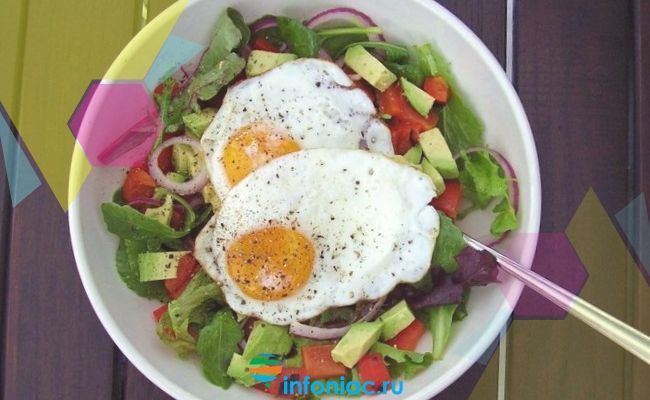
Breakfast: Mesclan salad with scrambled eggs (1 serving)
© LiveStrong
Ingredients:
Eggs — 2 pieces Lemon
juice — 1 tbsp
Olive oil — 1.5 tsp Mesklan
salad — 1.5 cups Roasted
bell pepper — 1 piece Crushed
red onion — ¼ cup
Avocado — 1/3 fruit
Salt — ¼ tsp
Black pepper ground – 1 pinch.
Instructions:
1. Heat a small amount of vegetable oil in a pan. Crack the eggs and fry for 4 minutes.
2. At this time, mix lemon juice and olive oil in a bowl. Add Mesclan lettuce, bell pepper, onion, avocado and 1/8 tsp. salt, mix.
3. Place scrambled eggs on top of the salad. Sprinkle with pepper and remaining salt.
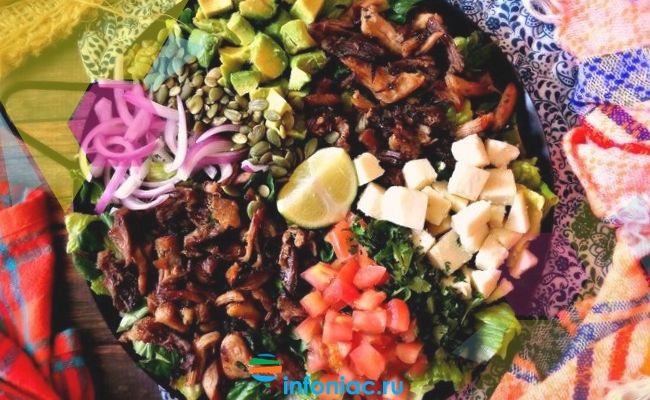
Lunch: Carnitas salad (4 servings)
© LiveStrong
Ingredients:
Baked bacon — 2 tbsp
Minced pork — 1 cup 1 lime
juice
Cilantro — ½ cup
Spinach — 3 cups Romaine
lettuce — 1 cup Diced
tomatoes — ½ cup Queso Fresco
cheese — 30 g
Red onion, diced — ¼ onion
Pumpkin seeds — 15 g.
Instructions:
1. Melt the bacon in a pan. Add the pork and sauté until the meat is browned.
2. Squeeze lime juice into the pan, add ¼ cup cilantro. Fry for 5 minutes while stirring. Take it off the fire.
3. Place romaine lettuce and spinach on the dish. Top with pork, then tomatoes, avocados (if desired), cheese, onion, pumpkin seeds, and the rest of the cilantro. Serve.
Dinner: Grilled Italian eggplant salad (4 servings)
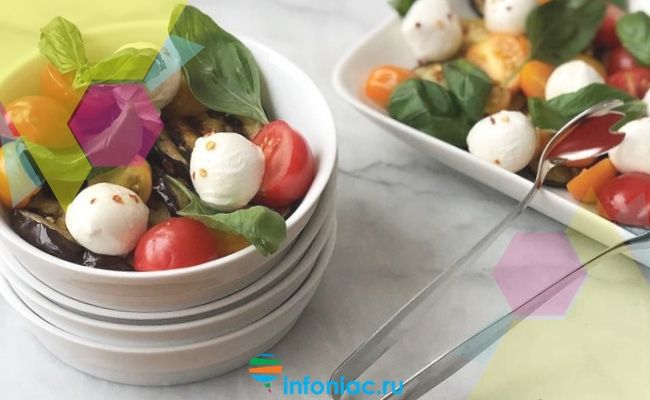
© LiveStrong
Ingredients:
Eggplant — 320 g
Olive oil — 3.5 tbsp
White balsamic vinegar Cherry
tomatoes — 230 g Mozzarella
cheese — 230 g
Dry ground red pepper — 1/8 tsp
Basil
Salt — ½ tsp
Instructions:
1. Prepare the grill.
2. Cut the aubergines into slices no more than 1 cm thick. Lubricate them with olive oil (2 tablespoons), sprinkle with ¼ tsp of salt.
3. Grill the aubergines for 5-6 minutes on each side. Put it on a dish.
4. In a small bowl, combine the vinegar and the rest of the oil.
5. Cover the aubergines with halved cherry tomatoes and Mozzarella cheese.
6. Pour the vinegar dressing over it. Sprinkle with the remaining salt and red pepper and basil.
Sunday
Breakfast: Bacon and Tomato Frittatas (4 servings)
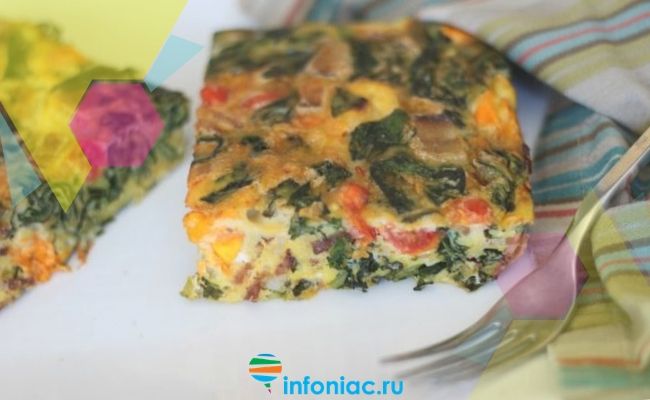
© LiveStrong
Ingredients:
Large eggs — 10 pieces
Salt — ¼ tsp
Basil — 8 tbsp
Sun-dried tomatoes — 4 pieces
Bacon — 2 pieces Avocado
oil — 1 tbsp
Aioli sauce with roasted garlic — 1 tbsp
Instructions:
1. Preheat oven to 150°C.
2. Whisk eggs seasoned with salt.
3. Heat avocado oil in a pan over medium heat.
4. Add tomatoes and bacon, sauté for 2 minutes.
5. Add the eggs and basil and sauté for a few more minutes until the eggs set. Then move the pan to the oven.
6. Bake for 25-35 minutes.
7. Remove the pan from the oven. After 5 minutes, cut into portions and serve with Aioli sauce.
Lunch: Spicy prawn fajitas (2 servings)
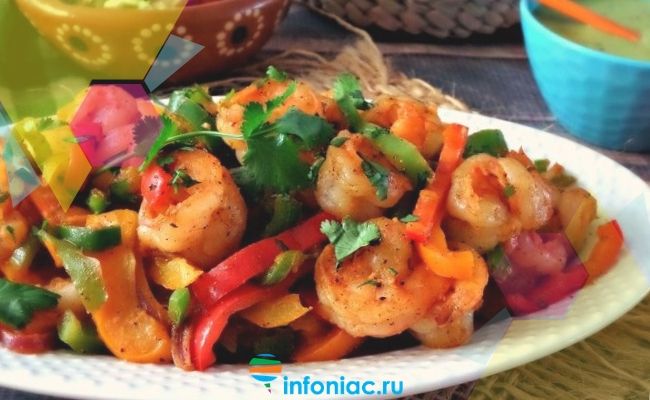
© LiveStrong
Ingredients:
Peeled shrimps — 120 g
Garlic — 1 clove Ground chili
pepper — ¼ tsp Ground
cumin — ¼ tsp
Oregano
leaves Olive oil — 2 tbsp
Green bell pepper — 1 piece Red
bell pepper — 1 piece Yellow
bell pepper — 30 g Crushed California chili
pepper — ½ cup
White onion, diced — ¾ cups Lemon
juice — 30 g
Cilantro — 30 g
Instructions:
1. Combine prawns, garlic, ground chilli, cumin, and oregano in a large bowl, stir gently. Add salt and pepper to taste.
2. Cover the bowl with cling film and refrigerate for half an hour.
3. Heat olive oil in a grill pan. Place the prawns and fry for 5 minutes.
4. Add onion, bell pepper, California chili, and lemon juice. Fry for another 3-5 minutes.
5. Remove from heat, season with cilantro. Serve with cheese tortillas (you will find instructions for making them above, in the Turkey Tacos recipe).
Dinner: Roasted broccoli with Tahini sauce (3 servings)
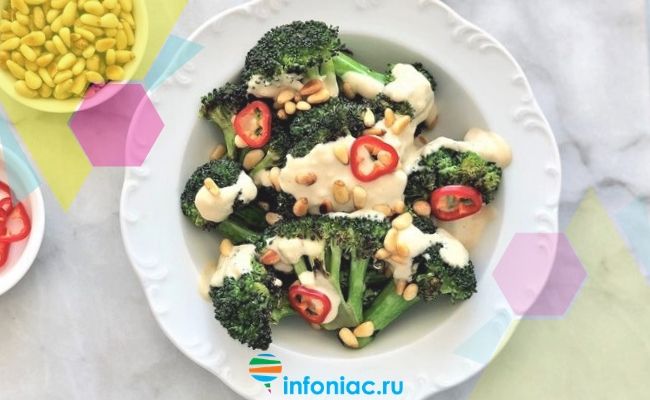
© LiveStrong
Ingredients:
Tahini paste — 1.5 tbsp
Lemon juice — 1.5 tbsp
Matcha green tea — 2.5 tbsp
Olive oil — 1.5 tbsp
Garlic — 1 clove
Salt — ¼ tsp Ground
cumin — 1 pinch Broccoli
inflorescences — 6 cups Roasted
pine nuts — 2 tbsp
Instructions:
1. Prepare the dressing in a small bowl: mix tahini, lemon juice, 1.5 tsp tea, 1.5 tsp olive oil, garlic, 1/8 tsp salt and cumin.
2. Place the pan on medium heat, pour the rest of the tea on it, add butter, chopped broccoli and the rest of the salt. When you hear a hiss, cover and steam for 3 minutes. Then remove the lid and cook for 3 more minutes.
3. Arrange the dish on plates, add the dressing and sprinkle with pine nuts.
Keto bread: pastry recipe

© Emma Shevtzoff/DietDoctor
Perhaps you can't imagine a hearty lunch or dinner without a fragrant crunchy piece of bread. Or you don't want to give up your favorite breakfast: a fresh bread with butter and a cup of invigorating coffee. And ordinary wheat or rye bread is now banned — so what to do? There's a solution — you can bake a hearty low-carb keto bread yourself that won't disrupt your diet and tastes great. The recipe was developed by Maria Emmerich, a healthy eating expert and author of many best-selling books on the ketogenic diet.
Ingredients:
Psyllium (ground plantain bran) — 5 tbsp
Almond flour — 1 cup
Baking powder — 2 tsp
Sea salt — 1 tsp Pure
water — 1 cup
Apple cider vinegar — 2 tsp
Egg white — 3 eggs
Sesame seed — 2 tbsp .
Instructions:
1. Heat the oven to 175 °C.
2. Combine all dry ingredients in one bowl. Boil water.
3. Add vinegar and egg white to the dry ingredients, and mix thoroughly. While adding boiling water to the mixture, whisk it with a mixer at the same time. Watch out for the consistency – it should resemble plasticine.
4. Brush your hands with olive oil, and divide the dough into 6 separate pieces of round or slightly flattened shape. Place them on a baking sheet covered with parchment paper and brush each slice with olive oil using a cooking brush. Sprinkle sesame seeds on top.
5. Bake for 55 minutes. If you hear a dull sound when you tap on the bun, it means that it's ready.
6. Serve.
One such loaf contains only 2 g of carbohydrates. For comparison, a wheat loaf of similar sizes contains at least 20 g of carbohydrates.
Recommendations for women on the keto diet

© KatarzynabialAsiewicz/Canva
Women on the keto diet have more difficulty than men for the following reasons:
1. The female body responds to a sharp change in diet with more significant hormonal fluctuations.
2. During PMS, many women crave sugary foods that are excluded on the keto diet.
3. A woman has less muscle mass, so fat burning is slower.
4. Many women during menopause gain weight for natural reasons, which makes it especially difficult to fight excess weight.
So that the keto diet does not cause you trouble and really helps you lose weight, follow these simple recommendations:
1. Avoid carbs slowly and gradually.
2. Avoid late dinners.
3. Exercise and be physically active.
4. Keep a “success diary” on the keto diet, and regularly include the following information:
why do you follow a ketogenic diet;
how does your weight change; do you
feel a surge of energy; have your mood, self-esteem
changed; whether
you have a craving for sweets.
Keep this diary — it can come in handy when discussing your diet with your nutritionist.
The material has an informational and reference function! Before using any products, you should consult a specialist!