
 Health Method
“Everyone thought I was crazy when I was breathing in cold water. Everyone thought I was out of my mind. But it was the other way around. I was deep in my mind.”
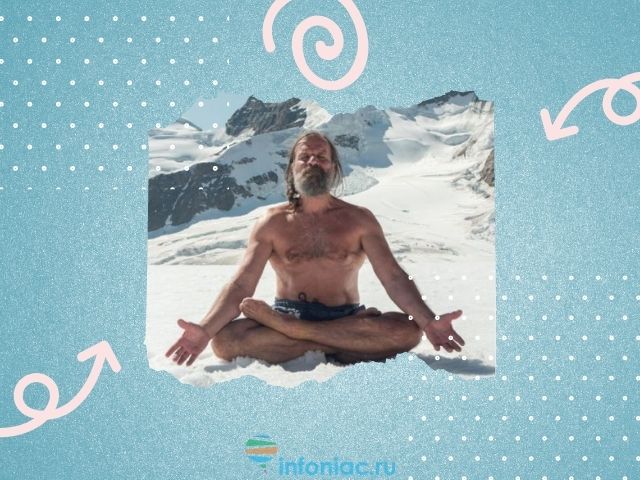
Wim Hof, also known as “The Ice Man,” holds 20 Guinness World Records for withstanding extreme temperatures.
He climbed Everest and Kilimanjaro wearing only shorts, spent hours in an ice bath, swam 60 meters under the ice, and ran a marathon in the Namib Desert without food or water.
According to Wim, all these achievements were made possible thanks to a special method.
He believes that almost everyone is capable of doing the amazing things he has demonstrated to the whole world.
The material has an informational and reference function! Before using any products or services, you should consult a specialist!
Wim Hof method
The Wim Hof method is a breathing technique that allows you to control the body's autonomous systems. Thanks to it, a person can learn to consciously control their immune system to fight diseases.
Proper nutrition, exercise, rest and adequate sleep are the key to health. However, during a period of viral infections, we can only hope that our immune system is strong enough to fight viruses.
Optimal immune health is defined as a balanced state where the body has adequate biological protection to fight diseases, infections and other undesirable ones biological invasions. This balance is also known as homeostasis, and French scientist Charles Richet has contributed more to its understanding.
“Living things are stable. They must be such as not to be destroyed, dissolved or disintegrated under the influence of the colossal forces (often hostile) that surround us,” explained Charles Richet.
After 100 years, Hof discovered through medical research that the immune system could be strengthened by regulating homeostasis in response to stimulation. The first external stimulus was the breathing technique he developed.
Wim Hof's method is similar to Tummo's inner fire meditation practice and Pranayama yoga breathing. By combining these techniques, he created his own unique method. Thanks to him, he learned to withstand extreme cold, heat and fear.
The first part of the method is a breathing exercise, which can be called controlled hyperventilation.
Hyperventilation is what most often happens involuntary. Now imagine breathing like this without the trigger for stress. This breathing practice leads to complete oxygenation of all cells and blood, strengthening the body's defenses.
Don't try this method:
under water
while driving a vehicle
without a doctor's permission
1. Controlled breathing
1. Sit back and close your eyes
Sit in a comfortable meditation position so you can breathe freely without feeling any pressure. It is best to do this breathing technique in the morning after waking up on an empty stomach.
2. Warm up
Take a deep breath.
Breathe in well until you feel light pressure in your chest in the solar plexus area.
Hold your breath for a while and breathe out completely.
Push the air out as much as you can.
Take a break. Repeat this warm-up 15 more times.
3. 30 powerful breaths
via GIPHY
Imagine you're inflating a balloon.
Breathe in through your nose and exhale through your mouth in short but strong bursts.
Draw your stomach inward as you exhale and inflate it when you breathe in.
Keep a steady rhythm and make full use of your diaphragm.
Close your eyes and take 30 breaths until your body is oxygenated.
Symptoms may include a slight dizziness, a slight tingling sensation all over the body, and a surge in energy.
4. Scan your body
During 30 powerful breaths, immerse yourself in your body and try to understand what's going on inside your body.
Using your intuition, analyze which parts of the body lack energy and which parts have an excess of it.
Mentally direct energy/heat to these blocked areas.
As you gradually free yourself from clamps, feel how your body relieves emotional and physical trauma and tension and is filled with warmth and love. Feel how all the negativity burns out.
Some people talk about seeing colors and other images during this exercise. Dive into your inner world to understand where tensions or blocks have appeared.
5. Delay
After 30 quick breaths, draw in air again, filling your lungs as much as possible without using too much force.
Then push all the air out and hold your breath for as long as you can.
Pull your chin in a little bit to prevent air from getting in again.
Relax and open your body's energy channels. Watch how oxygen is distributed throughout your body.
Hold your breath until you feel the inhalation reflex in your upper chest.
6. Restoring breathing.
Breathe in to the fullest. Feel your chest expand. Release any tension in the solar plexus.
When you breathe out at full capacity, hold your breath again. Lower your chin to your chest and hold this position for 15 seconds.
Watch how you can control energy with your mind. Scan your body to detect tension or blockages and channel energy into it.
Relax your body and release all clamps. Your body knows what's best for it. In 15 seconds, you'll complete the first round.
Start practicing with 1-2 laps. Try to do this exercise daily and add two extra laps after a few days.
After you feel more comfortable holding your breath, add exercise and stretching. Do at least 15 minutes or 6 exercise laps.
If you feel dizzy or painful, get out of the pose and lie down on your back. Breathe normally and stop practicing. Take at least 5 minutes to relax and scan your whole body.
Briefly:
30 times balloon inflation
Full breathing
Exhale fully and hold until you feel like breathing
Take a full breath and hold your breath for 10-15 seconds
Repeat until complete
Relax and scan your body for 5 minutes
Additionally:
Try doing push-ups or doing yoga while holding your breath until you feel like taking a breath. Note that you are stronger without air than you would be if you could breathe freely.
Recharge your energy by holding the root lock (by tightening your perineal muscles and pulling your navel towards your spine).
2. The effect of cold

Wim Hof's second method of controlling the immune system is cold therapy. After scanning your body in the previous exercise, you'll be ready for the cold.
It is very important to relax as much as possible while using this method in order to start the process of thermogenesis.
Cold shower
If you haven't dealt with the cold before, a cold shower is the best place to start. First, try cold your feet, then your legs, abdomen, shoulders, neck, back and head.
At the initial stage, shock, shaking, and hyperventilation are quite normal. Keep calm and breathe smoothly. Close your eyes and embrace the cold.
If you experience severe physical discomfort, such as extreme shivering, numbness, or pain, try to warm your body as soon as possible.
When you get out of the shower, try to scan your body again before you dry.
The effects of cold work like heavy lifting — you get stronger as time goes on. The tiny muscles around the veins contract when they're in contact with the cold. After a while (1-2 weeks according to Wim), they get stronger, healing your veins and having a positive effect on heart health.
Over time, it is possible to increase the effects of cold. At some point, the cold will stop causing discomfort and you may even stop taking a hot shower. You may notice how good you feel after a cold shower and how lethargic you feel after a hot shower.
These exercises are very effective when done consistently and in a targeted manner. Always monitor your condition so as not to harm yourself or others.