
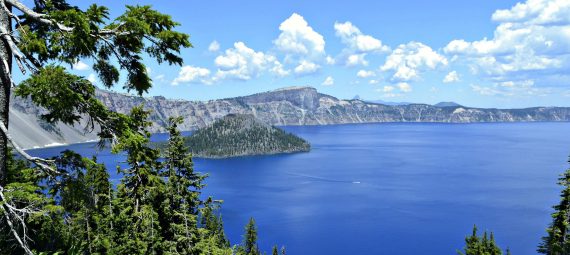
The Great Lakes are a system of five freshwater lakes located on the border of the United States and Canada. They are the largest group of freshwater lakes on Earth by area and volume of water and are of great importance for the ecology, economy and tourism of the region. In this article we will tell you about some amazing facts and the beauty of the nature of the Great Lakes.
Which lakes are included in the Great Lakes system?
The Great Lakes system includes five major lakes: Superior, Michigan, Huron, Erie and Ontario. In addition, a small lake St. Clair adjoins them. The lakes are interconnected by rivers and channels and form a single waterway for ships with a length of about 3000 km. The lakes belong to the basin of the St. Lawrence River, which flows into the Atlantic Ocean.
How did the Great Lakes form?
The Great Lakes began to form about 10,000 years ago, at the end of the last ice Age, when a thick layer of ice pushed through the earth’s crust and dug deep valleys. After the glacier melted, the valleys were filled with meltwater. Initially, the water flow went into the Mississippi River basin, but as the earth’s crust rose, it shifted towards the St. Lawrence River Valley.
What are the features of the Great Lakes?
The Great Lakes have a number of unique features:
- They contain about 21% of the world’s surface fresh water and 84% in North America.
- Their total area is 244,106 km2, which is more than the territory of Great Britain or France.
- Their total water volume is 22,812 km3, which is more than the volume of the Caspian Sea or Lake Baikal.
- Their coastline is about 17,000 km long, which is longer than the length of the Atlantic Ocean coast of the United States.
- They have different depths: from 64 m at Lake Erie to 406 m at Lake Superior.
- They have different heights above sea level: from 74 m at Lake Ontario to 183 m at Lake Superior.
- They have different climates: from temperate continental near Lake Michigan to subarctic near Lake Superior.
- They have different flora and fauna: from forests and prairies near Lake Michigan to tundra and taiga near Lake Superior.