
 Science took place
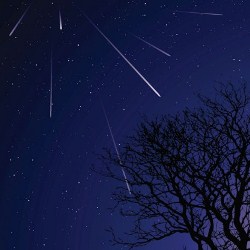
A never-before-seen celestial event, the Giraffide (Camelopardalid) will take place from May 23 to May 24, 2014.
While we see meteor showers or starfalls every year, like the Leonids or the Perseids, when Earth passes through dust particles left by Comet Swift-Tuttle for hundreds of years, May's starfall has never graced our sky before.
The impressive show is the result of tiny particles of rock and ice released by Comet 209P/LINEAR, discovered in February 2004.
The comet completes one revolution around the Sun every five years.
Starfall 2014
It is very likely that Earth will cross the comet's dust tail for the first time. This is material that separated from the comet in the early 20th century, and we're only now in a position where Earth will pass through that tail.
The brightness of the show depends on the amount of these remnants in space, but experts predict that we will be able to see up to 200 “shooting” stars per hour. However, we still don't know the exact time when this will happen.
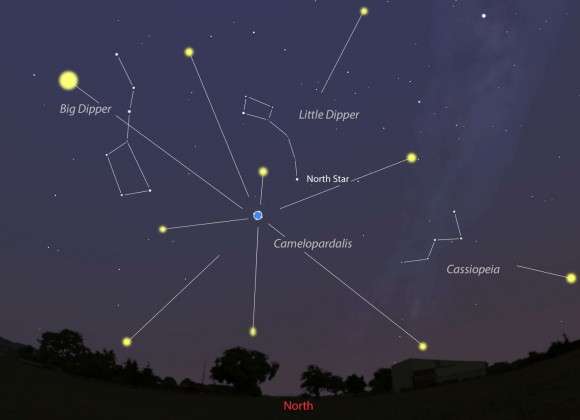
The approximate location of the Giraffe starfall (in blue) in the constellation Giraffe near the North Star.
The meteors will come from the Giraffe constellation, a dim constellation near the North Star. The comet's brightness is expected to reach 10-11 magnitudes.
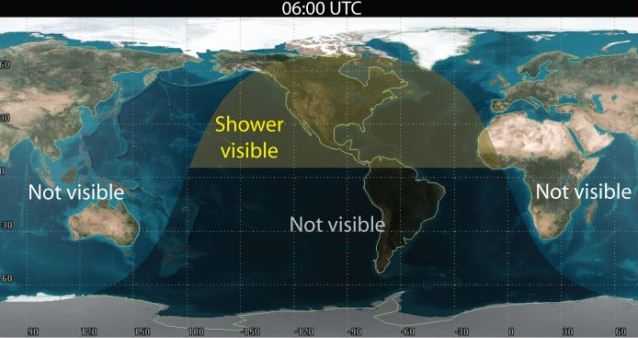
Giraffides will be visible to North Americans, as they will occur on the night of May 23-24. In Russia, this event will take place after dawn and will not be visible.
However, you can watch the starfall live through the Slooh online telescope.
Meteor shower or meteor shower?
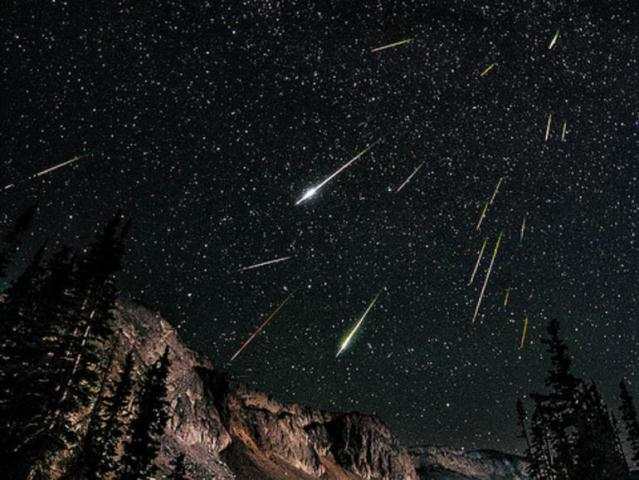
A meteor shower or starfall occurs when Earth passes through clouds of dust and gas left by a comet while our planet orbits the Sun. This material burns when it enters Earth's atmosphere, creating an amazing show.
Read also: Calendar of important astronomical events in 2014
People often confuse the concepts of meteor shower and meteor shower. In fact, a meteor shower is a stream consisting of meteors — fragments of comets or asteroids that burn up in the atmosphere before reaching the ground. Meteor shower, on the other hand, consists of meteorites — cosmic bodies that fell to Earth.