
 Incredible facts
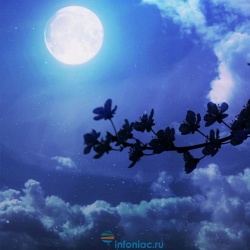
Earth's inhabitants can observe the last supermoon on May 7, 2020.
The full moon is called the “flower moon” because it symbolizes the heyday of spring.
This moon will look bigger and brighter than usual for three days, illuminating skies around the world.
The supermoon will be best seen on Thursday, May 7 at 10:45 AM UTC (1:45 PM PDT).
See also: Secrets of the lunar calendar: all about the full moon, its influence, rituals and getting rid of unnecessary things
A full moon occurs when the Moon is on the opposite side of the Earth from the Sun, making the lunar surface fully illuminated.
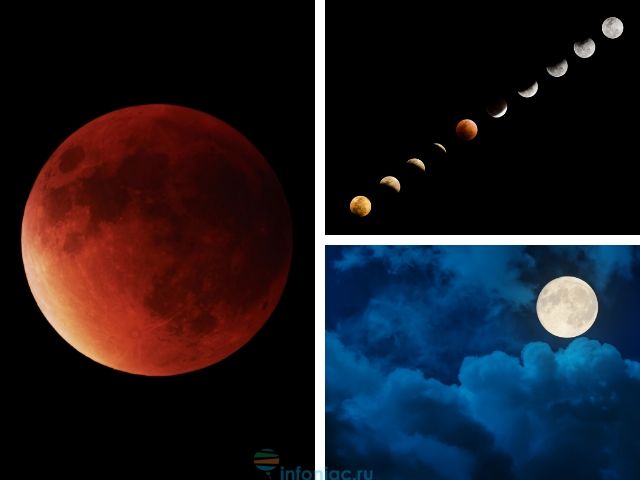
Supremoon in May 2020
© Getty Images Pro © Getty Images Pro © Getty Images Pro
A supermoon occurs when a full moon reaches its perigee, that is, a point in the Moon's orbit when it is closest to Earth.
The opposite of perigee is its apogee, and when the Moon reaches this point, it will look much smaller than usual.
Greg Brown, an astronomer at the Royal Observatory, explained that the Moon's orbit around Earth is not exactly round, but is a slightly flattened circle or ellipse.
Sometimes it is closer and sometimes farther away from Earth.
The May supermoon is the third and final this year, and we will see the next supermoon only in April 2021.
What is a supermoon?
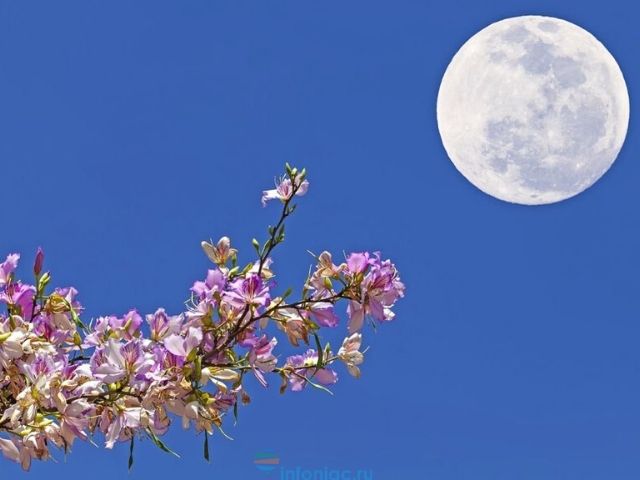
Astrologer Richard Nolle explained in 1979 that this is a phenomenon when “a new or full moon that occurs near (within 90%) its closest approach to Earth on a given orbit”.
At the same time, the Moon must be at least 363,711 km from Earth to be considered a supermoon.
Due to its relative proximity to Earth, the surface of a celestial body appears much larger when a supermoon occurs.
This time on May 7, 2020, the moon will be 7% larger and 15% brighter than a normal full moon.
You don't need binoculars or telescopes, but they can give you clearer views and information about the Moon. Unlike watching the sun, there is no harm in observing the Moon with the naked eye.