
The lands of Lebanon are exceptionally rich in various kinds of antiquities, and some of them are literally antediluvian — for example, the city of Byblos boasts a solid age of 7000 years! All the famous civilizations and cultures of the Mediterranean basin were noted here — from the Arameans and Phoenicians to the Romans, Turks and French.
It is not surprising that the number of architectural and historical monuments in Lebanon is off the scale, and often in the neighborhood you can see the Umayyad mosque, the Christian church and the ruins of the Roman hippodrome. Among other things, Lebanon can offer the traveler modern “chips”: a rich nightlife (local clubs are unanimously considered the best in the Middle East), excellent conditions for ecotourism and as many as six ski resorts.
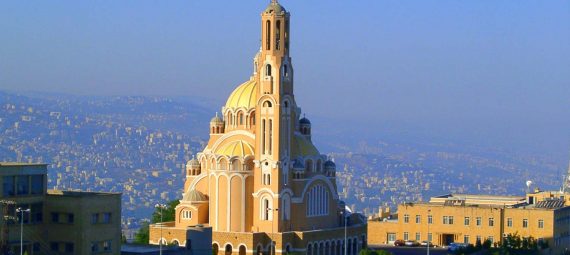
Sights of Beirut: elegant Dance-d’Etoile with a scattering of quite Parisian cafes and brasseries, Pigeon Rock — a natural monument standing in the sea, Mount Harissa with a statue of Our Lady of Lebanon, the National Museum with more than 1300 artifacts of rich Lebanese history, the Museum of Archaeology and History, the oldest in the Middle East, the Sursok Museum — a collection of modern paintings in the interiors of a rich Lebanese house of the 18th century, many galleries and fine arts centers. 20 km from the city there is the “eighth wonder of the world” — the caves of Jate, stretching for 9 km. It is amazingly beautiful here, and the dimensions are impressive: the largest stalactite on the planet (8 m) and one of the largest cave halls in the world with a ceiling height of 108 m.
In Byblos, it is worth walking through the ancient streets, exploring the ruins of the Phoenician temple, the citadel of the Crusaders, the Greek theater. Nearby there is a collection of the most ancient graffiti in the world: a lot of the powerful and ordinary mortals were kalyakala on the stone walls. Among the first is the Egyptian Pharaoh Ramses II (13th century BC!).
Tripoli is the “sweet” capital of Lebanon. All kinds of sweets are prepared here like nowhere else in the country.
In the Bekaa Valley and its heart — the city of Baalbek — Roman buildings are perfectly preserved: impressive temples of Jupiter, Venus and Bacchus, as well as a lot of secondary structures, such as public toilets and public houses.
Tyre and Sidon are cities mentioned in the Bible. In Tyre, it is worth exploring the Roman arches and forums, the magnificent hippodrome, the necropolis and the cathedral. By the way, it is from here that the Phoenician queen Elissa, who founded Carthage, comes from. Sidon is an equally famous Phoenician port, the main objects of tourist interest of which are the ruins of the Phoenician temple of the god of healing Eshmun, the Ottoman caravanserai Khan al—Fran’j, the ruins of St. Louis Castle, the 13th century Crusader Castle, the Great Omari Mosque, as well as a labyrinth of medieval bazaars and an interesting Soap Museum.
Divers and snorkelers will appreciate the underwater ruins of Phoenician and Roman cities located near the coastline of Tyre.
Sights of Tripoli: multi-kilometer bazaars, the castle of the Baron de Saint-Gilles, the Great Mosques of the Mamelukes, caravanserais, hammams and madrassas.
Natural attractions of Lebanon are the Valley of cedars, the age of trees in which is 2000 years old, the sacred valley of Kadisha, which served as a haven for hermits and patriarchs. Cave monasteries are perfectly preserved here. Wildlife lovers are also invited to the “Palm Islands”, a nature reserve 5 km from Tripoli. More than 300 varieties of migratory birds nest here, sea turtles and seals live.
Among other things, tours to Lebanon often involve a visit to neighboring Jordan. This is an excellent opportunity to embrace all the splendor of the ancient civilizations of the Middle East at once and feel the difference in the traditions, culture and way of life of these largely close peoples.