
 Ecology
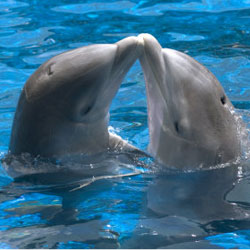
An unprecedented open dolphin society, bottlenose dolphins, was discovered off the east coast of Australia.
Most mammals, including humans, live in areas that have borders. The dolphins described by Proceedings of the Royal Society B have no such boundaries, although the relationship between dolphins is incredibly intense.
“Other mammals with complex social relationships live in semi-closed groups that are based on one or two more reproductive females,” says study author Richard Connor (Richard Connor). Connor). In this case, territories and groups of these animals are protected by one or both sexes.
An open society is a society that does not have any protected borders, scientists said. Connor and his colleagues analyzed the habitat and behavior of 120 adult dolphins over a fairly large area in Shark Bay, Western Australia. They paid attention to males and their very complicated social lives.
Male bottlenose dolphins have been seen in common bisexual relationships, sometimes exclusively homosexual. Male couples, and sometimes even trios, team up to fertilize individual females during the mating season. Most males are also members of other unions consisting of 4-14 males. Such relationships last quite a long time; one of the observed groups has been together for 17 years.
At first, researchers thought dolphins lived much like chimpanzees, meaning male friendships in their community are very strong, but chimpanzees usually patrol and protect their community's territory. Due to the fact that the marine area is an open space, Shark Bay dolphins could have different zones that would coincide with the zones of other groups in the area.
Although dolphins can be somewhat aggressive, their “make love, not war” lifestyle seems too peaceful and unlike that of other mammals, including person.
“We saw quite little aggression from females,” Connor said. “Sometimes they can be aggressive, but this happens very rarely and is not noticeable.” As for males, although they are able to be aggressive, they will not quarrel over trifles.
Land mammals are generally more attached to their home, although survival may depend on mutual dependence between humans and dolphins.
Connor and his colleagues believe that the suborder toothed whales (including sperm whales and dolphins), humans and elephants form the “big three” in the animal world, as we all have large brains, complex social ones life, we live in overlapping areas and spend relatively little physical strength to move. The slowest of this group are elephants.
“Baby elephants can't run and hide and are just a good steak,” says Connor. It's likely that groups help animals develop brains, social connections, and so on.