
Egypt resembles an endless museum on the banks of the Nile.
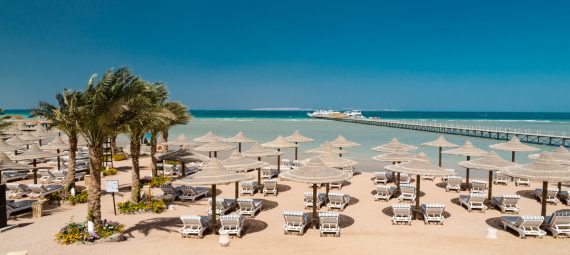
The monuments of the Pharaonic era, the Greek and Roman periods, as well as medieval Arabic architecture are well preserved here. Most of the country is occupied by desert and beaches along the Mediterranean and Red Seas. I especially like the coast of the latter because of the clear water. It seems that the photographer edited reality, but no: the sea is really fabulously beautiful.
In addition, it is cheap to live in Egypt, a tourist visa is issued right at the border and, if necessary, it is easily extended for up to six months. You can walk around the cities at night without fear: countless policemen keep order. And there are no drunks anywhere, because alcohol, as is customary in serious Muslim countries, is almost not sold in Egypt.
However, Egypt also has significant disadvantages. You should know about them in advance so as not to spoil the impression of a trip or relocation. Over the past two years, I have lived in an African state for seven months — in Hurghada, Luxor and Cairo. During this time, I have studied both tourist areas and typically Arab ones. I’ll tell you what I still haven’t come to terms with.
Dangers on the roads
There are good roads in Egypt, it’s nice to ride on them as a passenger. There is almost no precipitation here, so the asphalt is decent, it was not disturbed by rain and snow. Traffic in Egypt is on the right. Highways are often separated by a sidewalk so that oncoming traffic does not mix. They are trying to control the speed: for example, in Hurghada I saw a scoreboard where the 40 km/h limit was flickering.
The problem is that drivers of public transport and private cars are often reckless. According to WHO statistics, 12,000 people die on the roads of Egypt every year. The main reason is gross violations of the rules by drivers.
There are few traffic lights and pedestrian crossings. It comes to the ridiculous: in Cairo, one of the Go Bus stations is separated from the parking lot with buses by a road. To get to the parking lot, passengers have to make their way through busy traffic. Foreigners are sometimes escorted by police and Go Bus employees.
Ban on photos
In August 2022, the country’s authorities explained that it is possible and impossible to shoot travelers. For example, it is forbidden to photograph Egyptian citizens, including children, without their written permission. Military facilities, state institutions, the metro in Cairo and things that damage the image of the country, such as landfills in the middle of the street and poor areas, were banned.
Photographing is really prohibited. For example, in the Cairo metro, a policeman politely asked me to stop filming the station. He did not demand to delete the frames. The same thing happened when I wanted to take a photo of the Basilica of Our Lady of Heliopolis. The policeman crossed the street only to inform me about the ban on shooting.
And yet I have not photographed military posts and government buildings and have not encountered any real problems. I also advise you not to take risks. I still do not recommend getting a phone in the slums.
Garbage and unfinished buildings
Egypt seemed dusty and dirty. For some reason, residents of the country consider it normal to throw wrappers, packages, bags under their feet. At the same time, I did not notice a shortage of urns. There are even bins with separate garbage collection: officials clearly care about the cleanliness of the streets. The situation in the tourist areas and on the embankments is somewhat better than in the Arab quarters — in the same Dahar in Hurghada or in Islamic Cairo.
Cafe owners in Egypt love white fabric on chairs and sofas, but do not know how to clean it. As a result, light furniture soon becomes overgrown with dirt, which catches the eye in the bright African sun. The safety of the menu is also not monitored: sometimes they stretch out such horror that it’s scary to pick up.
Slowness
The Egyptians are in no hurry. They use the expression “Egyptian time”, which means that a delay of 5-30 minutes is not a delay.
Of course, not all Egyptians take their duties lightly and are late for meetings. Some services work like clockwork: for example, Go Bus buses run strictly on schedule. However, all these are rather exceptions: the hot climate does not encourage you to hurry somewhere.
Terrible heat
Most of the year in Egypt is hot: the temperature reaches +40 … 45 ° C. 96% of the country’s territory is occupied by the desert, the rains here are a miracle. Comfortable coolness, a combination of stable wind and a temperature of +18 …30 ° C last from October-November to the first half of March.
The rest of the time in Egypt is hard even on the coast and near the Nile. In March, I rented a house in Luxor, and then the temperature could jump to +44 °C. In this heat, the smartphone overheats and refuses to take photos.
The Red Sea coast becomes a furnace in summer. Five minutes in a room without air conditioning — and the T-shirt turns into a wet rag. And I can’t turn on the air conditioner for a long time: I caught a cold twice during the summer when I sat under it for an hour or more.
Relief is brought by strong winds, sometimes they rage in Hurghada for weeks. Then, despite +40 °C outside, indoors is tolerable. I’m afraid to imagine what is happening in Luxor and Aswan — cities on the Nile — in the summer. Cairo is no better either. I went there for a week in July and constantly bought water in cafes, at attractions and when moving between them.
Paid beaches
In Egypt, I visited the beaches in Hurghada, but there are problems that I will tell you about at other resorts.
In Hurghada, the coast is occupied by hotels, the coastline is closed by a fence. Entrance to the beaches costs 100-200 LE. Tourists are provided with a sunbed, umbrella, towel. You can’t bring your own water and food: they are sold on the territory, prices are twice as high as in the city.
As for the wild beaches in Hurghada, it’s better not to think about them: there’s garbage and a rocky bottom. I saw a wild beach near the Al Dora apartment complex, and a cursory inspection was enough to understand that swimming there is not worth it. I didn’t like the stones and the lack of sand at the entrance to the sea, and bags and wrappers were floating in the water.
It is unpleasant that the Egyptians earn money from tourists in this way. The Red Sea is fine, but I think the entrance should be cheaper.
Problems with English
In Egypt, there is a media in English, but in general it is poorly distributed. The native language for Egyptians is Arabic. English is spoken a little in tourist places, large supermarkets, bus stations, in the salons of mobile operators and government agencies.
In Hurghada, shops further than the second line of hotels speak Arabic entirely. In Cairo, taxi drivers do not know a word of English, sellers hardly remember numbers and numbers. Guides own only a jagged program. The way out is to communicate with pictures. For example, this is how I got by tuk-tuk to the heart of the City of scavengers — I showed the driver on my smartphone a photo of the church where I wanted to get to.
An important point: those who still speak English often know only general phrases. You need to talk to them using the simplest constructions. There are also those who speak English perfectly, but this is rare.