
 Ecology
Some coral species will benefit, others will suffer if ocean water temperatures rise amid global warming, scientists say.
Researchers are trying to identify the most serious problems that will appear in the ocean due to warming. What corals survive and which ones disappear will determine what coral reefs will look like in the future.
“The good news is that many coral reefs will be able to survive despite major climate changes, but the distribution of species will no longer be the same as in the past due to warm water and more oxidized,” says Terry Hughes, a researcher at James Cook University in Australia. “People who hope that in the future there will be just as beautiful and rich reefs.”
Most studies on how coral reefs will change have used relatively rough estimates to assess the health of future reefs. Hughes and his colleagues wanted more information to understand what the composition of the reefs, rather than their overall size, would be under different conditions.
A team of researchers studied more than 35,000 coral colonies along the Great Australian Barrier Reef. The area that was explored is 1,740 kilometers long.
“We chose the Great Barrier Reef for research due to the fact that the water temperature ranges from 8 to 9 degrees Celsius from summer to winter, and because the acidity of the water is all over The length of the reef also varies,” Hughes said. “This region offers different conditions that change differently with climate change and greenhouse gas emissions.”
During the research, scientists discovered “surprisingly flexible” clusters of corals that lived in different environments within the reef. For example, the corals that lived on the crest of the reef may have been very different depending on the region. The species that occupied the reef ridges were also different from those that lived on the slopes.
Earlier studies have shown that coral survival depends on the presence of “warm water” genes. Some solitary corals can survive near very acidic underwater sources, but they look very different from the reef-building corals known today.
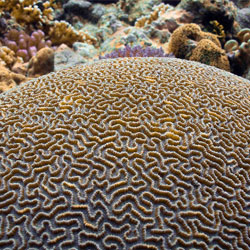
The impact of climate change may cause coral reefs to look very different from what they do today in the future. For example, if branched corals are replaced by corals that look like hills, fish will no longer have safe places to hide. Scientists are confident that corals will be able to survive global warming if something else doesn't kill them.
“Coral reefs are threatened by many other factors, including pollution and overfishing,” Hughes said. “We need to take into account all these factors, not just global warming, to give corals a chance for the future.”