
 Unbelievable facts
Most of the actions we take are intentional or purposeful. But stressful circumstances change our focus and engagement in a strange way.
When we're stressed or anxious, habits take over us, and our unconscious behavior tries to bring calm to our emotional chaos.
Nervous habits, such as the habit of biting our nails, are not only unsightly but also harmful to our health.
What are the most common nervous habits and how can you get rid of them?
Curling and pulling hair

© DAPA Images
Curling your hair in certain social situations is a gesture that means flirting. However, in those people who have obsessive hair curling, this activity becomes calming when a person is nervous or under stress, and stimulating, if it gets boring.
Because curling and pulling hair all the time may look like unprofessional behavior, many people who find it difficult to control this habit have learned how to do it when around there's no one.
Usually, a person can pull out a fairly large amount of hair. Other nervous individuals feel the need to pull hair off their heads. At the same time, a person feels emotional satisfaction and comfort.
The habit of pulling hair can lead to bald patches over time, and hair follicles can be damaged. Because this compulsive habit is rooted in shame and guilt, cognitive or behavioral therapy can best deal with it.
Smoking

© rattanakun
If you keep smoking because you think it might calm you down, think twice. Nicotine, an addictive substance found in cigarettes, can cause this false feeling.
Nicotine is a stimulant that makes you even more nervous, says Benjamin Toll, a clinical psychologist at Yale School of Medicine, where he is an assistant professor of the department psychiatry. Nicotine binds to specific places in the brain, which increases levels of dopamine, a mediator and hormone that makes you feel good. In other words, you feel the need to smoke at regular intervals to maintain enough addictive nicotine to provide yourself with high levels dopamine, which is associated with pleasure.
Nicotine has another trick. The only way to keep nicotine levels high is to take breaks for a smoke break, which is often a relaxing remedy in stressful situations. Over time, a smoker begins to associate moments of calm with smoke breaks, respectively, smoking.
A large number of studies have linked smoking to lung cancer, respiratory diseases and a number of other diseases. Recent studies show that the use of nicotine products, such as the nicotine patch, and counseling are quite effective. Smoking is addictive and should be treated as well as drug addiction.
Teeth grinding and clenching
© Comstock Images/Photo Images
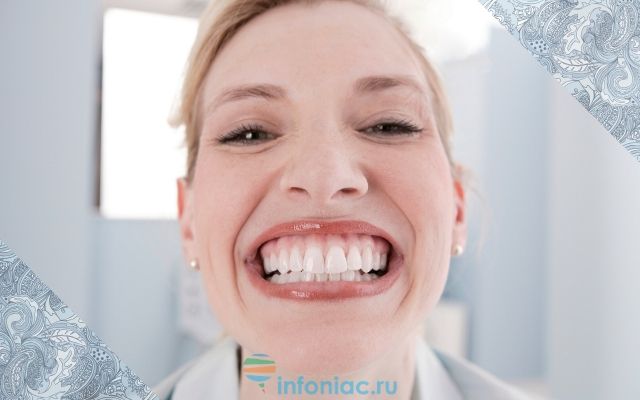
Although our teeth are strong enough to chew sinewy and fibrous foods, they are often unable to withstand grinding. Teeth grinding or bruxism are uncontrollable tooth movements, says Dr. Hoopingarner, a dentist and associate professor at the Department of Therapeutic Dentistry at Texas University of the Health Science Center in Houston.
Teeth grinding during sleep tends to occur when we move from a deeper level to a more superficial level of sleep. During this transition, almost all people tend to gnash their teeth.
Usually, nocturnal bruxism lasts only a few seconds. But some people can gnash for up to half an hour, which is usually stress-related. Nocturnal bruxism is bad for teeth, as during sleep we lose protective reflexes that prevent excessive damage, and teeth wear out over time. In order to prevent tooth wear, it is recommended to wear special protective devices that are worn during sleep.
During the day, instead of grinding, people tend to clench their teeth, which can also cause problems, such as a weakening of the periodontal ligament that holds teeth.
Clenching can also strain muscles, including the masticatory, temporal and internal pterygoid muscles, which are involved in closing the mouth. Massaging this area can help relieve tension. You should also try a behavior change technique. For example, you can constantly check whether you are clenching your teeth after frequent activities. During the day, the upper and lower teeth should be at a short distance from each other.
The habit of biting nails

© Dean Drobot
For many people, well-groomed nails are a reason to be proud. However, some people can't leave their nails alone because they see imperfections in them. The habit of constantly adjusting your nails by biting them or removing your cuticles to correct the problem often begins in childhood. It is not surprising that the more uneven your nails look, the more you will want to correct them. When a person gets into the habit of biting their nails around the nail plate, this can lead to infection. Since cuticles are designed to protect your nails from bacteria and fungi, any damage can lead to negative consequences, such as paronychia.
Over time, the habit of biting your nails can weaken and damage your nails. Many people who are used to biting their nails find it difficult to stop. Experts recommend keeping your hands clean and covering your nails with substances that taste unpleasant.
Crossing legs

© Farknot_Architect/Getty Images Pro
Some people, when anxious or under stress, obsessively begin to cross and straighten their legs and shake their legs. These movements rarely cause a problem, but it depends on how you sit, says Yogi Matharu, a physical therapist at the University of Southern California.
When you sit cross-legged, your body weight shifts to one half of your buttocks instead of being evenly distributed across your sciatic bones. At the same time, the pelvis rolls back, the upper back is rounded, and the shoulders lean forward and down. In this position, your neck needs to stretch out so you can look in front of you. And while this makes you feel relaxed, it can be bad for your health.
Sitting in this position can cause the sciatic nerve, which runs from the spine through the buttocks down to the legs, to become pinched, which can cause reduced blood flow, pain, numbness, and tingling in the legs. It can also lead to nerve irritation, a condition that may take several weeks to recover. Long-term effects may include back and neck pain, headache, and other chronic problems.
Experts recommend checking your body position periodically throughout the day. If the condition has become chronic, you should do stretching exercises, use manual therapy, or use an ergonomic keyboard.
The habit of clicking joints
© vvoevale
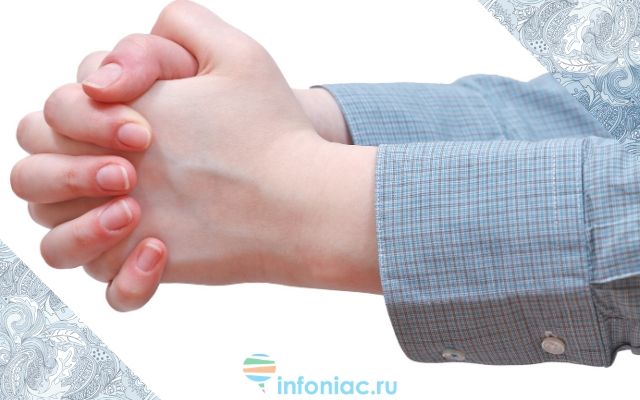
When you click your joints, you can hear a crunch, although this is actually due to the release of gases, says Dr. Steven Beldner, an orthopedic surgeon in New York City. For many people, this activity relieves stress and is just as satisfying as a short and enjoyable stretch.
The joint capsule that covers the joint contains synovial fluid that lubricates and nourishes the joint. This liquid contains dissolved gases, including oxygen, nitrogen, and carbon dioxide.
When you press the joint in a certain way, the pressure inside the joint capsule is relieved and this causes a clicking sound that occurs when soluble gases are released.
As a rule, clicking joints irritates people around them. Those who are in the habit of clicking their joints up to 200 times a day. However, studies show that such actions do not cause harm. Children tend to outgrow this habit, and experts advise adults who get into trouble with their habit from others to consult a behavioral therapist.
Pen suction

© Medioimages/Photodisc/Photo Images
Roth is one of the main transit points for microbes, says Philip M. Tierno Jr., Director of Clinical Microbiology and Immunology at the Medical Center Langone at New York University. With the nervous habit of sucking on pencils, pens and other objects, germs easily pass into your mouth.
Tierno counted about 600,000 types of microbes, of which only 1-2 percent are pathogenic and can be harmful. Most pathogens live on the pen, possibly contaminated by your colleagues or family members who touched the keyboard, door handles, and phone. This can cause a variety of illnesses, including acute gastroenteritis.
Experts recommend washing your hands more often so as not to carry pathogenic germs from infected objects you touched: door handles, keyboards, or desks. If you're having a hard time getting rid of the pen sucking habit, try to replace it with another activity, such as drinking tea.
The habit of touching and rubbing your face

© Deagreez/Getty Images Pro
Only if you don't wash your face, it's best not to touch your face at all for hygienic purposes. But for many, especially teenagers with an anxious and nervous character, it's hard to stop this habit.
People whose hands inevitably begin to touch their faces often experience tickling sensations, which makes them very eager to touch it. Others start to itch, which is actually a nervous sensation. Some even sleep with their arms wrapped around their faces.
This habit can cause pore blockage and acne. However, those who develop rashes on the face tend to squeeze them out, which causes bleeding and can lead to scars and infections.
Despite the fact that dermatologists are quite quick to identify this problem, it is quite difficult to convince young girls to visit a therapist, as few people see this as a problem. If you find it difficult to break this habit, try cutting your nails short to avoid scratching your face and reduce the risk of infection.