
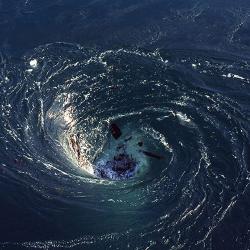
 Events
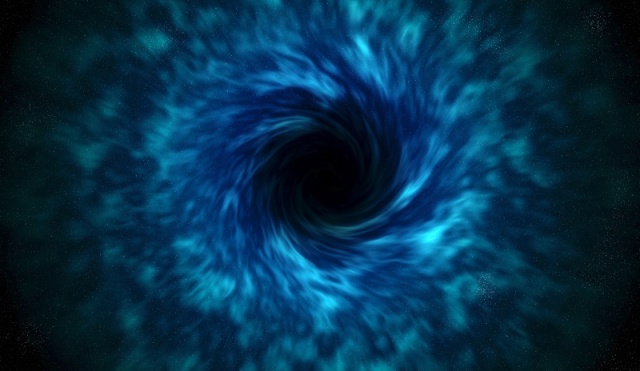
It's impossible to see them, but astronomers believe they exist. Black holes are gaps in space-time that attract anything that comes too close to them. Nothing that sticks into a black hole can leave it, not even light.
Scientists have now found such black holes on Earth, specifically in the South Atlantic Ocean.
According to researchers from the Swiss Higher Technical School of Zurich and the University of Miami, large ocean whirlpools in this area are mathematically equivalent to mysterious black holes in space.
This means they have the same effect on water as cosmic black holes have on light.
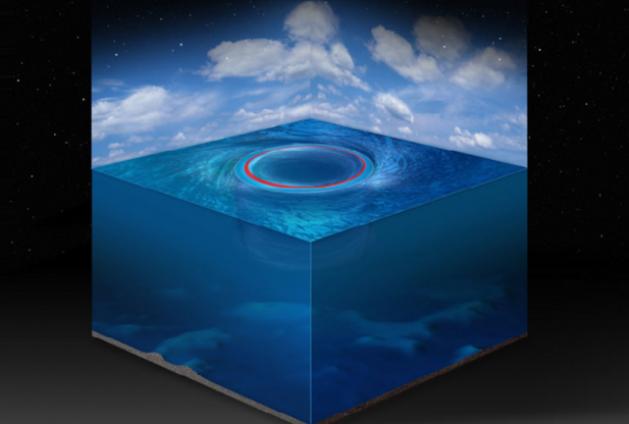
Huge ocean whirlpools can reach up to 150 km in diameter, and they move across the ocean.
Nothing can leave them, no matter how big or small the object is. Even water molecules that fall into such a whirlpool can't get out of this vortex. From this point of view, they can be called connected water islands.
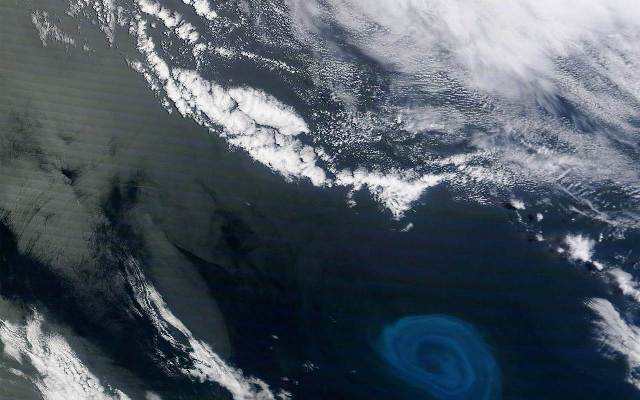
Ocean black holes transport not only microorganisms, such as plankton and foreign objects such as garbage or oil, but also water, whose salt composition differs from the surrounding waters.
Satellite observations have shown that over the past few years, the number of such whirlpools that are moving across the Southern Ocean has been constantly increasing.
Experts believe that their presence increases the amount of warm and salty water that is moving north. This helps to mitigate the negative impact of ice melting due to climate warming.
Whirlpools in the ocean (video)
The movement of water by ocean “black holes”
The formation of whirlpools in the South Atlantic Ocean
Black holes (video)
10 interesting facts about black holes (video)