
 Incredible facts
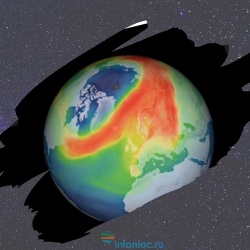
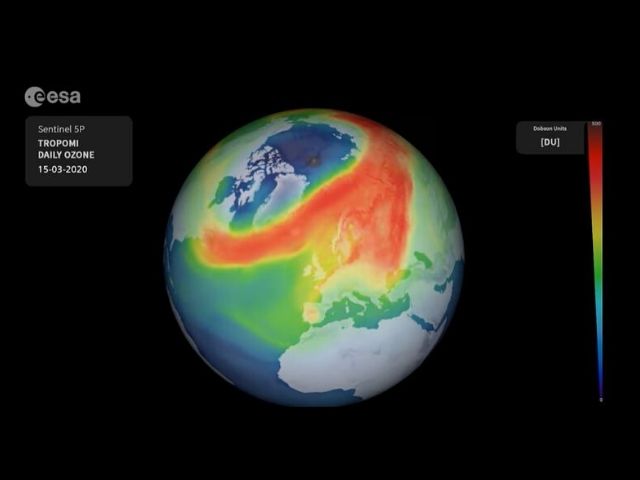
Over the past month, a new hole has begun to form in the ozone layer over the Arctic.
Previously, the ozone layer above the Arctic Circle was repeatedly depleted.
But this time, extreme weather and atmospheric conditions caused far more destruction than usual.
Read also: How does the Earth's main ozone hole behave?
And while scientists from the European Space Agency expect the ozone hole to close this month, the very fact that it has formed is alarming news about the state of our environment planet.
Depletion of the atmospheric ozone layer
© ESA/youtube
The ozone layer protects the Earth from the Sun's dangerous levels of ultraviolet radiation. However, in the 1980s, a hole was discovered in this layer over Antarctica.
It was found that the main cause was chlorofluorocarbons, chemicals that were used in aerosol cans and refrigerants at the time.
The Montreal Protocol was developed, requiring countries to phase out these chemicals, and the hole began to shrink steadily for decades.
This hole is not static; its size fluctuates throughout the year. It peaks in October, when Antarctica begins to warm up.
More sunlight means more ultraviolet radiation, which, combined with extremely cold temperatures, certain wind fields and chlorofluorocarbons, triggers again the process of destruction.
The Arctic goes through similar cycles, with changes in ozone levels that fluctuate throughout the year. But since temperatures here are not as cold as in Antarctica, the North Pole has never seen such a serious hole in the ozone layer before.
The ozone hole over the Arctic
© SimpleFoto
Scientists at the German Aerospace Center have recently discovered an unusually strong drop in ozone levels over the Arctic. Since March 14, it has fallen to less than 220 Dobson units, which is an “ozone hole”.
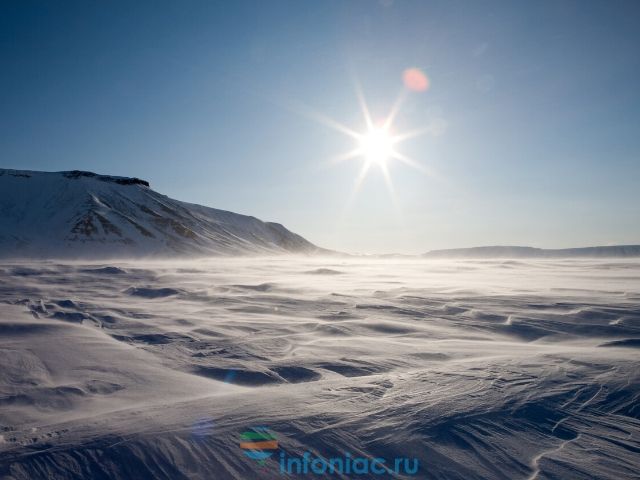
Scientists say that large losses of the ozone layer are due to unusually strong winds that trap cold air inside the polar vortex in the Arctic Circle.
However, even this unusually large hole in the ozone layer is much smaller than the more well-known hole above Antarctica.
The new Arctic hole covers an area of less than 1 million square kilometers, while the Antarctic hole could grow to 25 million square kilometers.
It remains unclear what to expect in the coming years. Although the unusually large ozone hole was partly caused by extreme weather conditions associated with climate change, it is too early to report that Arctic ozone depletion will worsen.
However, it is known that the depletion of the ozone layer can cause extreme weather conditions around the world. This could have far-reaching consequences in the future.
The hole, which has been monitored from space and Earth over the past few days, has reached record sizes, but it does not pose any danger to humans unless it moves further south.
If it spreads further south to more populated areas, such as southern Greenland, people will be at increased risk of sunburn. However, under current trends, the ozone hole is likely to completely disappear in a few weeks.
The ozone hole is not related to quarantine measures introduced in connection with the Covid-19 pandemic, which significantly reduced air pollution and reduced greenhouse gas emissions.