
 Ecology
For some male spiders, sex is a fairly fast and even life-threatening process, when, as for females, the outcome is not the most pleasant. Sexual intercourse is so dangerous for some males that they may even lose their sexual organ during mating.
New studies have shown that males even benefit from this type of “castration” because the female receives more sperm, which increases their chances of paternity.
This study, published in the Royal Society's journal Biology Letters, is the first to show that this phenomenon, known as “remote coitus”, is when the male penis is” works” separately from its owner, did not appear to benefit females. In fact, this seemingly painful process benefits males.
“The male reliably transfers his sperm to the female even when the sexual organ no longer belongs to him and he is in a hurry to escape from an aggressive female,” says study author Matjaz Kuntner. — At the same time, its cymbium (sexual organ) acts as a “traffic jam”, so the female can't mate with anyone else.”
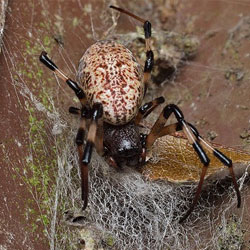
Kantner and his colleagues studied the behavior of the cannibal spider Nephilengys malabarensis. Their research also applies to other spider species, such as Herennia and Tidarren, and a similar situation may be observed in some other animal species with similar behavior patterns when mating.
For their research, scientists collected many N. Malabarensis spiders. They chose young virgin spiders for experiments. They first planted a male spider on the female's web. Then we observed what happened next and, using a microscope, calculated the amount of sperm that was obtained by the female.
“The mating process in spiders is very short and can last from 3 to 35 seconds,” the scientists said. – The duration of copulation is shorter if the female initiates the end of the process, and if the male initiates sexual intercourse lasts longer. After that, the males try to quickly escape from the female.”
If they don't have time to escape, the female eats them. If they manage to escape, in most cases they leave their sexual organ in the female's genital tract. In 90 per cent of cases, the males managed to escape, but the female's sexual organ remained. The escaped males ended up being sterile, but quietly lived to old age. Castration helped these spiders leave no chance for their competitors.
This study helps explain the benefits of mating for males and females. Many cannibal spiders, such as species such as black widow or N. Malabarensis mentioned above, have females that are quite large and deadly to males who are smaller and smaller are poisonous. Remote coitus and other tactics help avoid conflicts between the sexes.
For example, females of the Australian red-backed spider, one of the most venomous spiders on Earth and a close relative of the black widow, require 100 minutes of courtship, otherwise the female eats the male. But some very small males manage to avoid such a sad outcome. In a spider world, size matters, but in the opposite sense: the smaller you are, the more likely you are.