
 Incredible facts
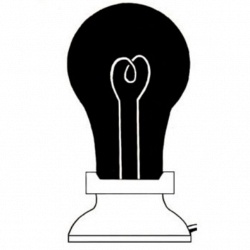
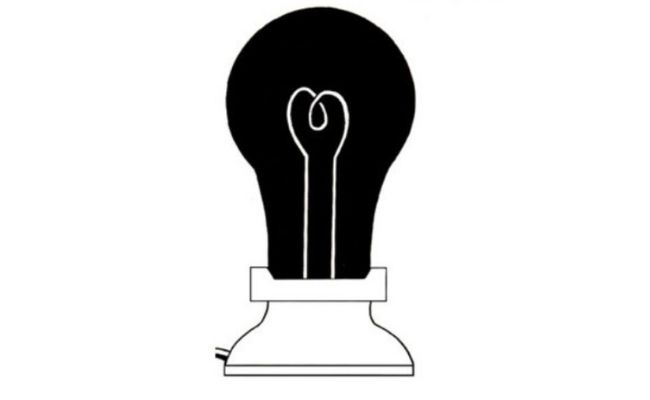
This optical illusion can deceive the brain of many users, and all you need to do is look at the picture continuously for 25 seconds.
Immediately after the specified time, look at the white background and the illusion will begin to act.
Optical illusion
What did you see after you tested the optical illusion?
After looking at a black light bulb for a while, you should see a light bulb on white paper or a light-colored wall.
Our brain interestingly deciphers photos in negative and positive terms.
In this illusion, the lamp's glass is a large area of black color, so when we look away, we get the opposite result, that is, a bright light bulb.
© whitsundaytimes
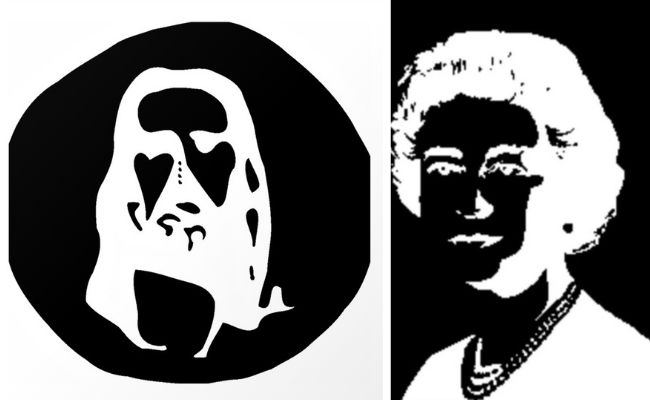
A similar process is observed in the optical illusions of Jesus and the Queen's black and white faces, when a negative photo appears in a positive way:
© society6
The science of optical illusions
You better understand how optical illusions work when you learn that our brains, not our eyes, play a key role in creating images in an attempt to protect us from potential threats.
Our brain is constantly trying to make sense of the world as quickly as possible, despite the fact that the world is in 3D and the images on the retina are in 2D.
It can sometimes be difficult for the brain to interpret everything at once, so it often uses labels and gives us a simplified version of what we're seeing. This is done so that we can react more quickly if the object we are looking at looks dangerous.
When we look at an object, we actually see light that bounces off it and enters your eye, which in turn is converted into electrical impulses. Then our brain converts these impulses into an image.
Optical illusions (photo)
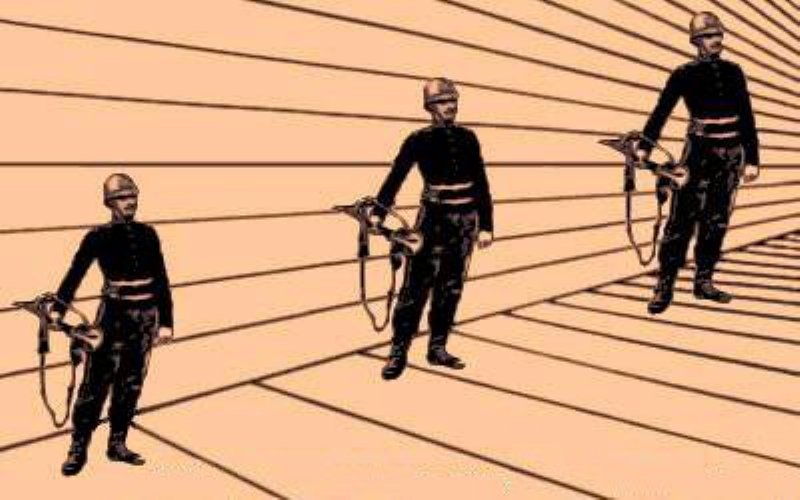
Different colors, light, and darkness can cause our brains to tell us that objects of the same size are actually different.
© brainden
It can also make us think that static patterned images are moving.
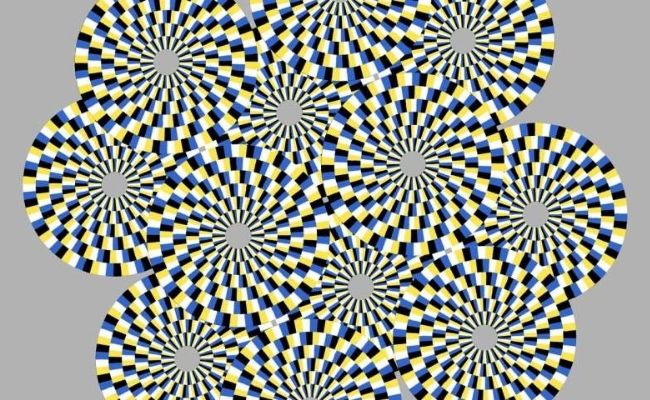
© raksaplava