
 Useful tips
Contents:
Surgery to remove the lower ribs Rib
correction
Abdominoplasty
Liposuction
Intralipolytherapy and mesotherapy
Myostimulation
Cryolipolysis
Thalassotherapy
Cavitation
Fasting
Physical activity and proper nutrition
A slim waist is the dream of the vast majority of people,
even if many of them don't want to
admit it. How often do you visit a site
that offers to get a slim waist without effort and starvation?
Now you will learn about all the real ways to achieve, if not
a beautiful press with fascinating cubes, then a flat tummy. And in some cases, a real
“aspen” waist.
Lower rib removal surgery
Creativa Images
It is no coincidence that we started our review with surgery to
reduce the waist by removing the lower ribs. It sounds shocking, but lower rib resection
surgery
has become very popular among those who, as they say,
will not cost the price to achieve the desired result.
Modern surgical cosmetology offers many ways to achieve
a slim waist. However, this cardinal
way to get a flat tummy can be called the fastest way for the
laziest.
How is lower rib resection performed
This operation was basically made possible due to
the specific structure of the human bone structure. The fact is that the lower ribs do not reach the sternum, so they are quite
easy to remove. General anesthesia for operations. Removal is carried out
through small incisions in the umbilical region.
Usually, part of the lowest pair of ribs is removed, that is, part of
the twelfth pair. In fact, the ribs are not completely removed, but simply shortened,
due to which the abdominal muscles contract and the waist really decreases significantly. In some cases this is
not enough; then the removal also affects part of the eleventh pair,
located above the lowest pair of ribs.
Rehabilitation period after rib removal surgery
The operation itself is relatively quick. In order to
minimize intervention, surgery is performed using an endoscope. The minimum
post-operative hospital stay
is two to three days, although it usually lasts longer. This
is followed by a relatively long rehabilitation period, which takes from three
months to six months.
Read also:
Starvation and autophagy — a scientific look at autophagy
It is forbidden to
physically load your body for a month or even two — you should refuse to visit the gym, swimming pool; you should
also not go to the sauna and solarium. Prolonged use of certain medications is necessary. Also, during this period, it becomes
necessary to wear special underwear that acts as a corset that
prevents the internal organs from dropping sharply.
Keep in mind that after suturing, a keloid scar is likely to
form in the incision area. In this case, it becomes
necessary to remove this scar, for which another operation should be performed. However, if everything
was done correctly and accurately, then after suturing, the scars will be
almost invisible.
Contraindications for rib removal
Representatives of both sexes who decide to take such a drastic
measure as removing the lower ribs for a slim (or even “aspen”)
waist should know that this operation may require some training. In some
cases, removal is completely impossible due to a number of contraindications:
– this operation is not performed on people with extra pounds.
If the waist, figuratively speaking, is lost somewhere deep in the folds of the abdomen, then the patient
needs liposuction (that is, surgery to remove
fat deposits in the abdomen and waist in particular);
– the type of figure can also be an obstacle to performing rib resection
surgery. This surgical procedure makes sense if you have a so-called rectangular body
type.
In this case, the waist is so implicit that no
physical activity, special exercises or other methods can help
make it much thinner. But such an operation is contraindicated for overweight people;
– serious hormonal disorders that occur due to
excess weight or can result in sudden weight gain are also a contraindication to rib resection.
If this factor is not taken into account, then the removal of the lower ribs can lead to
serious deformation of the spinal column;
– 25 years is the minimum age for this
operation. And this is quite logical, since the body continues to
grow until this age. If the lower ribs are removed during the growth
and formation of bone tissue, the further development of the skeletal structure may
be impaired so much as to damage the spine or internal ribs
organs;
– kidney prolapse from birth also serves as a contraindication to
the removal of ribs, as well as serious chronic kidney and lung diseases.
Before deciding on surgery, be sure to consult your doctors!!!
Vadimguzhva/Getty Images Pro
The consequences of removing ribs
If the indications for surgery have been met (that is, if excess fat
has been removed), the result of this operation will exceed all expectations. You will get
a narrow waist that will decrease by 15 centimeters or more; your figure will
immediately change its type: now it can be called an “
hourglass”.
However, the consequences are also that some of your
internal organs will lose their natural bone protection. Now, even an accidental severe blow to the kidney area,
sudden weight lifting and similar external influences can lead to
the displacement of organs or their damage.
Unfortunately, problems such as exacerbation of kidney diseases can be quite common consequences of removing the lower
ribs. In
particular, pyelonephritis may develop, and kidney prolapse may occur. Changes also occur with other organs, which
can lead to bronchial diseases, frequent pneumonia; colds easily
“stick”.
The cost of surgery to remove the ribs
The cost may vary significantly from clinic to clinic,
but in Russia, you may be asked from 150 to
300 thousand rubles to remove a pair of lower ribs. In this case, we are talking about rib resection as part of plastic surgery, because
therapeutic removal caused by any pathologies will be much
cheaper.
Compared to some European clinics, where the
cost of such an operation can range from 6,000 to 8,000 US dollars
at least, 150,000 rubles is
relatively small. And compared to some American plastic
surgeons, who require more than $25,000 for aesthetic rib resection,
this is actually a mere penny.
What other reasons can there be for removing ribs?
In addition to resection of the ribs to get a thin waist, the lower
pair of ribs is also removed for some serious lung diseases (tumors.
Lung abscess, tuberculosis, etc.) that require complex surgeries. Ribs
can also be removed if the spine or chest is deformed.
There are also quite non-trivial reasons that
lead some people to undergo surgery to remove the lower ribs (far from being
therapeutic or even aesthetic). It's about getting the
opportunity for oral self-satisfaction.
The famous rock singer Marilyn Manson became famous in this regard, removing his
lower ribs precisely in order to gain self-satisfaction.
Rib correction
This technique, unlike lower rib resection,
involves narrowing the waist without removing the ribs. This operation is less traumatic, not as expensive, but
the result is not as pronounced as when removing the lower ribs. In general
, this and the previous methods have as much in common as they differ from
each other.
How is the lower rib correction performed
The surgery is performed by a plastic surgeon in the following
order — the specialist makes incisions in the back area (the incisions are small, usually
no more than three centimeters). Then, using a special tool (in modern conditions this is done by means of a
so-called ultrasonic scalpel — piezotoma), incisions are made in
certain places and at the ribs themselves.
Incisions are made either on the twelfth pair of ribs or on the two lower pairs
at once. After that, the ribs, so to speak, are gently broken. In fact, their
angle of inclination changes, which leads to a decrease in the waist. It is no coincidence that this
procedure is simply called bending the ribs.
Sounds threatening, doesn't it? In fact, surgery to
correct the lower ribs, unlike surgery to remove the ribs, is performed under local anesthesia (however, general anesthesia
is also possible at the insistence of the patient or doctor) . And the duration
of the procedure usually does not exceed one hour.
Rehabilitation period after rib correction
The rehabilitation period in the case of such rib correction is
significantly shorter than in the case of rib resection. However, even after this
plastic surgery, it will be necessary to wear so-called compression underwear (corset)
for two months, accompanied by appropriate medical care
drugs.
Fotocuisinette/Getty Images Pro
In general, the entire rehabilitation period can be about three
months. Postoperative sutures, if done carefully, usually cease
to be easily visible after
three months. Approximately two months after the correction, you will have to deny yourself
sports, do not lift weights, and avoid any impact on the lower
rib area.
Contraindications for rib correction surgery
Let's consider several common cases when surgery to
correct ribs without removing them is impossible due
to medical contraindications:
– Your lifestyle
may be a serious contraindication to rib correction surgery. In other words, if you are actively involved in sports (pulling weights,
parachuting, skiing or participating, God forbid, in fights without
rules), then this operation jeopardizes your health and even your life;
– if you are overweight. We are not talking about being
overweight, but about certain stages of
obesity. In this case, rib correction is possible only after a procedure
to remove fat in the operated area (for example, after liposuction);
– kidney diseases (for example, if the kidneys are drooping from birth
or as a result of a previous illness) are
a contraindication to rib correction along with chronic lung diseases.
– the patient's age may also be a contraindication: if a person is in the process of bone formation and
growth (usually up to 25 years), it is better not to interfere in this process.
Before deciding on surgery, be sure to consult your doctors!!!
The consequences of rib correction surgery
As a result of rib correction, your waist will definitely decrease
by a few centimeters (up to 10 in some cases), which is less than after a lower rib
resection, but visually
very noticeable. With this method, there is some possibility of impaired
lung and kidney function, as the support of these
organs decreases due to changes in the bending of the ribs.
However, if the operation was normal, and the patient
faithfully followed all the instructions of specialists during the rehabilitation period, then
the likelihood of internal pathologies
organs are minimal. The internal organs of patients who
have undergone rib correction surgery remain more protected than the organs of patients
who have undergone rib removal surgery.
Cost of rib correction surgery
Rib correction surgery is much cheaper than
surgical removal of the ribs. In some clinics in Russia, the price may not
exceed one hundred thousand rubles. In
foreign clinics, such an operation will cost at least three times more
or more (although some exceptions are possible).
It is noteworthy that unlike rib removal surgery,
which has a number of indications that are not related to the need to aesthetically improve the appearance of the waist, the main indications for
surgery are rib correction remains the patient's desire to get a narrower
waist.
Abdominoplasty
After the previous two methods of surgery
to reduce the waist, it seems that nothing is more invasive. This may be so,
since the effect was on bone tissue. However, abdominoplasty is also
inherently a rather difficult operation, for which there must be
good reasons.
A creepy hanging belly (that is, fat and excess skin
around the front of the abdomen) is just one of the indications for this
procedure. Abdominoplasty is also an option when abdominal muscles are weakened and frail; this procedure is
often used after childbirth or to remove severe and
aesthetically unsightly ones postoperative scars in the abdomen.
How abdominoplasty is performed
Abdominoplasty (in fact, a tummy tuck) is
a very complex surgical operation that involves not only excision of the skin
in the abdomen and waist, but also the excision of fat
sediments. And it does not matter at all whether these deposits are the consequences of,
for example, childbirth, or whether this is a feature of your figure.

Kzenon
The operation is performed by a surgeon under general anesthesia, and it sometimes
lasts up to five hours (if successful, no more than two). In
standard cases, incisions are made in several places at once: in the bikini zone, directly above the
pubic area, and in the navel area. Then the skin, along with the fatty subcutaneous layer, is
literally separated from the peritoneum, after which a special
correction is performed.
This correction may include not only removing fat
deposits and stretched skin flaps, but also strengthening the muscle tissue layer that is part of the anterior wall of the peritoneum.
Also, if necessary, it is possible to change the location of the navel if it
is located asymmetrically or for other reasons.
This looks even more complicated than it sounds, because in
each case a lot depends on the surgeon's skill. Specialists use various types of cuts, also
resorting to vertical cuts if necessary. The latter are very noticeable,
so other scar removal operations may be required.
The very complexity of the operation has led to the emergence of
several types of techniques, including so-called gentle
mimiabdominoplasty, classical
abdominoplasty and large-scale extensive abdominoplasty, during which
layers of fat are removed not only from the abdomen, but also from the sides and even from the back.
Rehabilitation period after abdominoplasty
Since abdominoplasty is one of the most difficult
plastic surgeries, it is extremely important to strictly follow all
doctors' instructions during postoperative and rehabilitation
periods. Immediately after surgery, the patient stays in the
clinic for one to five days (in severe cases) and even more (in
particularly severe cases).
Swelling and severe pain are quite normal even
after relatively simple cases of abdominoplasty, so during the rehabilitation
period it will be necessary not only to avoid physical
loads (in fact, most are simply unable to do them), but also take
painkillers and other medications, as well as keep a diet.
It is necessary to bandage several times a week
for half a month or so. A half-bent position will become
normal for you during the first days, not only when you are awake, but also during sleep.
It is dangerous to straighten up, as
the seams may break. For three months, forget about lifting anything
heavier than three kilograms.
Swelling can last from two to eight months,
depending on the complexity of the operation. Sensitivity in the operated area
may be reduced within a year. Keep in mind that abdominoplasty is not a procedure that will make you forget your trip to the hospital
for a long time! On the contrary: it is advisable to see
specialists regularly (including your surgeon) for an extended period of
time.
Contraindications for abdominoplasty
– not so much a contraindication as an undesirable factor
for abdominoplasty is the desire to have a child in the future (even not in the
foreseeable future). The fact is that the changes that the abdominal area undergoes during
gestation will nullify all the advantages obtained as a result of the operation. You'll either have
to come to terms with them or plan a new operation;
– abdominoplasty is a useless and dangerous procedure
when it comes to obese patients;
– various chronic
diseases (for example, diseases of the lungs, cardiovascular
system, kidneys), including diabetic diseases, are also contraindicated;
– abdominoplasty should not be performed if you plan to become pregnant
approximately two years after this surgical procedure.
Before deciding on surgery, be sure to consult your doctors!!!
The consequences of abdominoplasty
The consequences of surgery depend on each individual
case, as well as on how difficult the surgery was. After
mini-abdominoplasty, which is performed mainly in the lower abdomen and does not involve moving the umbilical
opening, the patient has a barely visible suture, which is quite possible
disguise with simple plastic surgeries.
Kaspars Grinvalds
If so-called extensive abdominoplasty was performed,
then the consequences will be far from what you sometimes see in promotional
photos taken in the “before and after” manner. Scars can sometimes
look terrible, so it
will take a lot of plastic surgeries to somehow hide the
effects of abdominoplasty. By the way, there are frequent cases of seam discrepancies, usually
occurring against the background of improper behavior during the rehabilitation period.
However, this procedure achieves its goal — the patient
loses his sagging abdomen and loose skin; the waist becomes taut, stretch marks
go away. By getting rid of excess skin and fat
mass, you will objectively look slimmer. Unfortunately, if the
postoperative sutures are very noticeable, you will be able
to show your slimness only in tight clothes.
Finally, one of the consequences of abdominoplasty should be a
change in your eating behavior. Unfortunately, this is not always the case.
It is important not only not to gain excess weight, but also
not to lose too much weight, otherwise the skin will begin to sag, and all the cosmetic
effect achieved as a result of abdominoplasty will be nullified.
The cost of abdominoplasty
The cost of abdominoplasty depends on the complexity of each
specific operation. In some clinics in Russia, you can see offers
to perform this procedure for an amount not exceeding one hundred thousand rubles. Most likely, this is a minimal
intervention within the framework of mini-abdominoplasty, which does not involve the removal of
large amounts of fat, skin and the movement of the navel.
In fact, most often the cost of such a procedure can
be 300 thousand rubles and even reach half a million rubles, when the
operation also includes the need to strengthen muscles the anterior wall of the peritoneum, the movement and
modeling of the umbilical opening. In foreign clinics, the cost of
abdominoplasty is usually at least twice as high.
Liposuction
Another surgical method that allows you to get a slender
waist also consists in removing fat deposits accumulated over many
years of excessive absorption of food.
Unlike abdominoplasty and rib removal, it does not look so creepy.
But the indications for this operation are also different – with a very sagging abdomen,
liposuction is pointless for aesthetics.
How liposuction is performed
There are many methods for abdominal liposuction, but they are
all performed in much the same way: the doctor makes a small incision in the skin in the area from under
which fat must be removed. A cannula is then inserted into the incision — a fairly
thin tube with a special tip.
By moving the tip, the surgeon destroys the fat layer, while
pumping it out. How long this operation will take depends on
how thick the subcutaneous
fat layer to be removed is. Usually this operation lasts from
half an hour to 90 minutes. At the same time, up to five liters of
fat can be pumped out in one procedure! However, most often this figure is more modest — one and a half liters.
The anesthesia required for this procedure may also be
local if the doctor or patient does not insist on general anesthesia.
This is not to say that this procedure is very low-traumatic
— after all, nerve endings are damaged, which implies an
appropriate rehabilitation period.
There is also another way to break down fat that is not so
traumatic. This is a procedure in which fat is converted to
a gel-like state using a laser — that is, laser liposuction. It is removed from under the skin in the same way as during
normal liposuction. And everything else during laser liposuction, including the
duration of the postoperative period and contraindications, remains
almost unchanged.
Rehabilitation period after liposuction
Usually, the patient is discharged home on the second day after
liposuction. The stitches are removed in about one week or a little later. The rehabilitation
period directly depends on how
extensive the operation was. In other words, the more fat was pumped out, the
longer the rehabilitation period lasts. Usually no more than a month. Moreover, at this
time, physical activity is contraindicated, you can not disrupt your diet,
visit a sauna, a solarium. It is necessary to wear specially selected
compression garments.
Georgia Datsenko/Getty Images Pro
Contraindications for liposuction
– it is undesirable to perform liposuction in obese patients,
since this procedure is a direct path to abdominoplasty.
This is not surprising, since the abdomen will simply sag after removing excess
fat;
– in the vast majority of cases, liposuction is
pointless after the patient reaches the age of
55. The fact is that a person's skin at this age is no longer
elastic, which means that the abdomen and waist will be covered with ugly sagging
folds;
– liposuction, like previous procedures, is contraindicated
in kidney diseases. Liver dysfunction and
cardiovascular diseases are also contraindicated.
Before deciding on surgery, be sure to consult your doctors!!!
The consequences of liposuction
Since the
nerve endings of the skin are damaged during liposuction, the patient may
lose
abdominal sensation for several days, weeks or even months. It is very important to wear a special bandage during the rehabilitation period,
without which bruises and visible scars may remain in the operated area.
A properly and accurately performed liposuction procedure
is not able to give us a truly slender abdomen, since fat is not
completely removed, but only from places
of greatest concentration, which is often noticeable in the peculiar hillocks in this area.
However, this surgery can greatly help you take serious steps
towards a thin waist if you change your lifestyle and eating
behavior afterwards.
The cost of liposuction
The cost of liposuction in Russian clinics depends on
how extensive the procedure was. It also takes into account the fact from which
area the fat was pumped out. On average, the price can range from 40 to 80 thousand rubles.
Abroad, you will be charged from two to eight thousand dollars or more for such an operation.
Intralipolytherapy and mesotherapy
We offer you a couple of fairly quick ways to
remove subcutaneous fat for the lazy — injection
methods. The principle of operation of the methods is based on the effect on fatty tissue using
so-called lipolytics — special medications that regulate
lipid metabolism in cells.
The most popular methods offered in various
clinics are intralipotherapy and mesotherapy. Since injections are used in both cases to
combat fat deposits and to achieve a slim
figure, we will consider these two
techniques together. In addition, it is more convenient to compare them this way.
How intralipotherapy and mesotherapy are performed
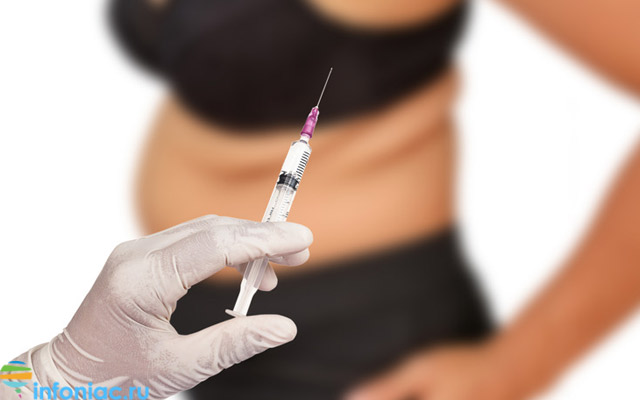
The patient is injected with a so-called
lipolytic cocktail, consisting of a group of drugs that break down fats well. For
intralipotherapy, in contrast to mesotherapy, more active
drugs are used, which are administered to a greater depth.
Read also: What happens to your body if you don't eat for 24 hours
Mesotherapy is a method that works primarily at the
surface, with injections ranging from one to four millimeters deep. Several injections are performed
at once, while intralipotherapy usually does not exceed one or two injections
per session.
Intralipotherapy and mesotherapy are not performed in one
session. With intralipotherapy, the average number of sessions in one course can
reach ten, with a frequency of
once a week. A mesotherapy course can include ten to 15
visits. The number of sessions is determined individually by a specialist.
Rehabilitation period after intralipotherapy and mesotherapy
This is not to say that intralipotherapy or mesotherapy are
absolutely painless for the body. Unpleasant sensations can occur not
so much during the injections themselves as after
them. In order to relieve puffiness, anti-inflammatory
medications and special creams are sometimes prescribed.
Swelling and redness go away quite quickly, sometimes
within one day. For two weeks, doctors do not recommend visiting a bath, sauna, solarium or
even sunbathing. In general, intralipotherapy or mesotherapy will not have
a significant impact on your lifestyle.
Contraindications to intralipotherapy and mesotherapy
–
chronic liver and kidney diseases, diabetes mellitus may serve as contraindications to both procedures;
– intralipotherapy and mesotherapy are not recommended in the presence of
autoimmune pathologies,
thyroid disease, blood diseases;
Saiyood/Getty Images Pro
– intralipotherapy or mesotherapy is contraindicated during
pregnancy and lactation;
– both procedures are impossible if you are
hypersensitive to the drugs that make up the lipolytic cocktail.
Effects of intralipotherapy and mesotherapy
The consequences of both procedures are that our waist
begins to look slimmer and toned. Both intralipotherapy and
mesotherapy reduce the
amount of fat deposits. However, the first procedure is more aimed at
combating local fat accumulation, while the second is more aimed at
combating cellulite in combination.
Usually, the effect of both procedures is not achieved immediately, but after
several visits. Intralipotherapy and mesotherapy are quite effective in fighting the fat layer,
providing a good visual effect achieved by a significant decrease in
waist volume.
The final result and effect of the above procedures
are judged after the end of the course. On average, when it comes to mesotherapy and
intralipotherapy, the duration of
the course can be one to two months or even several months, but
this parameter is set only individually, depending on the
complexity of the situation.
The cost of intralipotherapy and mesotherapy
The cost of both procedures usually includes the price of vials with a
lipolytic cocktail and the price of the injections themselves. In some clinics, injections are
conditionally free, as everything is compensated by the cost of drugs. The price for an injection as part of mesotherapy can be
an average of 3,000 rubles, and for intralipotherapy, an average of 6 to 8 thousand rubles
per ampoule. Abroad, such sessions are several times more expensive, reaching prices of
$700 or more per session.
Myostimulation
Those who are not ready to take drastic measures, including removing ribs or cutting off layers of fat and skin, as well as those who are afraid of injections or do not tolerate
lipolytic drugs, are invited
losing weight with electric current, that
is, myostimulation.
How is myostimulation performed
The standard myostimulation course offered
by various beauty parlors can include about 10 sessions, although
often their number can be almost doubled. The duration is two to three weeks. The
procedure is often described as painless and almost relaxing. However, many
patients describe it as rather unpleasant.
It is carried out as follows: electrodes are
attached to the abdominal area, through which electrical discharges are supplied, causing muscle
tissue to contract. The range of pulse
currents used for this procedure ranges from 30 to 150
hertz. The current is regulated during each individual procedure, from
minimum to maximum.
Rehabilitation period after myostimulation
There is usually no question of a special rehabilitation period after
myostimulation. Some clinics advise not to eat
protein foods during the entire period of the
procedure. This can be considered a little trick, since the volume of the abdomen can decrease
slightly from just one protein-free diet.
Contraindications to myostimulation
Myostimulation has quite a few contraindications,
despite its apparent safety:
– the procedure is undesirable if the pain threshold is low or when there is
hypersensitivity to the effects of impulse
currents. Ignoring this fact usually leads to patients
writhing from cramps and pain during myostimulation;
– myostimulation is prohibited for kidney and liver diseases (
for example, in the presence of kidney stones, gallbladder);
– myostimulation is extremely dangerous during pregnancy, in the presence of
a pacemaker, in lung diseases, in thrombophlebitis.
The consequences of myostimulation
Of course, it is purely arbitrary to compare this procedure in terms of effectiveness with
invasive operations. Despite the fact that clinics
claim 4-6 centimeters
that your waist will lose in volume after a full course of myostimulation, patients are usually disappointed with the
result.
Often, the zero result is explained by the fact that myostimulation
is indicated for people with sagging abdominal skin. Indeed, in the process of
body shaping with currents, the main effect is on the abdominal muscles, and not on the fat layer. Muscles tone and
stretch, which can sometimes explain the positive effect of this
procedure. Perhaps that is why many people recommend myostimulation in combination with
other procedures – lymphatic drainage massage, sports activities, and so on.
The cost of myostimulation
The cost of myostimulation varies significantly depending on the
clinic. In others, they may ask for no more than 1000 rubles for one procedure,
while others may ask for 2500 or more. It is noteworthy that in many Western countries, myostimulation is not promoted as actively as in
Russia as a separate procedure. At the same time, the cost of
complex procedures is announced.
Cryolipolysis
Ksenija_OK/Getty Images Pro
If, as part of myostimulation, our waist is exposed
to electric current, then as part of cryolipolysis, the subcutaneous fat layer
feels the effects of low
temperatures. At the same time, the effectiveness of the procedure is achieved due to the increased
sensitivity of fat cells to low-temperature effects.
How cryolipolysis is performed
Since the task of cryolipolysis is to influence low
temperatures on the subcutaneous fat layer, and not on the skin, the skin is protected with a
so-called antifreeze cloth
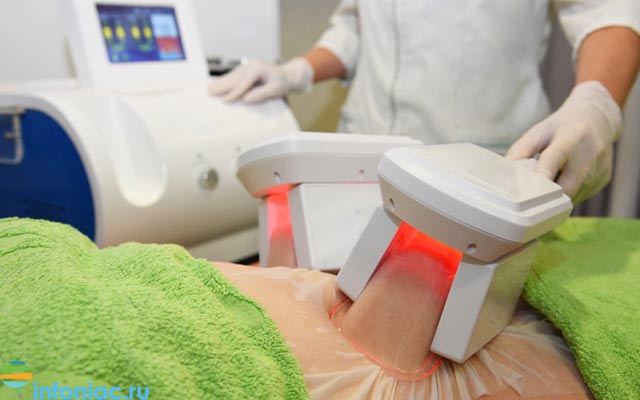
impregnated with a special gel. Then, a
vacuum nozzle is applied to the problem areas, which draws in a layer of skin with subcutaneous fat,
destroying the latter with a low temperature.
The effect is achieved due to the effect on fat cells, in
which fats are broken down due to low temperatures (in fact, the metabolism of fat cells
increases). This is a process called lipolysis. The duration
of one such procedure is about 40 minutes or a little longer. The number of procedures
is determined individually, but it is rarely possible to do with three procedures.
Rehabilitation period after cryolipolysis
Cryolipolysis is positioned as a procedure after which no rehabilitation period
is required. Despite this, many patients
who have undergone this procedure
report bruising, swelling, and redness. Thus, in reality,
postoperative pain can persist for several
weeks.
Patients who are struggling with the effects of this procedure
may be recommended to wear special compression garments.
It definitely makes sense to give up active sports at least for
a short period of time. However, these
consequences are purely individual and depend on many external factors.
Contraindications to cryolipolysis
Since the cryolipolysis procedure is called completely
useless and safe, many unscrupulous clinics may even keep silent about existing
contraindications. And they are there, although not so many:
– some experts critical of cryolipolysis
warn that this procedure can be dangerous if the
subcutaneous fat layer is less than five centimeters thick;
– cryolipolysis is contraindicated for pregnant women and women during lactation;
– if there is an individual hypersensitivity to the
effects of low temperatures, this procedure is contraindicated.
The consequences of cryolipolysis
Even after several procedures, you should not expect a quick
result from this cryolipolysis. Clinics say that your
waist size will decrease by 30-40 percent.
In reality, however, the results may be much more modest, and even then not
for everyone. The most effective cryolipolysis procedure is combined with
other procedures, including massage. It should also be remembered that noticeable
results appear within the first three months.
The cost of cryolipolysis
The average cost of cryolipolysis in Russian
clinics can range from 20,000 to 35,000 rubles. In some clinics, you can find
lower prices, while in others, the price can reach up to 50 thousand. It is noteworthy that this procedure is
not much more expensive in Western clinics. Perhaps this is due to the availability of equipment for this
procedure and its widespread distribution.
Thalassotherapy
The very name of this procedure speaks for itself — you are not
operated on, you are not exposed to impulse currents, and fat
cells are not destroyed by cold. In fact, you are offered a special set of spa treatments that simulate the effects of the marine
climate on the body. Sounds nice, doesn't it? But how effective is this therapy,
especially away from the sea?
How thalassotherapy is performed
Ideally, thalassotherapy includes a set of active
activities and spa treatments that are carried out on the seashore.
The therapeutic effect is achieved
through the effects on the body of swimming, sea air and water, and
sunbathing. There are many well-known resorts in the world that position themselves as ideal
places for thalassotherapy.

Ponomarencko/Getty Images
In large cities, thalassotherapy is a set of
procedures that are indirectly related to the sea; and they are performed in spa centers. The standard
set of thalassotherapy treatments usually includes cosmetic
massages and wraps.
The cosmetics that are used in this case can be
made on the basis of extracts of various algae, include
sea salt, therapeutic mud and clay. Some salons use extracts of marine organisms
and natural sea water. If the treatments are chosen correctly, regular
visits to the spa really have a beneficial effect on the body, including
regulating its weight.
Rehabilitation period after thalassotherapy
As part of thalassotherapy, there is no effect on the
body, which could even be conditionally called invasive. In fact,
we are talking about pleasant and gentle medical, cosmetic
or even preventive measures, after which there can be no talk of
any rehabilitation period.
Contraindications to thalassotherapy
Contraindications to thalassotherapy may be the same conditions in which many massage procedures cannot be performed, as well as a number of
diseases:
– Thalassotherapy is contraindicated for oncological
diseases, skin diseases, blood pathologies, problems with the respiratory
system.
The consequences of thalassotherapy
One of the main results of thalassotherapy is an overall
improvement in well-being. After the procedures, the skin becomes elastic and heals. The body itself becomes
toned, the abdominal muscles tighten after massage and wraps, and cellulite
visually decreases.
Does this lead to a decrease in waist size? Unfortunately,
not always and not for everyone, but with the right procedures,
thalassotherapy in combination with an active
lifestyle will really help remove a couple of centimeters from your
belly. However, thalassotherapy cannot
be called a cardinal way to get a flat stomach.
The cost of thalassotherapy
Since thalassotherapy is a set of different
activities, its cost depends on
what procedures will be performed. Also, a lot depends on the cosmetics
used, on the status of the spa center (simple, elite,
etc.).
Average prices may range from 700-3500 rubles,
but more expensive procedures are also possible (such as wrap-drainage, applications
using special algae
, etc.). It is important to understand that at least some effect from thalassotherapy
should be expected when several procedures are involved in
combination.
Cavitation
Cavitation is often referred to as non-surgical liposuction
because this method also involves removing fat from the body.
In fact, this is not one procedure, but a whole
range of procedures in which the membrane membrane of fat cells is destroyed (or at least should
occur).
How cavitation is carried out
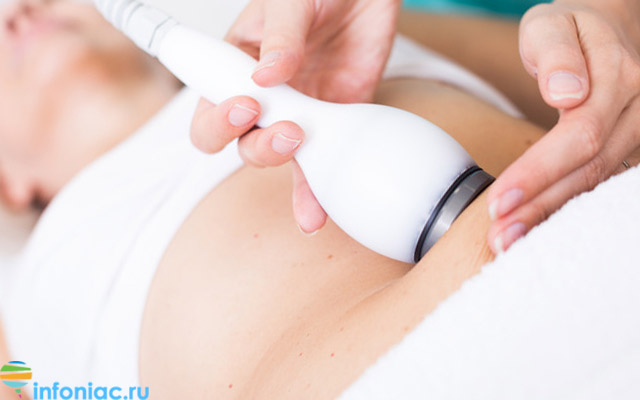
The specialist determines the location of fat deposits; then a gel is applied to the skin in the
appropriate areas, which is carried with a special ultrasound device that generates
ultrasonic waves in certain frequency limits. The
vibrations created by this act on the fat layer.
The duration of the procedure is from 10 to 40 minutes. The course may
include several treatments. How is fat removed from
the body, you ask? During cavitation, cellular memabrane is impaired,
after which the fat converted to a liquid state is excreted as a result of
natural metabolism.
Jackf/Getty Images Pro
Rehabilitation period after cavitation
Cavitation does not impair the integrity of the
skin, so there is no special rehabilitation period.
There are certain rules
that require drinking plenty of fluids at the
time of the procedures, and observing proper eating behavior.
Contraindications to cavitation
– various chronic
diseases of the liver, kidneys, and cardiovascular system may serve as contraindications;
– cavitation is contraindicated in certain forms of
diabetes mellitus, during lactation and lactation, in the presence of a pacemaker.
The consequences of cavitation
Despite the fact that all clinics that vied with each other to offer
cavitation say that after the first procedure you will lose 2 to 5 centimeters in the
waist, the reality is that cavitation gives extremely modest results. Many argue that even the small effect
that can be achieved is due to side massage when an ultrasound device is applied
to the skin.
Cavitation cost
In Russia, cavitation prices vary greatly, but on average, you need to pay about 3,500 rubles
per procedure. This procedure is more expensive abroad.
Depending on the clinic, the patient will be forced to pay between $1,000 and $10,000
for the full course.
Starvation
If you try to dig into information sources
to find a link between starvation and a thin waist,
you will almost immediately come across dozens or even hundreds of offers to lose weight without starvation. In fact, it is almost
pointless to search the Internet
for a clear fasting recipe that will help you personally reduce your waist. Consultations and medical examinations are required.
How is fasting done
It is believed that if fasting is carried out for more than a day, it
should be carried out under the supervision of a specialist. The paradox is
that no specialist in official
medicine should (from the point of view of this very official medicine) promote
fasting, since the latter is a method like this called alternative
medicine.
Strictly speaking, there are conditions in medicine
when patients are required to fast — after or before surgery, for certain pathologies. And this
fasting lasts about 3-5 days.
However, special conditions must be created for the patient, and medical
supervision is necessary. At the same time, refusing water is prohibited. At home,
few doctors will advise you to stop eating for more than 1-2 days.
As for alternative medicine, it actively
uses several methods of therapeutic
fasting, which can really help get rid of excess fat in the
area waist:
– full or water starvation, carried out for 1-40
days, during which they completely refuse to eat food, but
drink water in unlimited quantities.
Minor full fasting lasts 1-2 days, average full fasting lasts 3-7 days,
while prolonged full fasting can last 8-40 days.
– absolute or dry fasting, carried out for 1-2
days, during which they completely refuse to eat food and drink liquids;
– combined fasting, carried out for at least
3-4 days. In the first days of fasting (1-3 days), a person refuses water and
food, but starts drinking water on days 2-4.
Rehabilitation period after fasting
The period of rehabilitation after fasting (called the
recovery period) depends on the type of fasting. It is clear that immediately after
fasting, no matter how long it lasts, you can not switch to a normal diet. Therefore, nutrition after fasting is called
restorative. For some types of fasting, it can last 2-2.5 times
longer than the fasting period itself.

JackF
Contraindications to fasting
It's dangerous to starve. This is recognized not only by opponents of curative
fasting, but also by its supporters. Most often, the danger is due to the fact that people
begin to starve on their own
without consulting specialists or undergoing a medical examination.
Meanwhile, fasting has many contraindications:
– you can not starve during the active phase of various diseases
of the respiratory system;
– fasting is contraindicated in heart failure, cardiac arrhythmias, pathologies of the
circulatory system, after a heart attack;
– starving is dangerous in type 1 diabetes mellitus;
– fasting is contraindicated in various kidney and
liver diseases, and so on.
Before you decide to starve, be sure to consult with experts!!!
The consequences of starvation
It is unlikely that it will be a secret to anyone that the inevitable
consequence of any uncontrolled starvation is death. We are not talking, for
example, about minor starvation, although it can also be dangerous for some
people. But a complete rejection of water for 7-10 days usually kills a person.
Read also: 8 benefits of curative fasting that will surprise you
In addition, there are many scientific papers that
prove that starvation (or even malnutrition)
causes many diseases.
Of course, fasting will cause you to lose weight and your waist to become
slimmer. However, along with adipose tissue, muscle
mass also goes away during fasting.
But when nutrition is restored, it is fat that most easily
comes to its place. It is up to you to decide whether to starve or not, but do not forget that official
medicine, with all its adherents, represented by venerable academicians and professors, actively
opposes starvation.
The cost of fasting
The phrase “cost of fasting” can cause
laughter or bewilderment. Indeed, if you are not starving, then you are not
buying food, that is, you are not spending money. However, severe opponents of starvation say that a very large percentage of
people who decide to starve for health are exacerbated by serious chronic
diseases. They get so bad that then you have to work on
drugs alone.
Physical activity and proper nutrition
Agree, it is more pleasant to eat than not to eat. But in order to
reduce your waist, it is important what you eat, how often and
what lifestyle you lead. In other words, there is no need to periodically torture yourself, completely refusing to eat, at the risk of
undermining your health; you just need to switch to an appropriate
diet, adhering to which you will be full of and begin to lose weight.
How to switch to a different mode of life
The sad news is that there is no single recipe
for everyone to change their activity patterns and eating behavior. Some people are
driven by their health, others by the fear of old age, and others by the desire to
have a slim waist. And nothing can force some to give up fatty
foods and start exercising.
However, the good news is that almost everyone can do this —
switch to a different mode of life — if they really want to.
Starting small — by avoiding junk food and exercising in
the morning — you are unlikely to remove fat from your sides as quickly as, for example, by resorting
to liposuction. However, the result will be achieved later and without violence against
the body.
You can say that sports for you are already violence against the
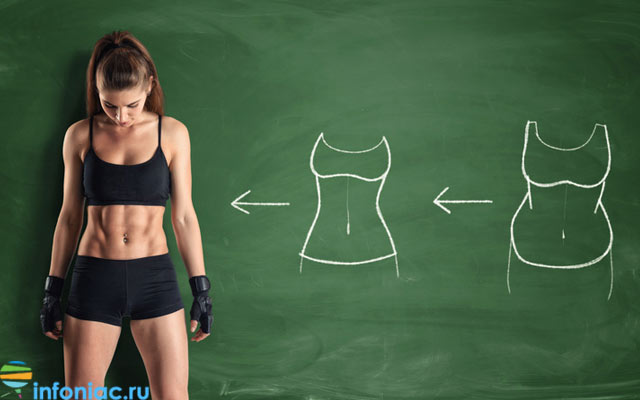
body! Of course, there are different methods. But here's a simple example of how to lose a couple of centimeters (or even more) from the waist without significant effort in
30-40 days:
– easy jogging in the morning — 10-15 minutes;
– jump rope — jump without fanaticism as much as you can and as
much as you can;
– sideways. Try to lean as low as possible (it's
not that difficult). The secret and effectiveness of slopes lies in their quantity. Aim to make 50 slopes in each direction,
making two or three sets. Gradually increase the number of slopes and
approaches;
– from a lying position on the floor, raise your legs and upper
torso so that only your fifth point is in contact with the floor.
You should stretch your arms forward and
try to hold this position for at least 10 seconds. Take a break. Repeat 15-20
times. The initial number of approaches is 4-5 per day;
Gearstd/Getty Images Pro
– avoid fatty, fried and sweet foods;
– reduce portions of food, but increase the number of meals
(for example, not three meals a day, but five meals a day);
– if possible, you can periodically resort
to a cosmetic procedure (for example, a wrap or a massage).
Let this lifestyle be the norm for you for just one
month. You can be sure that after 30 days you will see the results of your work. And if they
do not suit you, you can always return to your old way of life and
achieve a thin waist using one of the methods suggested above.
Of course, with the help of cosmetology (especially with the help of surgical cosmetology), you can quickly achieve serious results when it comes to a thin waist. But often this result does not last long, especially if you do not change your lifestyle and eating behavior. That is why the most reliable method in most cases remains the combination of physical activity and proper nutrition.