 Ecology Museum
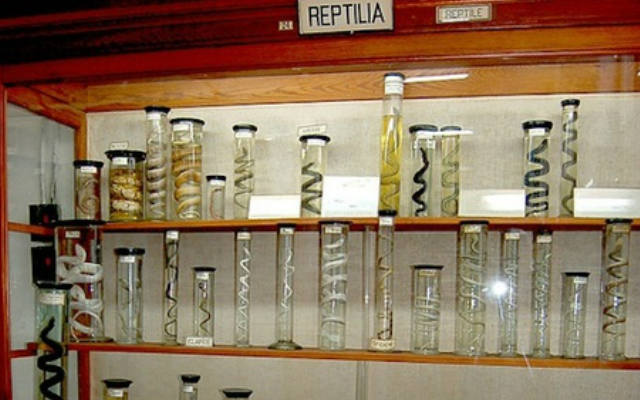
Scandinavian scientists were lucky enough to discover a new species of snake. Moreover, this discovery took place not somewhere in desert sands or impenetrable jungle, but at the Natural History Museum in Copenhagen, Denmark. It is reported that two researchers, Johan Elmberg from Sweden and Arne Rasmussen from Denmark, studied a collection of transparent containers filled with formaldehyde, in which” the bodies of snakes rest.
Scientists have found two sea snakes with the same name on a sticker on the wall of the container. It is noteworthy that both snakes were sent by collectors to Denmark back in the 19th century. “However, the snakes looked different and were unlikely to belong to the same group of snakes,” said Johan Emberg. “After comparing sea serpents with other similar species in various museums in Europe, it is clear that we have found a new separate species of snake.”
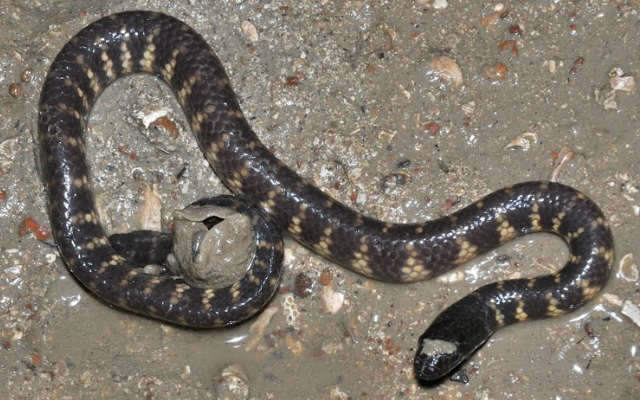
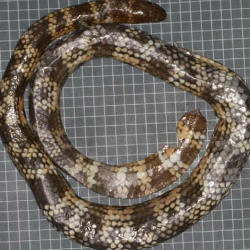
The mosaic sea serpent (Aipysurus mosaicus in the scientific world) is what scientists called this reptile because of its unusual skin, which looks like a Roman floor mosaic. “It never crawls ashore and now that it has been identified, it is obvious that these snakes are relatively common in northern Australia and southern New Guinea,” said Emberg, saying that the presence of snakes in these waters is a good sign that coral reefs and rare ecosystems are developing normally.
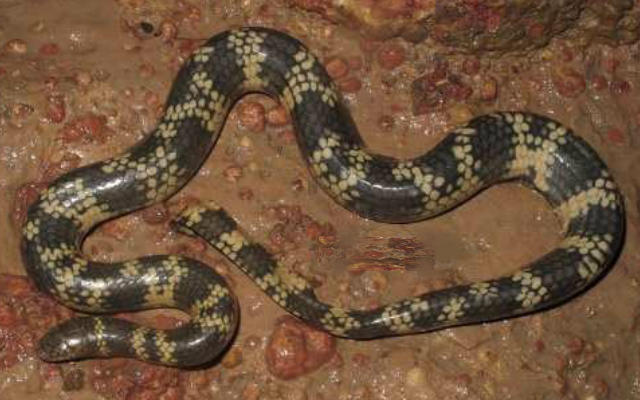
“Since there are snakes left in this habitat, this means that the reefs are healthy and unharmed,” Johan explained, adding that unlike other marine reptiles, which are highly poisonous, the mosaic sea snake is essentially harmless. In general, this species feeds on fish eggs and has very small fangs. Until now, it was believed that this snake was a species of species called Aipysurus eydouxii, but molecular analysis has shown that these are indeed two different species.