
 Culture
Nowadays, there are a
large variety of literary genres in the world, and science fiction occupies a special and honorable place
among them.
In this article, we will tell you about the latest
in the world of science fiction literature, about the best books and works, and you
will learn about what you can read at your leisure if this genre is close to you.
Science fiction
First, let's look at what
science fiction is all about and how this genre came about. Science fiction was
popularized and presented to the general public in the 1920s.
Its essence lies in the fact that invented or real scientific discoveries and
inventions affect society both in the future and in the present. Science
fiction is a relatively young and rapidly developing genre. Formally,
it appeared in the West at the beginning of the last century in connection with the industrial
revolution and the emergence of new technologies. Many authors are actively interested in
progressive discoveries in order to predict future
changes in the world as accurately as possible and surprise the reader as much as possible.
George Orwell,
1984 (18+)

In fact, science fiction
uses elements of the future to highlight and discuss issues that are important
to humanity in the present. George Orwell's dystopian novel 1984
is a classic example of such a work.
In it, our world culture has become
a victim of total state control and manipulation of society. The book
is useful for reading at any age. It is perceived in different ways, but
its essence will be captured by every reader who respects the cultural heritage of mankind.
The novel tells the story of the life of
Winston Smith, a party member who does not share its ideology and fundamentally
disagrees with the position of its sinister leader, Big Brother. Big Brother was able to
control everyone's life and even thoughts by creating a special language and so-called thought
police so that people would not even think about rebellion.
He watches what they listen to,
read, what they talk about, and punishes “perpetrators” severely. Smith, on the other hand, does not
want to put up with the established rules and
the terrible totalitarian regime of the Big Brother Party.
If you think about it, the book reflects the horrors of
totalitarianism and media control in the real modern world, and also
points us to the consequences that can
entail for all humanity the absolute dictatorship of one violent man.
Richard Morgan, Altered
Carbon
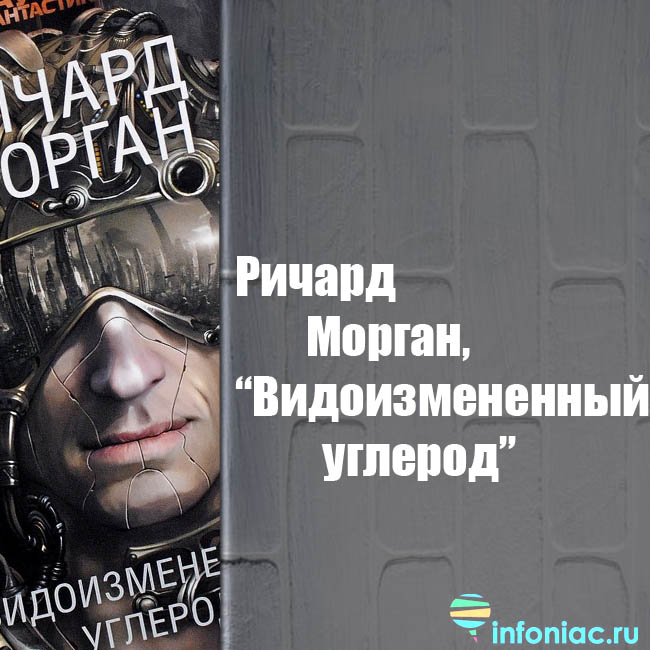
The action takes place in the future, in a world
where people have learned to preserve human consciousness and transfer it to a new body. This
procedure can be performed an infinite number of times, changing bodies again after the
death of the previous membrane.
However, not everyone is happy with this prospect,
because the body can only be changed after it ages and dies. This is
why most people only change their bodies once or twice. Rich people, on the other hand, can
afford to change shells more often than others. They're called Mafs.
One of them, Lawrence Bancroft,
commits suicide. However, after moving to his new body, he forgets everything that
happened to him two days before his death. Convinced that he has been fished,
Lawrence seeks help from former military officer Takeshi Kovac. Will he be able
to solve the mystery? If so, at what cost…
Neil Stevenson, Anathem (18+)

Written in 2008, this novel
will make you rethink many aspects of life, science and philosophy. We recommend
reading it at a more meaningful age to understand its essence, because the
main themes of the novel are quantum mechanics and multi-world interpretation.
The book will introduce us to Fraa Erasmas, a
young man living in the Saint Edhar concentration center. So-called concentrates are
safe havens for mathematicians, philosophers and scientists, where they are protected from the harmful
influences of the outside world and can set their own clear rules.
For centuries, cities and governments have been born and collapsed outside the
walls of the centers, while their own traditions and rituals prevailed inside.
Three times, in the darkest times, violence and
pain, generated by prejudice and ignorance, invaded a closed
community. But what doesn't kill us makes us stronger. Community members only
adapted to the circumstances, becoming even more isolated, harsh and
independent of technology and material things.
Erasmus, on the other hand, is not afraid of the outside world, because the
last invasion took place too long ago. During one of the ceremonies, when the gates to the outside world
are opened — this happens every ten years — he
looks forward to being reunited with a family he hasn't seen since he came to
community. However, he does not yet know what changes await him and whether
he will be able to cope with them.
Anne Leckie, Servants
of Justice (18+)
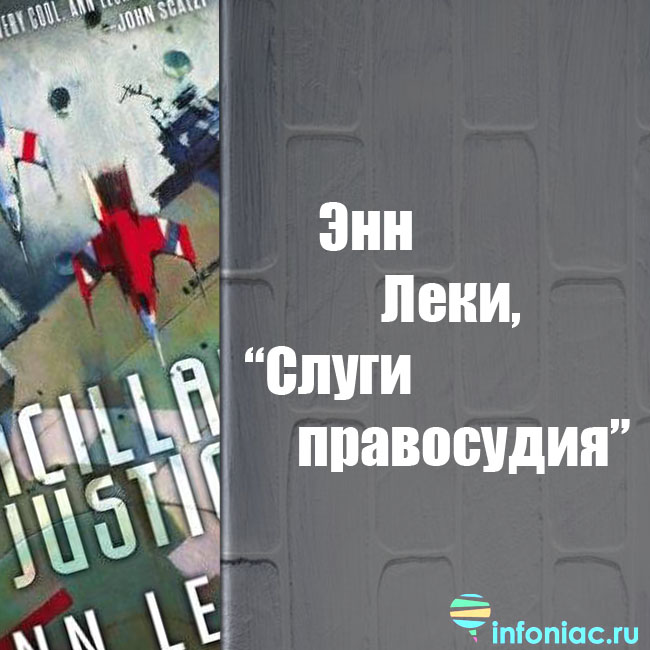
Far in the future, Earth as such no
longer exists, and all its colonies are united into a single empire — Radch. Ships
used in military service are operated by high-ranking military officers.
And the dirtier work is done by servants — the bodies of former criminals, with artificial intelligence inside
them instead of an individual.
At the beginning of the novel, on a distant, cold
planet, we meet Breck, a soldier ready to complete his own
mission. It used to be part of a huge machine — a ship called
Torren's Justice — a colossal machine powered by artificial intelligence. The ship connected
thousands of soldiers serving Radch, a vast empire that had completely
conquered the galaxy. However, the treacherous destruction of Justice Thoren
left behind only one fragile body, too many questions, and a burning
thirst for revenge.
Karen Lord, Best of
Possible Worlds (18+)

A secretive and secretive but proud
alien society is left without a home — their homeland is destroyed and destroyed, and the
survivors are forced to turn to humanoids living in the world their home used to
be remote communication. At the same time, they do their best to preserve their
cherished way of life. They will soon have to learn that in order to preserve
their unique culture, they may need to change it completely and
irrevocably.
To do this, a man and a woman from these
two very different worlds must come together and work together. This is the only way
they will be able to achieve what they want and, in the end, curb many secrets and their
incredible consequences. Perhaps this unusual team —
cold-blooded and reasonable on the one hand, hot-tempered and passionate on the other — will be able
to find its destiny.
This is a story about survival, love and
hope. This is a story about finding the best of all possible worlds.
Aldous Huxley, Brave New World (18+)
This dystopian novel
is a classic of science fiction. It has been translated into many
languages and opens our eyes to the so-called “consumer society”. In many
ways, the novel, which takes place in a state with modified
citizens and a social hierarchy based on intellectual abilities,
anticipates breakthroughs in reproductive technology, learning during sleep and in the
areas of psychological manipulation.
In a country where people are
born differently than we are used to — they are grown in special
vessels — there are 5 segments of the population. They differ from each other both externally
in physical abilities and internally in intelligence. The Alphas
are at the top of this chain.
Ordinary workers who do
dirtier jobs and who are not brilliant are raised in a completely
different way than “alphas”. People at the cultivation stage are deliberately made stupider with ethyl
alcohol, then they go to work harder to take their time, because a
lot of things in the state are automated.
According to residents, problems in the state are solved very simply — with the
help of a drug that is not addictive, but kills a person by the
age of 60. Death is treated with humor, and residents do not have access to love, religion
and everything sublime. Everything they get can also benefit from low
pleasure — sex, drugs, mass entertainment. Will the main characters be able
to experience other joys of life, or are they destined for vulgar diverse entertainment?
Read also: Science fiction that came true
Science-fiction fiction
Walter Miller Jr.,
The Leibowitz Passion (18+)

Reading the novel, you will be transported to the
post-apocalypse world, experiencing the consequences of a terrible nuclear war.
Most of the action takes place in one of the Catholic monasteries in the southwestern United States.
This novel is an example of a true classic
science fiction work, as evidenced by readers' sympathy and the
1961 Hugo Award.
In a nightmarish shattered world, where people
despise technology and progress as the cause of wars, life awakens after a long sleep in the
dark. The latest scientific discoveries
are secretly fueled by monks who live in seclusion in a monastery in the middle of the desert. These
monks, on the other hand, devoted themselves entirely to studying and preserving the sacred
writings of blessed Isaac Leibovitz, who sought to preserve knowledge
destroyed by an ignorant crowd.
This is where the story of violence and
barbarism begins, through which we can see the relentless progress of the human
race, cursed by its ability to repeat sad mistakes. This is
a serious and at the same time funny, stunning, tragic and timeless
story that has not lost its amazing and catchy qualities over the years. This
book has always been, is and will be a true masterpiece of world
science fiction literature.
Phyllis Dorothy James, Child
of Man (18+)
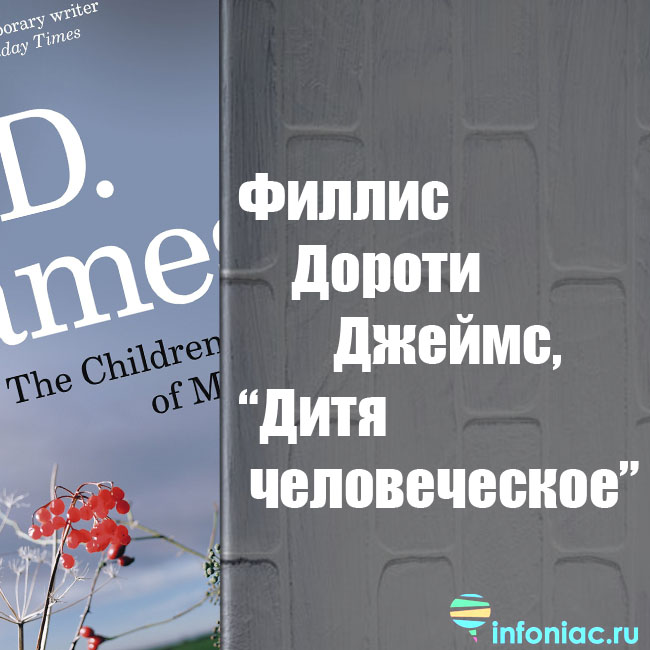
In an effort
to portray a plausible prediction of the future, British writer F.D.
James has created a true classic of modern science fiction literature,
which every year It's becoming more and more like reality. Today, in
many countries, there is a problem — a decrease in births. And although the
balance in the world is now being regulated, no one knows what will happen in the near future.
“The Human Child” is
a sad story about a world with no children and no future. In it, the
human race became completely sterile, and the last generation born grew up
long ago. Humanity is beginning to die out, as suicides
and hopelessness become normal phenomena in society. Theodore Faron,
an Oxford historian who is completely indifferent to this prospect,
spends most of his time remembering.
One day, a
bright and very attractive woman named Julian turns to him for help. But the most interesting thing
is that as you communicate with her and her group of unpromising revolutionaries,
Theodore wakes up a desire to live. Could they be the key to the survival of the
human race?
Robert Charles Wilson, The Chronolites (18+)
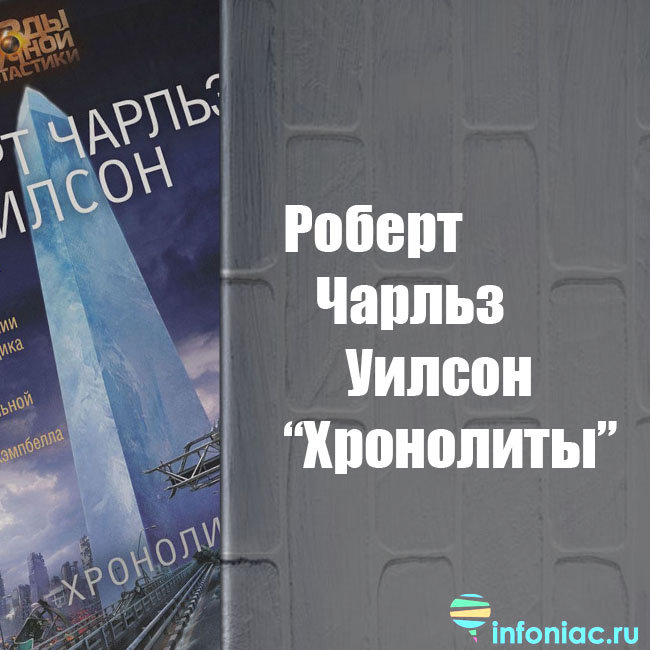
Scott Worden is a man who is
relentlessly haunted by the past and will soon be haunted by the future.
At the beginning of the 21st century, Scott is an immigrant living in Thailand and an
absolute slacker. One day he becomes an unwitting witness
to an incredible event: a 60-meter stone pillar suddenly appears in a wooded area.
Its appearance destroys trees within a
radius of about 500 meters from the epicenter, freezes the air around and an explosion of radiation
breaks into the atmosphere. The formation unknown to Scott consists of foreign
matter, and the inscription carved on its surface tells of a great military
victory in the future, which is 16 years away.
Marissa Meyer, CyberCinderella (18+)

The city of the future is New Beijing. The world
is suffocating from a new disease called letumosis, for which
no cure has yet been found. The main character of the novel is Lin Zola, a cyborg, lives with her stepmother and
is the manager of a special mechanical stall. Society doesn't
like cyborgs, so she hides who she is.
At the request of a prince named Kai, Zola and
one of her sisters go to a landfill to collect
the necessary parts to repair his android. Soon, her sister becomes infected with
letumosis, which infuriates Zola's stepmother. Angry, she takes Zola to a local hospital, where she is being experimented
on to find a cure for the terrible disease.
Research shows that Zola
has a very unusual immunity. She manages to fix the android, and her sick
sister soon dies. Will Zola be able to save everything she cares
about and discover the truth about who she really is and who she was before she became a cyborg?
Anthony Burgesses, A Clockwork Orange (18+)
Fans of this
iconic work are not only among science fiction lovers, because A Clockwork
Orange is known all over the world, it is played and
films are made, but quotes are used in everyday life. Anthony Burgesses created this brutal masterpiece during the Cold
War, when totalitarianism, anxiety and suppression of will reigned everywhere, but its
central themes are still relevant today.
This controversial and controversial
work makes the reader draw a line between freedom and
permissiveness, and also reminds us of responsibility for their actions. The incredibly
deep themes covered in the work are seasoned with the author's interesting language
— nadsat — which he himself invented.
The main character of this
violent but incredibly sobering novel is a fifteen-year-old “friend” named Alex, who, along with his
gang, dedicates all his free time to “street violence” :
rape, robbery and beatings.
After committing a brutal murder, the teenager is still sent to prison, where he is offered alternative treatment
for his freedom. Alex
agrees, not knowing what to expect. Mutilated by treatment, he returns
home where no one is waiting for him — in his room, in his parents' home, now lives a person
completely unfamiliar to Alex, who replaced his son with his parents.
Some time later, Alex recovers from his past treatment, but his previous aggression, cruelty and hatred for everything are
partially lost. At the same time,
he does not see the point in properly raising his future children, believing that there will always be room for mistakes and violence in their
heads.
This is a sad story about a future where crime and violence
prevail over respect and common sense. With the help of author's slang, the novel terrifies
the reader and warns him that it is
necessary to draw a clear distinction between freedom and permissiveness, otherwise terrible universal
tragedies cannot be avoided.
Octavia (18+) Butler, Dawn
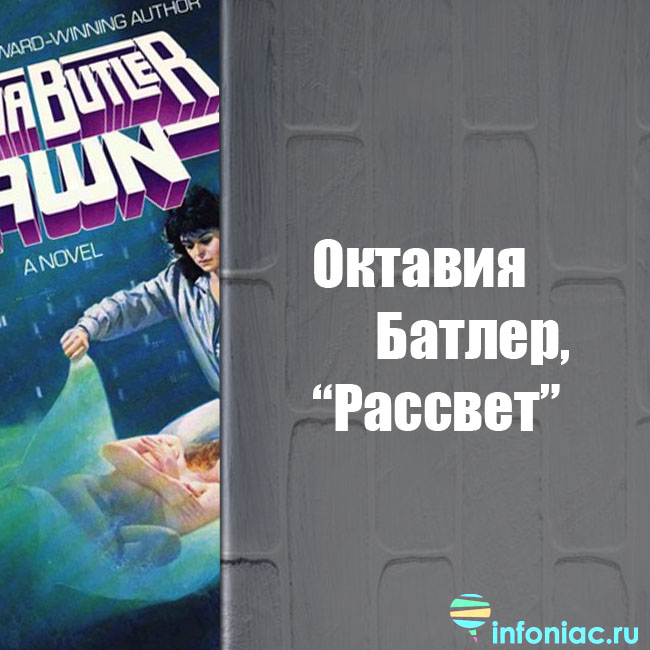
Olivia Butler's best works are illustrative examples of
classical contemplative literature based on studies of race,
class, and power. In the novel “Dawn”, she talks about the amazing
rescue of humanity by an alien race after the Earth is destroyed by a
nuclear explosion. The only condition for outsiders is that the survivors,
when they return to Earth, must rebuild it, carry alien
genetic material and create offspring with aliens.
Due to the nuclear flame raging on Earth at the
end of the war, Lilith lost her beloved husband and son. Hundreds of years later,
she woke up aboard a huge spaceship piloted by Onkali — creatures
that arrived just when it was necessary to save humanity
from deaths.
They kept Lilith and the rest of the survivors asleep
for centuries while they found out details about Earth and its inhabitants themselves. Now
her mission is to bring these people back home. However, life among Onkali on a newly
inhabited planet will never be the same again. After all,
Onkali have always survived at the expense of other primitive civilizations, merging with them
genetically, regardless of whether the other side agrees or not.
Now, for the first time since the nuclear holoch, life
will reappear on Earth. Grass will grow again, animals will run through forests, and people will
learn to survive in wild, untouched nature. But their kids won't be human anymore.
More precisely, not really…
Ursula Kroeber Le Guin, The Deprived (18+)
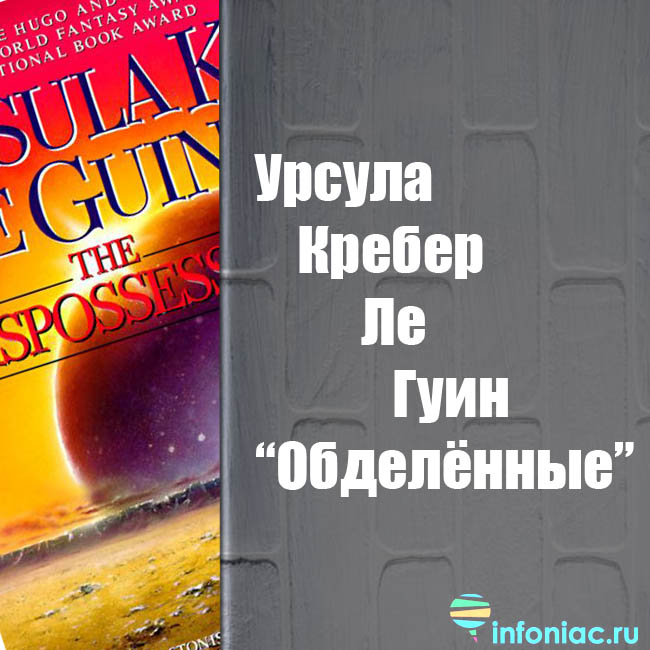
“Deprived” is one of Le Guin's most successful,
unrivaled and powerful novels. The story
is told in two worlds that are twin but consider each other
moons: Urras, where capitalism, great wealth, progress and
inequality reign; and Annares, which is home to anarchists who were expelled from Urras
centuries ago.
Stranded between two worlds, Shevek is a brilliant physicist who
unwittingly provokes a revolution while on the verge of the greatest
discovery the universe has ever seen. Shevek knows how to act — he looks for
answers, asks questions when it would seem useless to ask, and
does his best to break down the wall of hate that has
separated for so long anarchists from the rest of the civilized universe.
All this, and much more, will require incredible
efforts and sacrifices from Shevek – he may have to lay down not only his
family, but also his own life on the altar. Will he dare to take an unprecedented trip to Urras,
the utopian planet where it all began, to defy life
's difficulties and ignite the flames of change?
See also: The best works of space fiction — book Universes and galaxies on paper
Science fiction — books
Philip K. Dick, “Do Androids Dream
of Elektoys?” (18+)
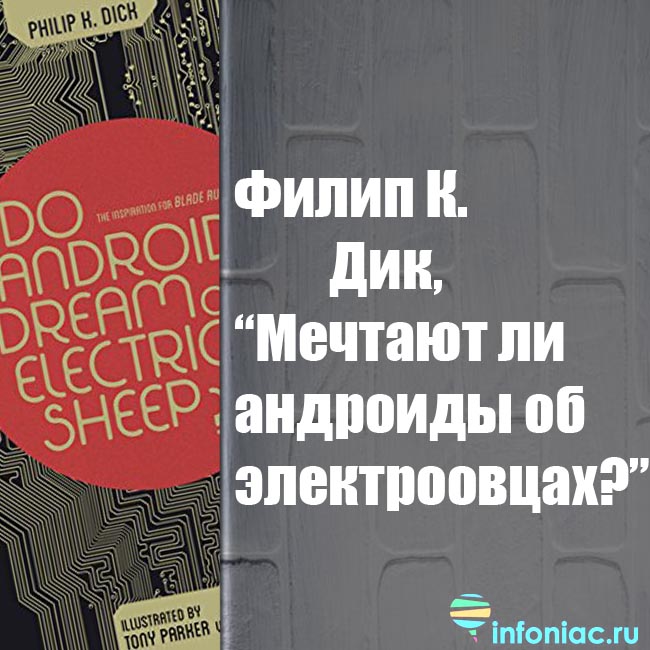
This novel
is considered one of the most successful in the history of Philip Dick's work. Without
a doubt, the work can be called a classic of
science fiction literature. It raises very controversial, but
extremely important topics for modern humanity. In some places and
ideas, the novel may be contradictory, but all fans of science fiction
should visit its pages at least once.
The novel
is set on Earth, but it's not at all what we know it now.
The last world war destroyed almost all the amenities
that provide and make life easier for people. Devastation reigns everywhere, and unfortunate
survivors and those who haven't escaped huddle in abandoned cities, where they die of hunger
or disease.
Rick Deckard is a
bounty hunter, and at the time of the novel, his main task is to eliminate
several aggressive androids with unique intelligence that have arrived on Earth
illegally. His task is particularly difficult, and Rick has no margin for error.
In addition, he intends to spend the money received for its implementation on live
sheep — almost all animals are extinct, and caring for an electric sheep provokes Deckard's
serious mental problems health.
While
working on the task, Rick will have to question not only his activities,
but also his own identity. His work is further complicated by the fact that androids
are hiding somewhere, among people, and they look completely indistinguishable from them.
They can be identified using special tests, but you still need
to handle them with the utmost care — you'll never know who's in
front of you. So do androids dream of electric sheep?
Frank Herbert, Dune (18+)
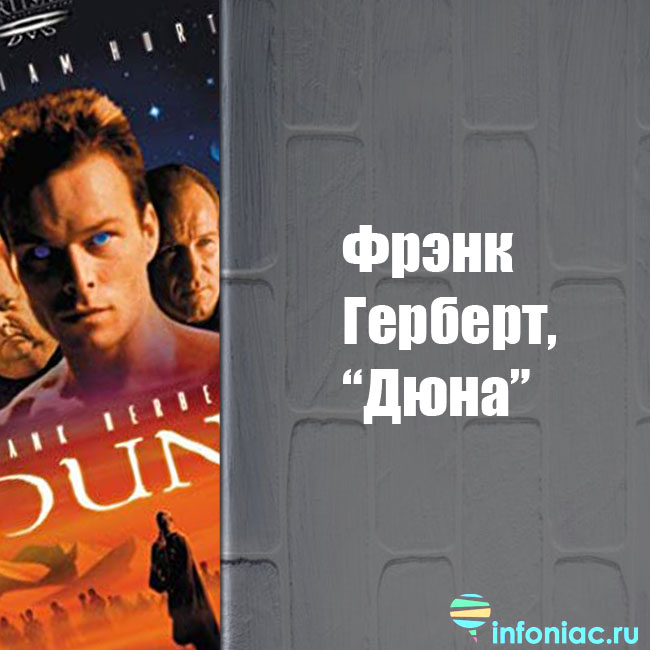
This science fiction novel
is the very first, most successful and most famous in the
Dune Chronicles series, which Frank Herbert continued to write several years after its
publication the first part. It brought the American writer not only worldwide
fame, but also a number of prestigious awards. Dune has also
inspired many famous writers and screenwriters to create their
works.
Dune tells us the
story of young Paul Artreides, heir to Duke Leto and the House of Artreides.
The action takes place in the distant future, in a rapidly developing intergalactic
feudal empire on the deserted planet of Arrakis, where the Great Houses, the ruling ones,
act as power childbirth and families. Arrakis is the main
planet in the galaxy, and it produces Spice, a special, most important substance in
space that is used to travel between stars.
This is a story about a
multi-level and multifaceted interaction between politics, religion, ecology, technology
and human emotions in particular, as the forces of the empire are fighting each other
a friend for power over Arrakis. Dune is often featured in many
sources as the most successful science fiction novel. A little tip —
if you do decide to master the whole cycle, it's up to you, but Dune
is an unrivaled novel, and you won't find anything better than it in the series.
Elisabeth Beer, Dust
(18+)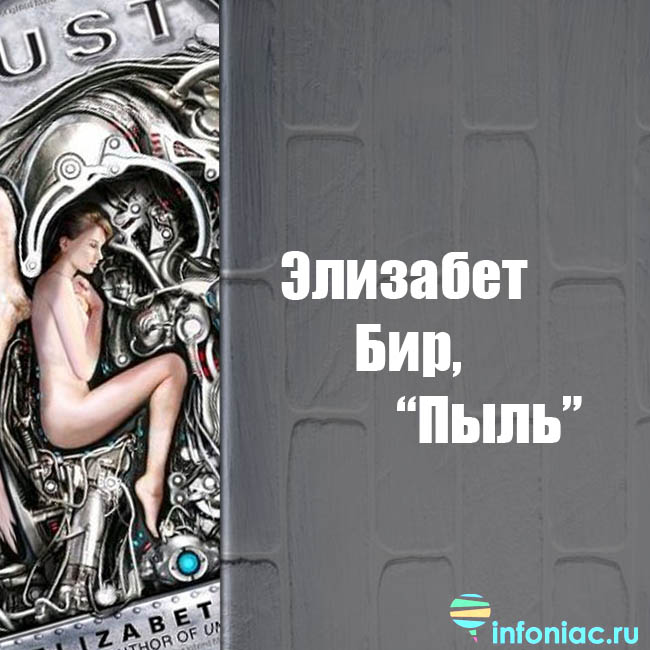
This is the best generational ship novel
you can find. In it, artificial intelligence, angels and humans coexist
on the so-called Jacob Ladder, which has been in orbit for many years. This is the extraordinary
story of an aristocrat, maid and angel who travel on an already dying
ship, struggling to stop the war between their homes and
change the order forever your world.
On a broken ship that
revolves continuously around the doomed Sun, residents eventually came to terms with their
aging iron world. However, one day, the old order of a dying ship
suddenly changes, perhaps completely and irrevocably.
Princess Ariana has always been known for
her composure and cruelty. But the fact that she deprives the angel of her
wings on the battlefield, even after his submission, definitely proves her ferocity and
dishonor. A captive angel named Perceval is waiting for an unusual death — Ariana intends
to absorb her memories and mind. Undoubtedly, this terrible death will spark a war
between homes, but that's exactly what the fierce princess is waiting for. Perhaps it would have ended
so sad if the handmaiden hadn't appeared in the story in time.
“Dust” is a sensual
story about the desire to stop a destructive war between homes, about a dangerous
journey on a crumbling ship, about compassion and cruelty, as well as why
this brutality can lead.
Orson Scott Card,
Ender's Game (18+)

This novel has a special place in the hearts of many science
fiction fans. In addition, he is also famous among
fans of other genres. Ender's Game won its author two
prestigious science fiction awards.
It is not often the case that the writer's very first
novel becomes a classic of the genre and also provides the author with
worldwide fame, but “Ender's Game” can be said to have broken the
system. The Hugo and Nebula Award-winning novel
tells the story of six-year-old Andrew “Ender” Wiggin, who ended up in
Combat School because he may be humanity's only hope in the future
war against an alien race.
Ender, in some ways the
result of genetic experiments, is quite capable of becoming the military genius
that the Earth so desperately needs right now, because it is under attack
an alien enemy that seeks to destroy all living and human beings. The only
way to find out if this is really the case is to send Ender to study at Combat
School, which will either discover a real diamond in it or destroy and break
it. As he learns, Ender becomes stronger and grows before our eyes.
The war against the Zhukers has been going on for a hundred years, and the
search for the perfect commander takes just as long. However, Ender is not the only child out of the
ordinary. His older brother and sister are just as different from the rest —
Peter is aggressive, his cruelty is impossible to control, and Valentina is too
calm and gentle, and incapable of violence. That's why they couldn't
get to the same school as Ender.
Nevertheless, Peter, driven by envy of
Ender, persuades Valentina and blindly wants power, seeks to control the
political process, and become the main ruler.
Valentina's amazing abilities are aimed at subtly controlling people's beliefs — her words are
always convincing. Hiding anonymously on computer networks, the two begin to
shape the fate of Earth, an Earth that won't have a future if
Ender fails.
Ray Bradbury,
Fahrenheit 451 (16+)

In one of the greatest dystopian
novels, Ray Bradbury explores the problem of total government censorship and the
merciless destruction of knowledge by completely removing books from objects,
accessible to the public. This immortal classic clearly and acutely notes that
a person destroys what he cannot fully understand. Young readers may be
confused by the Cold War tone in the novel, but Ray Bradbury's truths are timeless.
The story of Montag, who has evolved from
a firefighter destroying books to a fighter for life and knowledge, is one of
the most successful and famous in the history of science fiction literature.
This novel is useful for everyone, because it raises important topics for modern
society. What can happen if people start mercilessly killing
their own culture?
In the near future, Guy Montag works as a “firefighter”,
but his distinctive feature is that he does not put out a fire, but creates
it by burning books that he considers dangerous to society. Meeting young
Clarissa, who does not accept the established social order, but soon dies
tragically, Montag begins to rethink his own life. At the risk of
himself and everything he cares about, he seeks to save what he once
destroyed.
Read also: Science on the verge of new fantastic discoveries
Genre science fiction
Mira Grant, Korm (18+)

With all its original findings and
unusual plot twists, Meera Grant's “Feed” is a
zombie apocalypse book you should never miss. This is the
story of a group of bloggers who are on the verge of the most incredible
changes in their lives. 21st century, a cure for cancer has long been found. The common
cold is also defeated. But at the same time, humans have created something far worse.
Something invulnerable, immortal.
The virus spreads through human
organisms, the infection blocks the body, leaving only one basic
command relevant: FEED. Now, 20 years after the Uprising, bloggers Georgia and Shawn
Mason are at the beginning of the most significant story of their lives: a dark conspiracy.
The truth is bound to come out, even if it costs them their lives.
Daniel Keys, Flowers for
Algernon (16+)

This short sci-fi short
story is a sure thing for most readers – and this is the best compliment
for him. Flowers for Algernon has won
several prestigious awards to its author. Initially, this work was
a science fiction novel, but later, after the author worked on it, it
grew into a full-fledged novel.
At the very beginning of the novel,
we meet a 32-year-old man named Charlie Gordon. He has phenylketonuria and his IQ is 68, which indicates his intellectual disability.
Charlie's uncle got him a simple job at his bakery so he
wouldn't have to live in a government facility. Wanting to improve his
intellectual abilities in some way, Charlie regularly attends reading and writing courses at
a special school for mentally retarded adults.
One day, two researchers, Dr.
Strauss and Dr. Nemur, begin looking for people willing to take part in
an experiment in which, through a unique surgical procedure
are rapidly developing intellectual abilities. Listening to the
advice of a school teacher and Charlie's sincere desire to learn how to read and write
correctly, they choose him for the experiment. The
operation is successful, and over the next three months his iq grows to 185.
The most remarkable thing about the book is that its writing
style changes as the main character's level of intelligence increases
– errors in the text disappear, and more scientific terms appear. “Flowers for
Algernon” is a novel about friendship, about
society's misunderstanding and rejection of a person, about scientific discoveries, experiments and their impact on the lives of specific
people. It clearly shows what a desire to go against
nature for the sake of science can entail.
Isaac Asimov, Foundation (16+)

To begin with, we should say
a few words about the author himself and about the novel as a whole. Isaac Asimov was born in the
RSFSR, from where his family moved to America when the writer was 3 years old. The
novel itself is the first and main part of a later series that bears the
same name. In addition, the novel itself contains five smaller
stories, which together form one story.
All five short stories were
published between 1942 and 1951, and some of them originally
had different titles. Nowadays, the novel's stories can be found under the titles Psychohistorians, Encyclopedists, Mayors,
Merchants, and Merchants. They are all arranged in
chronological order and are linked by one story.
The great and powerful Galactic
Empire has ruled for twelve thousand years, but everything falls
into disrepair, and it is no exception. She's dying. But only Gary Seldon, the
creator of the latest revolutionary science, psychohistory, can see this
sad future — a dark era of ignorance, barbarism, and devastation that
will last incredibly for a long time — as much as 30 thousand years.
In order to preserve the knowledge accumulated over the
centuries and save humanity from suffering and death, Seldon gathers
around him the best minds in the Empire — both scientists and educated people —
and takes them to a dark, inconspicuous planet at the very edge of the Galaxy, where they
can work and become a beacon of hope for future generations. Seldon calls the band “Foundation”.
However, the inexperienced “Foundation” soon
finds himself at the mercy of the corrupt lords of the Empire, which is already on its
last legs. Humanity's last hope is faced with a terrible
choice: to submit to barbarians and succeed, or to confront them and be
destroyed.
Mary Shelley, Frankenstein
or Modern Prometheus (18+)
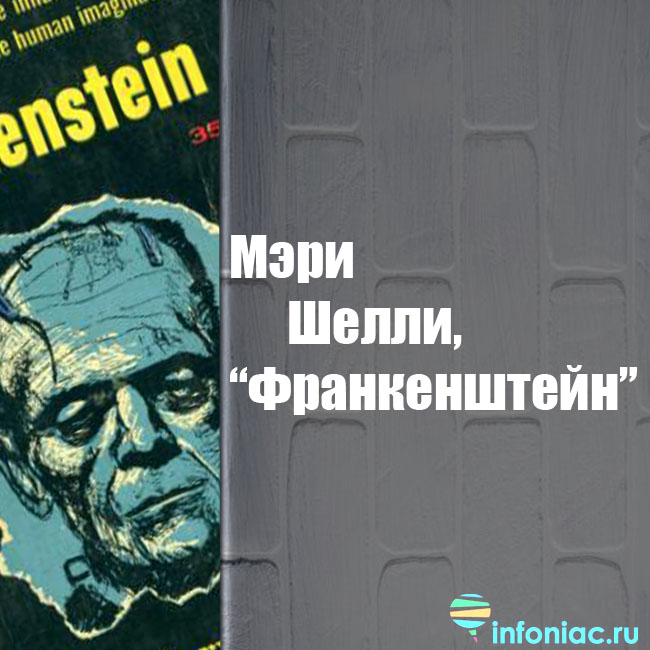
Despite the fact that this work is
an undeniable classic of Gothic literature, it is confidently considered
one of the earliest and most vivid examples of science fiction. It is no exaggeration to say that Frankenstein has
significantly influenced both literature in general and many branches
of pop culture. Even 200 years after the novel was first published, many
modern works and films can be found echoes of it.
Mary Shelley started writing a novel when she
was only eighteen years old. As both a gothic thriller, a
passionate novel and a future-proof short story, Frankenstein
presents the fascinating story of young scientist Victor Frankenstein,
devoted to his ideas.
Obsessed with discovering
the root cause of life and animating lifeless matter, Frankenstein assembles
a creepy humanoid creature from stolen parts of the human body. When
the assembled monster begins to move, Victor is horrified by what he sees. Exhausted by
long isolation from society and loneliness, the once peaceful and
innocent creature becomes violent and embittered, intending to take revenge on
its creator, Frankenstein.
This absolute bestseller and,
undoubtedly, an important ancestor of all horror works, does not just
tell a fictional story, but raises disturbing
questions in human minds about existence, essence and origin of life, about man's place in the universe.
What does it mean to be human? What responsibilities do we have to
each other? How far can we go in experimenting on nature itself? You will find answers to
these and many other pertinent questions in one of the most
famous Gothic and sci-fi works.
Science fiction best books
Alette de Bodard, Tea Master and Detective (16+)

It is important for all fans of science fiction to know about the latest in the literature of this genre. We are happy to share them with
you.
Welcome to the Shattered
Pearl Belt, a collection of rings and orbits ruled by exiled scientists and
powerful families. There is a special type of transport between orbits —
intelligent ships. They are capable of transporting people and goods from star to star. In
this unusual society, people and avatars — the bodies of intelligent ships — are
closely related, and the human environment changes depending on the person they are
talking to or in their mood.
This book is an amazing story about
a wounded warship named Daughter of Shadows, which is currently helping
people find their serenity and Moon Chau, who turns to her for help.
A story about the past, about emptiness and the fight against it. Undoubtedly, the world of
science fiction has never seen such a world before.
Brooke Bolander, The Only
Harmless Great Thing (16+)

At the very beginning of the 20th century, a group of
female workers at a factory in New Jersey slowly died from radiation
poisoning. At the same time, an innocent elephant is deliberately killed by electricity on
Coney Island. These are facts.
Now these two tragedies are
intertwined in a dark story of rage, radioactivity, and absolute
injustice that screams that they shouldn't exist. Prepare for
an exhausting journey through years and eras, filled with
violence, in search of meaning and justice.
Russian science fiction
The Strugatsky Brothers, Roadside Picnic (16+)

It's time to tell you about some
science fiction works by Russian writers, because they have some very
interesting and noteworthy works. The first work we would
like to talk about is Roadside Picnic by the Strugatsky brothers,
first published in 1972.
The hero of the story, Red Shewhart, is a stalker,
one of those young rebels who, despite the great danger,
are forced to enter the Zone regularly and illegally to collect mysterious
artifacts left over from an alien invasion. His life depends
entirely on this place, as well as on the prosperity of the black market,
where artifacts can be sold for a lot of money.
One day, when Shewhart comes back to the
Zone with his buddy, something goes wrong. But Radrick's main problem
is that he is absorbed in the Zone, obsessed with it, and is eager
to go there again despite all the dangers. After all, someone who once wanted to become a
stalker will not be able to change.
Alexander Belyaev,
Professor Dowell's Head (16+)

The whole world
mourns the loss of Professor Dowell. Shortly before his death, he was on the
verge of a breakthrough in human organ transplantation. Marie Laurent
considered herself privileged to work as an assistant to the talented
Professor Kern. But her high feelings turn to shock and horror when she walks
into Kern's lab.
On the table,
surrounded by tubes and tanks, with moving lips and blinking eyes,
lies Professor Dowell's very head! But the culmination of
this incredible story is the escape of one of the heads, which was given
a new body.
Written more than
half a century ago, this unique work raises a number of eternal questions
that concern modern people as well — not only the possibility of innovative organ
transplantation and parts of the body, but also the use of
psychiatric hospitals as prisons, as well as media manipulation.
Science fiction
book series
Liu Cixin, Remembering Earth's
Past (16+)
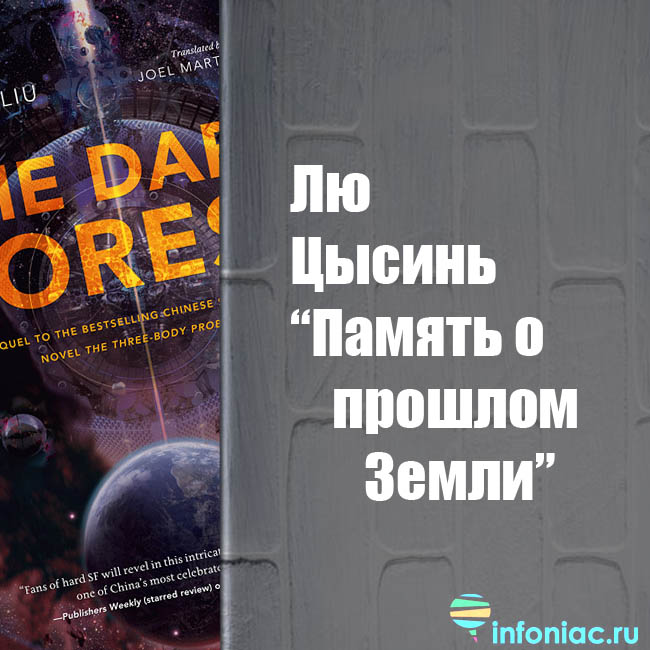
Liu Cixing is a Chinese writer
specializing in science fiction. He is one of the most
famous and successful followers of this genre in all of China. Some of his
works have won the author numerous prestigious awards both domestically
and abroad. In particular, the first part of the trilogy “Remembering the
Earth's Past” won the writer the world-famous Hugo Literary Award.
“The Three-Body Problem” is the beginning of this
brilliant trilogy, and it was the book that won the Chinese science fiction writer
the prestigious Hugo Award. Most
readers often associate it with the title of the entire trilogy, and it can rightly be considered a worthy
introduction to Remembering Earth's Past.
The book takes place at the very
epicenter of the Cultural Revolution in China. In 1967, astrophysicist Ye
Wenjie witnessed the terrible death of his father, a talented
physicist. He is being killed for refusing to
invalidate the theory of relativity.
Shortly thereafter, she
is wrongly accused of inciting environmentalists like Rachel
Carson to promote the work of environmentalists. She is also told that she can escape punishment if she agrees
to work at a research center that searches for extraterrestrial
intelligence. 40 years later, her work becomes directly related to the suicide
outbreak by scientists. Can anyone save humanity, and how can the three-body
task contribute to this?
“The Dark Forest” is the second book in the trilogy,
which really amazes the reader and keeps him on his toes
until the very last page. In it, humanity will have to deal with the
difficulties that have befallen it and gather strength to
repel alien invaders.
In the second book of the trilogy, Earth is relentlessly
and irreversibly approaching a fateful alien invasion —
only four centuries left. At the end of this time, alien creatures —
trisolarians — will arrive at their destination and take over the entire solar system.
They have access to all human
information, and only one detail is an unsolved mystery: the human
mind. Can anyone use this mystery as an
advantage over alien invaders, and how will it affect human life?
“The Eternal Life of Death” — Liu Cixin is the last, final part of an incredible trilogy, and
at the same time a “cherry on the cake” and an absolute masterpiece. The book
begins on Earth at the height of its prosperity as female engineer
Cheng Xin, who has spent hundreds of years in a cryogenic freeze, awakens again.
This happens six months after the
Yom Kippur Battle. Trisolarians share their knowledge, and human science
is developing. It would seem that soon two civilizations will be able to coexist peacefully
without the threat of destruction. However, the truce makes people too complacent.
Will they be able to improve and reach the stars, or will they die in
their own cradle without knowing all the secrets of the universe?
Anne McCaffrey, The Horsemen
of Pern (16+)

The fantastic epic, the cycle “The Horsemen
of Pern”, was the main and most famous work of this American
writer. The cycle includes many novels written both by the
writer herself and together with her family — son and mother. Despite the fact
that the cycle contains more than 25 stories, it is customary to single out one main,
the very first trilogy. It will be discussed in our article.
Dragon Flight is the first novel in the main
trilogy. It takes place in the distant future on the planet Pern,
colonized by humans. Initially, the colonists sought a low-tech,
agricultural lifestyle, without spaceships and other advanced technologies,
but they had to abandon this idea forever after how they
encountered Threads that are dangerous to them, falling from the sky — substances that
burrow into the ground and destroy everything that is alive and fertile in it. Residents,
however, found a way out of their almost hopeless situation — fire-breathing dragons,
bred to protect Pern, were able to completely burn deadly
threads. Finally, humanity has once again had the opportunity to feel
safe and begin to develop.
Dragons used by humans have
telepathy and are able to establish a strong lifelong connection with a particular
person. However, not all people are granted this privilege — only a
select few who have telepathy and developed senses fall into this
category. Dragons, on the other hand, have several colors that determine their size and status
in the community.
There are blue males, green females,
brown males, bronze males, and golden female queens. The bronze ones, the
biggest males, are traditionally the only ones who can compete with
each other for the golden female. Green females do not have the right to breed,
as they usually produce small and weak dragons that are unable
to participate in the protection of Pern. Golden females are not just the most purchased dragons —
they also control the entire community of these creatures, being at the top of the
hierarchy.
The main character of
the novel is a careless cook named Lessa. She spent most of her life
serving those who betrayed her father and took possession of her lands. For
her sake, for her world, Lessa must throw off her shackles and change the course of history. It so happens
that a girl meets a golden dragon queen, whose relationship will last
from now on until the end of their lives.
This connection will protect them
when the Threads fall back to Earth. Once upon a time, dragons and their riders were
numerous, but now, when they are so needed, they are becoming scarce. In
this regard, brave Lessa will risk her life, and the life of her beloved dragon, to
save her beautiful world from destruction. Only time will
tell whether they will cope with this difficult task.
Dragon's Journeys is the second part of the trilogy.
A few years after the events of the first part, a
terrible threat hangs over the Earth again – the threads again fall into the
soil and destroy unusual larvae whose task was to protect the Earth. Therefore,
brave and fearless horsemen take off again, and their formidable dragons whirl
and rush to the source of danger, spewing a saving flame that
destroys the Threads even before how they touch the ground.
But F'lar, the ruler of Weir,
knows very well that he must find another, more effective way to fight the Threads,
which will help him save Pern. And he must do this before his
reckless brother F'nor comes up with another suicide plan. Despite the
fact that this miraculous method will make life on Pern much easier,
dragons will never lose their importance.
White Dragon is the third and final
part of the trilogy, which describes the life of a young Lord Hold Ruath named Jaxom,
who inadvertently linked himself to the unusual white dragon Ruth. As he grows
older, Jackson has to deal with the difficulties that come his
way, because being a lord and a rider at the same time is not an easy task.
In addition, he needs to cope with Ruth's
growing up, because the dragon is not only unique white in color, but also smaller than
others in size. Another distinctive feature of this unusual creature
is that it is able to travel back in time, warning certain
events. One day, while fighting the Threads, Jax falls ill with a fatal
illness that forces him to settle in the Cove. At this time, he begins
to understand some of the secrets of Pern's ancestors and begins to understand the
past much better.
Susan Collins, The Hunger
Games (18+)

Few people in our time have not heard about this
sensational trilogy by American writer Susan Collins. After all, despite the
fact that over the past few years, there has been a
real boom in the world of dystopian literature, especially in teenage genres, none of these works have
become so as successful as the Hunger Games trilogy.
Despite the fact that the plot — several innocent
teenagers get into a violent game played by a
corrupt government — seems simple at first, those who watch
deeper, they know for sure
that Susan Collins managed to build her own, amazing world and give readers one of the brightest heroines of
modern literature.
In addition, the trilogy clearly
demonstrates how even ordinary people, under the influence of stress and for the sake of
their lives, become wild, violent and capable of unimaginable violence.
There is good news for movie lovers — all parts of the work have
colorful and unforgettable film adaptations.
The Hunger Games, the
very first part, marked the beginning of one of the most colorful trilogies in the history of
science fiction. A state called Panem originated in
post-apocalyptic North America. It consists of the Capitol, the cultural center of
rich life, and 12 poor districts on its outskirts — districts. Earlier,
the 13th District uprising against the Capitol led to the destruction of the district
, and the government established the annual Hunger Games, which are
always held on a grand scale and They are covered on television.
For the Games, as punishment for the past
and reminders of the power of the Capitol, each district annually nominates a
boy and a girl aged 12 to 18 through the Harvest draw. They're called
tributates and they're on an entertaining reality show for the rich from the Capitol.
District residents fear the Harvest like fire, because out of 24 Hunger Games stands, only one
wins. And he is the sole survivor of a deadly fight
for freedom.
“Catching Fire” is the second part of the acclaimed
trilogy, published in 2009 and became famous
all over the world in a short run. Despite everything, Katniss Everdeen, who took her
twelve-year-old sister's place in the first part, wins the Hunger
Games. Miraculously, another tribute from District 12 also survives — previously, there would always be only one
winner.
The girl returns to her beloved family
and her longtime friend, Gale. However, things are not going the way she would like them to.
Gail keeps a distance between herself and Katniss, Pete turns away from her, and
she can't figure out her feelings. In addition, districts
are already hearing echoes of the impending uprising against the Capitol,
an uprising provoked by Katniss and Pete.
To her surprise, Katniss causes
unrest that she can't stop on her own. And the worst thing for her is that she doesn
't even know if she should intervene. As the Winners Tour gets
closer and closer, Katniss and Pete must convince the whole country they're in love and
happy — or else the consequences could be dire.
As they enter the Hunger
Games arena for the second time, Katniss and Pete must do everything they can to deceive the
Capitol again. In the second part of the trilogy, Susan Collins not only tests
the characters for strength, but also surprises readers at every step.
“Mockingjay” — Katniss Everdeen,
a fearless girl, survives the Hunger Games again and doesn't give up
despite her house being destroyed. Her family is safe, but Gail has escaped and Pete
is held captive at the Capitol. It turns out that District 13 still exists, the
rebels are on the alert, new leaders leading the uprising are on the way — a
revolution at arm's length. Katniss finds herself in the middle of the
action.
The success of the uprising
depends almost entirely on Katniss's willingness to play a major role in it — despite all the fears and risks of
going against the Capitol for Panem's future. It should put aside all
emotions and lead people along. She should be
that mockingjay.