
 Science
is a field of human activity aimed at developing and systematizing objective knowledge about reality.
It would seem that there are no unresolved questions for humanity, but despite the latest discoveries in various fields of science, scientists are still trying to find answers to many questions.
Our review contains ten scientific mysteries that are still unsolved.
Secrets of science
1. Why is there more matter than antimatter
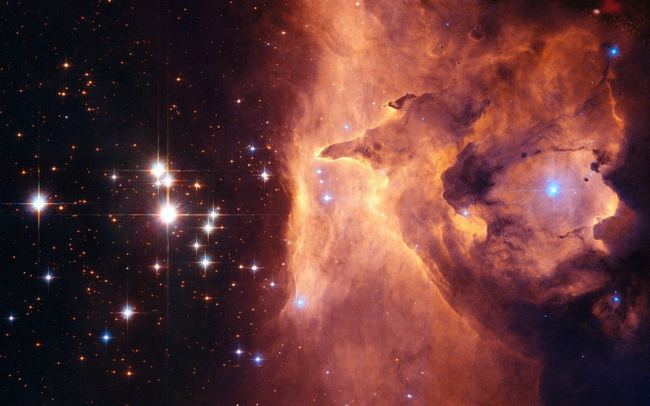
According to the current understanding of particle physics, matter and antimatter are identical but opposite. When they meet, they completely destroy each other and release a large amount of energy. Most of these annihilations must have happened when the universe was in its infancy. However, it still has enough matter left to create billions of galaxies, stars, planets, and everything else.
Most of the discussion takes place around B mesons, subatomic particles with a short half-life that consist of quark and antiquark. The decay of B mesons is slower than the decay of anti-B mesons, which is why enough B mesons could appear to form everything in the universe. In addition, B-, D- and K-mesons can oscillate and become antiparticles and inversely composite particles. According to one hypothesis, mesons are likely to assume a normal state, which is quite possible, since there are still more ordinary particles than antiparticles.
2. Where did all the lithium go

At the beginning of the universe, when the temperature was incredibly high, isotopes of helium, hydrogen and lithium were synthesized in huge quantities. The proportion of hydrogen and helium in the universe is still very high, but only about a third of the level predicted by the simulations has been found to be lithium-7. There are many different explanations for why this happened, including hypotheses with hypothetical bosons known as axions. They are also thought to be at the core of stars that our current telescopes and instruments can't detect. But there is no clear theory why this happened yet.
Read also: 10+ of the most mysterious and unusual atmospheric phenomena
3. Why do we sleep

Although we know that circadian rhythms (biological clocks) are responsible for wakefulness and sleep, we do not yet know the essence of this phenomenon. Human sleep consists of several 90-minute cycles of brain activity. Each of these cycles consists of a gradual, slow dive into deeper sleep, and then an abrupt transition to the dreaming phase – so-called REM or paradoxical sleep. At the end of REM sleep, the cycle either ends and we wake up or a new cycle begins. The structure of the human brain is such that deep slow-wave sleep prevails in the first half of the night, and by morning, the REM phase of sleep increases.
Except for warm-blooded animals (mammals and birds), none of the living creatures have these forms of sleep. Cold-blooded vertebrates and invertebrates have a monotonous sleep period. However, according to a number of signs, the form of sleep with different phases is very ancient. Most likely, this form of sleep offers some survival advantage, as it has become entrenched during evolution. But what this advantage is still completely unclear.
4. What is gravity
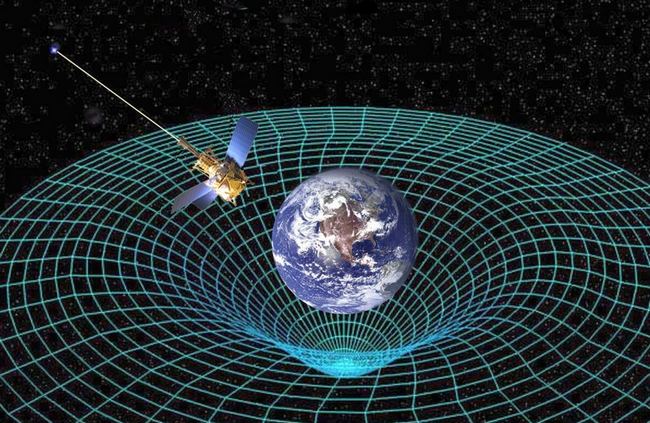
We all know that the Moon's gravity causes the ebb and flow, the Earth's gravity keeps us on the earth's surface, the Sun's gravity keeps our planet in orbit, but how well we are do we understand? Gravity makes it possible for larger objects to attract smaller ones. But why does gravity exist? Why is there so much empty space in atoms? Why is the force that holds the components of an atom together different from gravity? Do gravity particles exist? We cannot answer these questions at the current level of scientific development.
5. Are we alone in the universe
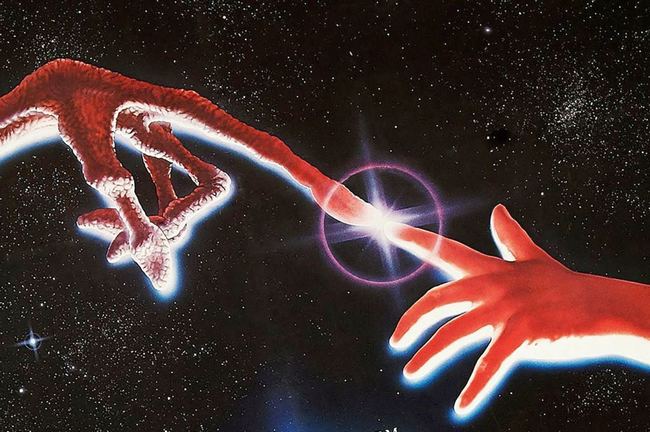
The universe we see is 92 billion light years across, filled with billions of galaxies with stars and planets. But the only proof of life is only here on planet Earth. We're incredibly unlikely to be the only life form in the universe, but why haven't we contacted anyone yet? This is called the Fermi paradox. Many suggestions have been put forward as to why this did not happen, and many of them seem quite plausible.
There are a lot of scenarios, maybe we just don't notice the signals, maybe they've been here for a long time, but we don't know about it, maybe they don't want to talk to us. Or, the most disappointing scenario is that Earth really is the only habitable planet in the universe.
6. What does dark matter consist of
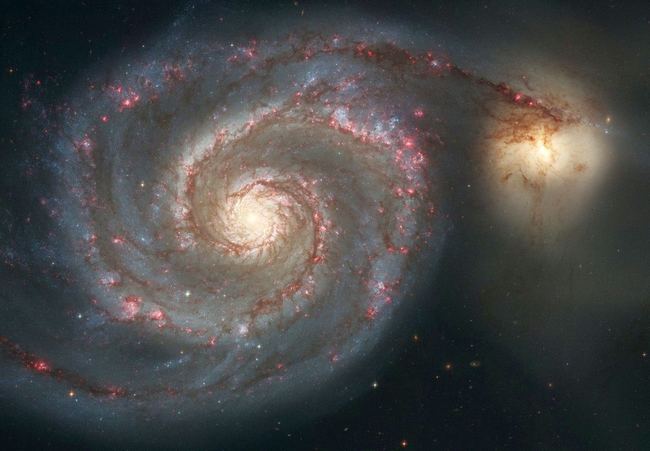
About 80% of the matter in the universe is made up of dark matter. Dark matter is a pretty weird thing as it doesn't emit any light. Although its existence was first talked about 60 years ago, there is still no evidence to support this theory.
The most natural assumption seems to be that dark matter consists of ordinary, baryonic matter, which for some reason interacts weakly in an electromagnetic way and therefore does not found when studying, for example, emission and absorption lines. There are other candidates for the composition of dark matter: axions, neutrinos and supersymmetric particles. But we can talk about significant candidates on the basis of some facts obtained on the basis of observations, but there are no such facts.
How life came about
7. Where we're from
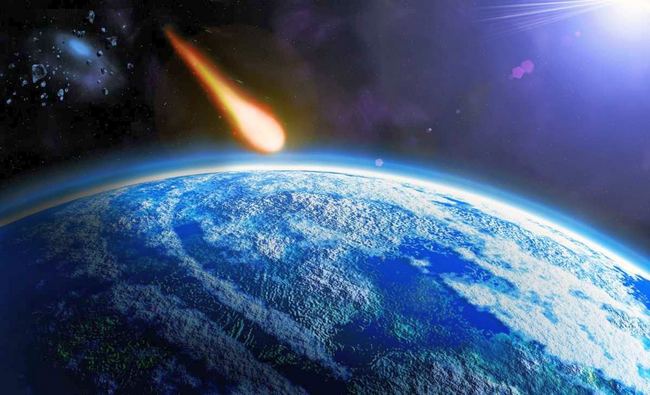
Where did life on Earth come from? How did this happen? Supporters of the “Primary Broth” theory believe that at the dawn of its development, our fertile planet itself formed more and more complex molecules, which later gave rise to life. This could happen in the depths of the ocean, under ice, and in volcanic craters. Although DNA is the predominant basis for life on Earth now, it has been suggested that RNA may have dominated the first life forms.
In addition, the question is whether there were other nucleic acids other than RNA or DNA. Did life only come into being once, or did it once start, then be destroyed, and then re-emerged? Some believe in pansermia, the hypothesis that life was brought to Earth by meteorites or comets in the form of microbes.
8. How plate tectonics takes place

It may seem surprising, but the theory of tectonics of lithospheric plates, which move continents and cause earthquakes, volcanic eruptions and even form mountains, has become broad fame not so long ago. Although the hypothesis that all continents could once be one was first put forward back in 1500, this idea became widespread only in the 1960s, when a reasonable one appeared physical evidence is the theory of ocean floor spreading, according to which blocks of the lithosphere of the oceanic crust move apart and the released space is filled with magma generated in the mantle Lands. The mystery, however, is what exactly causes these plates to move.
9. How animals migrate

Many animals and insects migrate throughout the year, trying to avoid seasonal changes in temperature and the disappearance of vital food resources, or in search of mates. Some people travel thousands of kilometers to do this and then easily find their way back. Different animals use different methods of navigation, including those that make it possible to use the capabilities of the Earth's magnetic field and internal compass. However, scientists are still unable to understand the whole mechanism of these abilities, how animals know exactly where to go year after year.
Read also: Top 10+ most unusual holidays in the world
10. What is dark energy
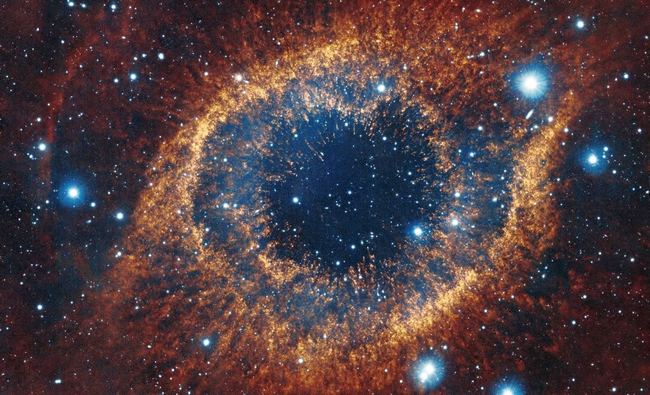
Of all the unsolved mysteries of science, dark energy may be the most mysterious. While dark matter makes up roughly 80% of the universe's mass, dark energy is a hypothetical form of energy that scientists believe makes up 70% of all the contents of the universe, and due to of this energy, our universe continues to accelerate. So far, scientists have more questions than answers. What does it consist of? Is dark energy constant, or can it change in any way? Is it possible to reconcile dark energy data with Einstein's theory of gravity, or will it need to be revised?
Back in the early 20th century, scientists believed that they had learned everything about the world order. However, this view was wrong. And even now that scientific progress has advanced far, much remains far beyond comprehension.