
 Ecology
Scientists have unraveled the secret of how mosquitoes develop immunity to viruses, which could potentially help develop improved vaccines against certain diseases, such as tropical diseases fevers.
A team of scientists from the State Association for Scientific and Applied Research in Geelong, Australia, discovered Vago, a protein that was originally found in fruit flies. It is produced by the cells of infected mosquitoes and stimulates other cells to activate protection against the invading virus.
Mosquito-borne viruses, such as dengue fever, Japanese encephalitis, and West Nile virus, threaten the health of thousands of people, livestock and other wildlife. Globally, 50-100 million people are infected with the dengue fever virus, killing 22,000 people each year, according to the Proceedings of the National Academy of Sciences magazine.
According to Professor Peter Walker, these insect vectors pose particular health risks to Australians, as they spread very quickly due to several factors, including climate change and the development of tourism and trade.
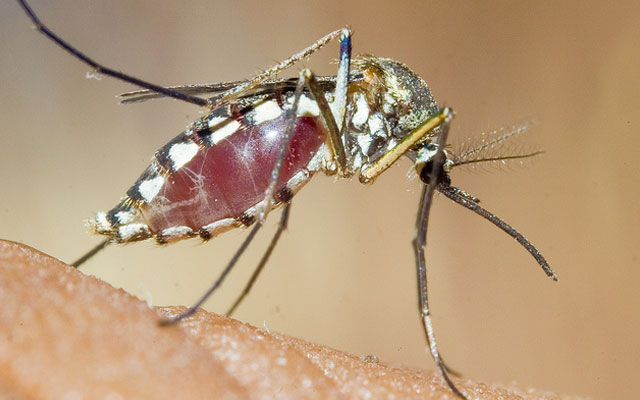
So far, very little has been known about how insects protect themselves from viruses. Unlike humans and other mammals, insects lack key components of the immune response, including antibodies, T cells, and many important cytokines (a category of signaling molecules), for example , interferon.
Using West Nile virus as an infectious model, a team of scientists demonstrated that Vago acts in a mosquito in the same way as interferon in humans, although they are not structurally related .
“Mosquito cells can sense the presence of the virus, they identify its small genome and produce Vago. The produced Vago protein then binds to receptors in other cells, signaling the anti-viral defense system to limit the effect of the infection, “Walker said.