
 Science
Scientists studying fragments of the Chelyabinsk meteorite came to the conclusion that it separated from its parent body after a collision with an asteroid.
This collision eventually caused it to fall to Earth. Moreover, other related objects may still remain in space.
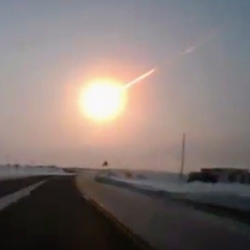
When the meteorite hit the ground on February 15, 2013, it was the second largest airborne explosion in history.
The first was the fall of the Tunguska meteorite in 1908, which was 1,000 times more powerful than the atomic bomb explosion in Hiroshima, knocking down trees on an area of more than 2,000 square kilometers near the Podkamennaya River area Tunguska in Siberia.
The fall of the Chelyabinsk meteorite
Due to its incredible speed and a smaller angle of entry into the atmosphere, the object exploded, sending small fragments of meteorites to Earth.
Scientists are studying the Chelyabinsk meteorite to understand the nature and formation of near-Earth objects.
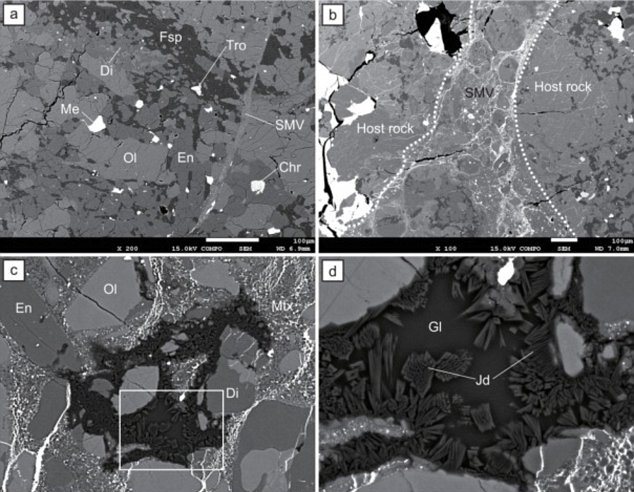
They found the mineral jadeite in the meteorite, which forms at high pressure and high temperatures, which was most likely the result of a collision with an asteroid about 150 meters in size. diameter.
The Chelyabinsk meteorite itself was 17 meters in size. The asteroid was moving at a speed of 5400 km per hour, splitting the rock that became the Chelyabinsk meteor. Most likely, there are other related asteroids that could threaten Earth.
See also: The Chelyabinsk meteorite has “asteroid brothers” that threaten the Earth
Scientists estimate that the collision occurred about 290 million years ago.
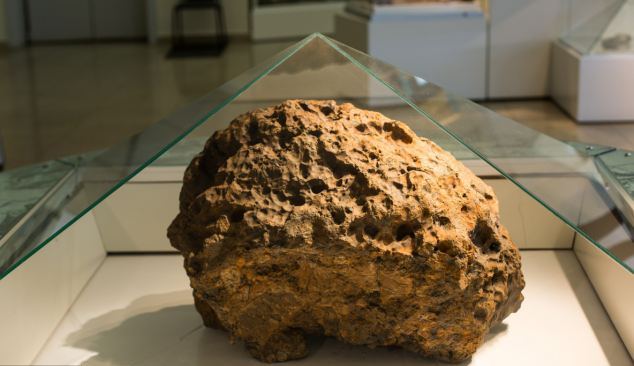
Chelyabinsk meteorite fragment (video)
The largest fragment of the Chelyabinsk meteorite was found in Lake Chebarkul in March 2014. It was about 2 meters in diameter and weighed several tons.
Several fragments were also found last year, and the largest one weighed 570 kg.