
Sitting on the steps, feeding birds or wearing heels – study the list of not the most obvious prohibitions in European countries, so as not to accidentally break something and not fly into a tidy sum. Even if some of the rules seem strange and too strict, remember that cities are just asking for a little respect.
You can’t walk in swimming trunks
On the streets of some European cities, it is officially forbidden to appear in an unsightly appearance, namely in a bathing suit. As soon as you step off the sand onto the hard asphalt, be kind enough to put on a shirt. This rule applies, for example, in Croatia, Spain and Italy.
If you still can’t wait to get naked, here’s a list of the best nudist beaches in Europe – enjoy.
You can’t feed pigeons
The Vienna city authorities decided to fine everyone who feeds the birds by € 36. This is how the city controls the bird population and takes care of their health: human food is not useful for them at all.
Since 2008, it has also been forbidden to feed birds in Venice: it is believed that the products of birds’ vital activity destroy valuable mosaics of historical monuments. So think twice before stuffing your pockets with buns before a visit to San Marco: if you are caught by the hand feeding pigeons or seagulls, you face a fine from € 50 to 200.
You can not have a snack on the street
In Italy, it is forbidden to eat and drink in public places and near attractions. For example, in Rome, for a picnic on the steps of the Spanish Steps or at the Trevi Fountain, you can grab a fine from € 40 to € 240. In Rome, they even came up with a black list of violent foreigners who may not be allowed into the city again.
Similar rules apply in Venice. One day, a couple of tourists from Berlin decided to arrange an elegant coffee break on the Rialto Bridge: the guys settled down on the steps, laid out their camping tiles and put on a coffee maker. This picnic cost the travelers almost €1,000 fine.
And in Florence, they decided to constantly water the steps of churches and historical buildings with water so that no tired traveler would sit down on them.
You can’t ride a bike
Venice is a clear leader in the number of bans. The historical center of the city is completely pedestrian, so tourists can not ride a bike there, many signs around the city remind about this. Even if you just roll your bike nearby, you can earn a fine of up to €100. You can only drive a bicycle in your hands along a short route in the Piazzale Roma area.
You can’t wear high heels
Here you have to choose between style, comfort and the law. When you pack a suitcase to Greece, it’s better to leave the stylish boats at home: it is officially forbidden to walk through the ruins in heels there. Not only because of the danger of injury – heels can harm the surface of ancient monuments.
You can’t build sand castles and stone turrets
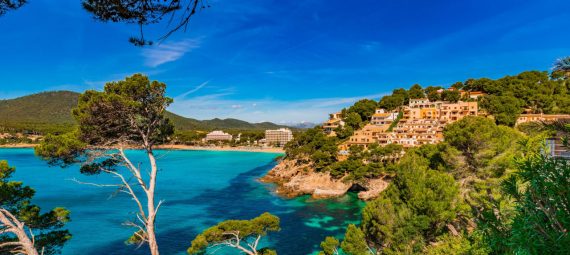
In Magaluf, one of the most famous resorts in Majorca, sand architecture can be fined € 100. The ban is due to the fact that sandcastles can interfere with the work of rescuers. Some vacationers also complain that the locks block their view of the sea and do not allow them to enjoy the views – and the views in Majorca are gorgeous, they can not be hidden in any way. In addition, it is forbidden to pick flowers and drink water from fountains on the island.
In another Spanish resort – Tenerife – they are thinking of banning turrets made of stones. The pebbles on the beaches of the island are the most important component of the local ecosystem, and the turrets violate it. Tiny algae grow in the lower part of the stones, which crustaceans, reptiles, and mollusks feed on – and when the pebbles are constantly moved, the algae becomes smaller and smaller.
You cannot use Google Maps
In the Italian city of Baunei in Sardinia, Google Maps was banned because the application worked very badly, constantly pointed the wrong way and tourists began to get lost in the surroundings. Travelers found themselves on impassable roads and could not go back on their own. In 2019, the local rescue service moved forward to search for lost tourists more than a hundred times. Therefore, signs with the inscription “Do not follow the instructions of Google Maps” were installed on the roadsides.