
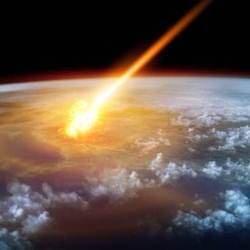
 Unbelievable facts
Professor Stephen Hawking recently said that attempts to create thinking machines threaten our existence.
A well-known physicist says that developments in the field of artificial intelligence will lead to the fact that in a few decades computers that will be thousands of times more powerful than modern ones will take over their own creators and will put an end to human existence on Earth.
This “Terminator” scenario was taken quite seriously by many scientists and specialists.
But in addition to smart machines, our species and civilization are threatened by many other dangers. Here are the 7 most likely doomsday scenarios.
Asteroid fall
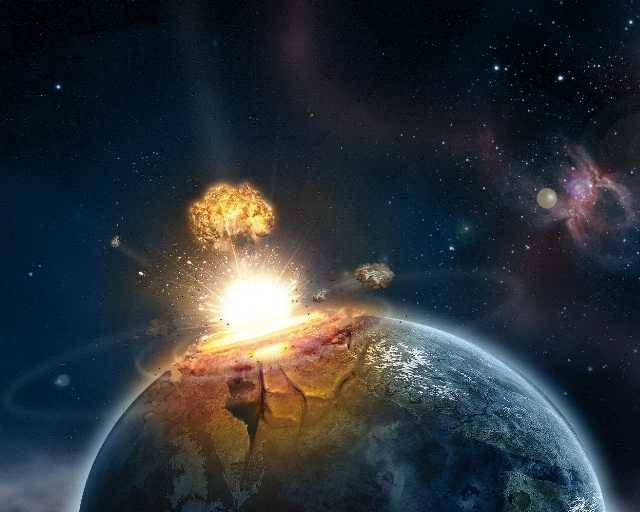
Our solar system is littered with billions of debris particles, ranging in size from large boulders to objects several hundred kilometers in diameter. They fall to Earth from time to time.
Presumably 65 million years ago, an object, possibly a comet, fell on the Mexican coast and caused a global winter that led to the extinction of the dinosaurs.
In 1908, a small object fell in Siberia, razing about 2,000 square kilometers of forest to the ground.
Read also: An asteroid will collide with Earth on March 16, 2880
Hundreds of scientists are calling for a global alert system that would alert us when a deadly asteroid is coming.
Probability: Remote during our lifetime, but one day it will happen.
The result: there has been no extinction event on Earth in the past 3 billion years, but if the asteroid that once killed dinosaurs falls, civilization will end.
Artificial intelligence
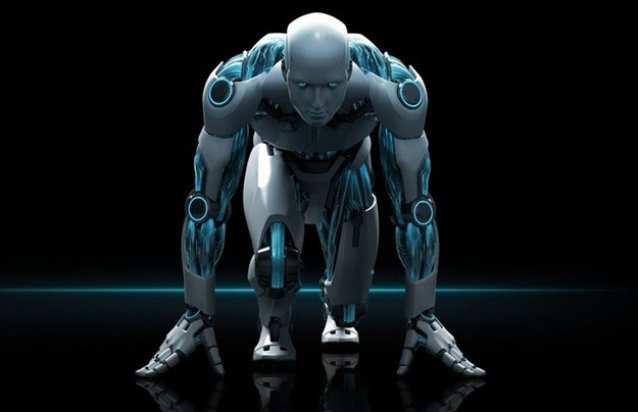
Professor Stephen Hawking believes that an event called a singularity could occur in a few decades. The singularity is the moment when a massive uncontrolled increase in the total computing power of all artificial intelligence systems will begin. In other words, machines will become intelligent.
By then, we may have handed them over control of basic life support systems, from food sales to power plants and banking systems.
Machines will be able to control humanity, and we can't just turn them off because they'll control power supplies.
Probability: Unknown, although computing power increases every 1.5 years. We don't know if machines will be conscious or if they will “want” to do something. Skeptics argue that the smartest modern machines that exist today are no smarter than cockroaches.
The result: If machines want to get rid of us, there may be a war between machines and people. But they are unlikely to want to destroy the planet, as they also live here.
The spread of a genetically created epidemic
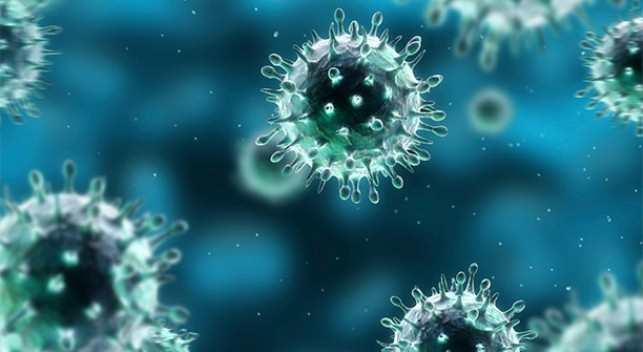
This is probably the most frightening and likely danger. The reason why Ebola did not become a global epidemic is that it is not so easily transmitted and kills its victims fairly quickly.
However, once a modified version of this disease is transmitted by airborne droplets, the carrier will be able to kill millions of people in a few weeks.
It is not known whether any terrorist group has the knowledge or the conditions to do something like this, but defense experts quickly realized that it could be a powerful biological one with a weapon.
Probability: Maybe someday someone will implement their plans.
The result: Catastrophic. Common infectious diseases, such as avian flu strains, can kill hundreds of millions of people.
Nuclear war
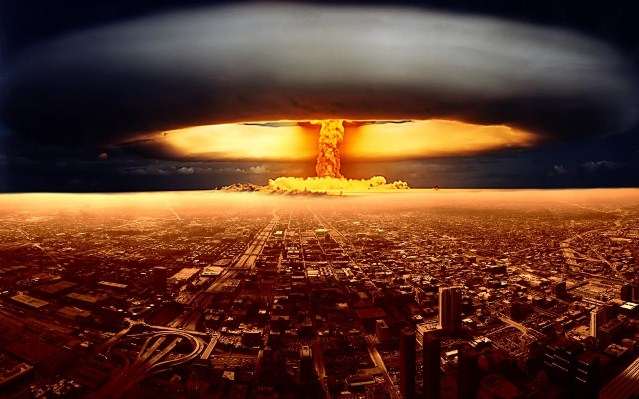
It is considered one of the most likely scenarios. Despite the existence of numerous limitation treaties, there are more than 15,000 nuclear warheads and bombs that, in theory, can kill every person on Earth several times.
Even a small nuclear war can cause massive destruction. In 2011, NASA scientists estimated that a war between India and Pakistan would cause global temperatures to drop by 1.2 C within a decade and kill 2 billion people.
Probability: High. Nine countries have nuclear weapons and more countries want to join.
The result: Although, even in the event of a war between the US and Russia, humanity will not be completely destroyed, billions of people will die, and the global economy will collapse for a century.
Particle accelerator
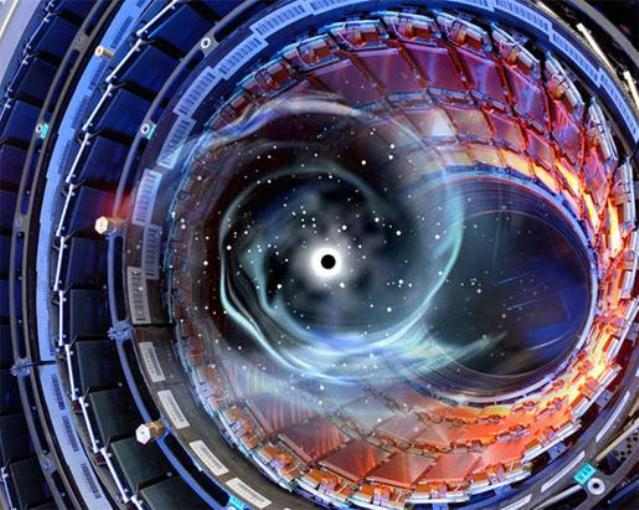
Even before testing the Large Hadron Collider (LHC) at CERN (European Council for Nuclear Research), where a particle called the Higgs boson was discovered, German scientist Otto Rossler warned that a particle accelerator could theoretically mistakenly create a black hole that would swallow the Earth.
See also: “God Particle” — the Higgs boson found
Particle collisions in the LHC are much weaker than natural collisions that occur when cosmic rays hit Earth.
However, maybe one day an improved version of the collider will create something that can destroy a planet or even the universe at the speed of light.
Probability: Very low
Result: Devastating
The end of the universe

Many scientists believe that our universe looks suspicious. Physical constants—quantities that control the fundamental forces of nature—allow for the existence of another form of life.
So the famous physicist Fred Hoyle wondered if our universe was some kind of staging.
Another philosopher, Nick Bostrom, speculated that our universe might be just one of many “simulations” on an alien computer, something like a computer game.
If this is the case, we can only hope that the creatures that control our artificial world are harmless and will not want to press the shutdown button if we “behave badly”.
Probability: According to Bostrom's calculations, there's a greater than 50 percent chance that our universe isn't real. Moreover, the lack of evidence for extraterrestrial life may be indirect evidence that our universe is not what we think it is.
The result: Catastrophic if those who control us turn against us.
Global climate change
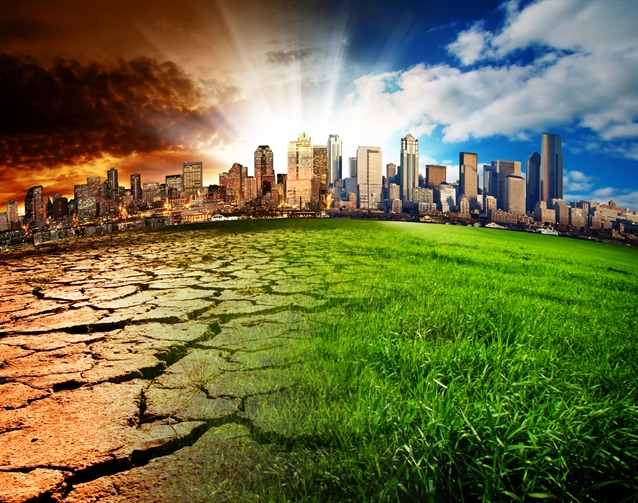
Few scientists now doubt that carbon emissions are affecting our planet's climate. According to the report of the Intergovernmental Panel on Climate Change, the average temperature on Earth will increase by 3-4 degrees in the future.
While this doesn't mean the end of the world, humanity will need resources to cope with such a drastic change. The effects of global warming will begin to be felt by the middle of the century, just as the Earth's population is predicted to reach 9 billion. Millions of people could be left homeless due to rising sea levels, and weather changes would seriously damage agriculture.
Probability: Carbon dioxide levels may rise to 600 parts per billion, and climate change will be appropriate.
Result: Catastrophic in some places, less so in others. Unlike most disasters, we have a chance to fix things.