
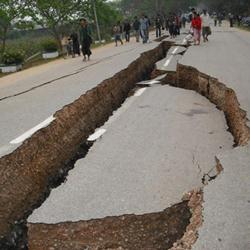
 Unbelievable Facts
1. The largest earthquake reached a magnitude of 9.5 in Chile in 1960. It caused a giant tsunami that spanned 10,000 km.
2. The 2011 earthquake near Japan increased the Earth's rotation speed, shortening the day by 1.8 microseconds.
3. About 1,500 earthquakes occur in Japan every year.
The consequences of earthquakes
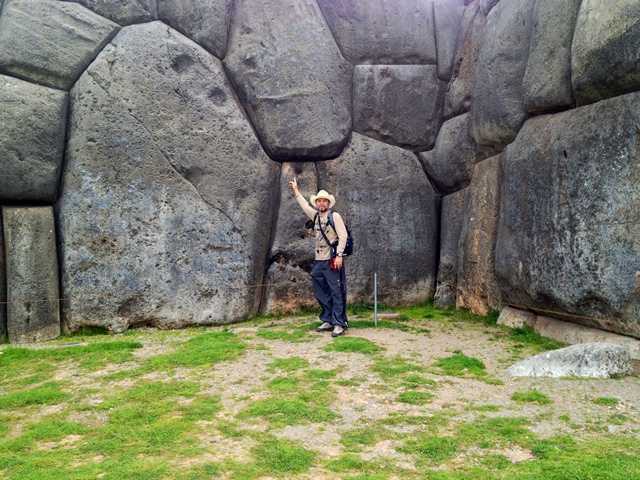
4. Inca architectural structures were incredibly resistant to seismic activity. The masonry used by the Incas could withstand the biggest earthquake.
5. Earthquakes turn water into gold.
6. After the magnitude 8.0 earthquake in Mexico City in 1985, almost all newborn babies survived in the collapsed hospital for 7 days without food, water, heat or human contact.
7. The earthquake of December 16, 1811 caused parts of the Mississippi River to reverse briefly.
Read also: 5 of the deadliest earthquakes in history
8. The height of Everest decreased by 2.5 cm after the 2015 earthquake in Nepal.
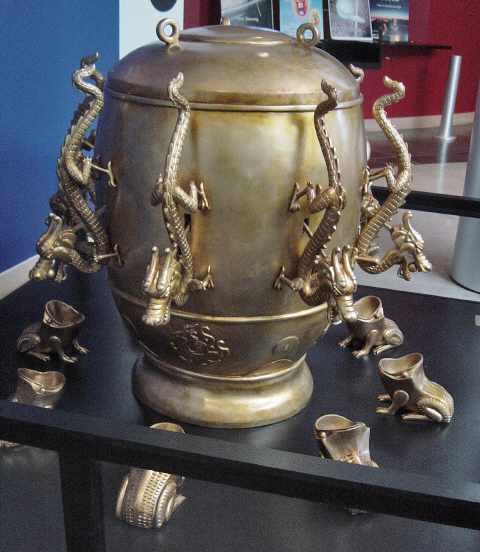
9. In 132 AD, a Chinese inventor created a seismograph that, at the time of an earthquake, threw a copper ball into the dragon's mouth and frog's mouth.
10. About 500,000 detectable earthquakes occur each year. About 100,000 of them can be felt and 100 of them cause some kind of damage.
11. On average, an earthquake lasts about 1 minute.
12. Tremors can also occur several years after the main earthquake.
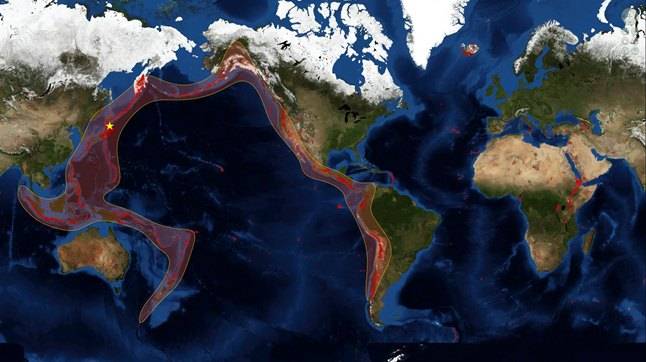
Earthquake map
13. About 80 percent of Earth's major earthquakes occur near the Ring of Fire, a horseshoe-shaped region in the Pacific Ocean where many tectonic plates meet.
The second most powerful earthquake area is called the “Mediterranean Folded Belt”, which includes countries such as Turkey, India, and Pakistan.
14. The 1201 earthquake in the eastern Mediterranean was the deadliest in history, killing more than 1 million people.
15. Scientists believe that animals may feel weak tremors before an earthquake. It is possible that animals sense electrical signals that occur during underground shifts.
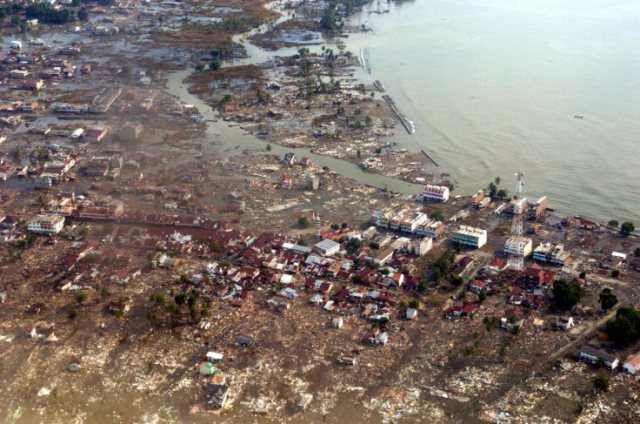
2004 Indian Ocean Earthquake
16. The 2004 Indian Ocean earthquake lasted almost 10 minutes, making it the longest earthquake ever.
17. An earthquake can release hundreds of times more energy than that released by the Hiroshima nuclear bomb in 1945.
18. Before an earthquake, an unusual smell may appear in ponds and canals. This is due to the release of underground gases. Groundwater temperatures may also increase.
19. An earthquake on the moon is called a moonquake. Moonquakes are usually weaker than earthquakes.
20. Earthquakes are usually caused by geological disturbances, but they can also be caused by landslides, nuclear weapons testing, and volcanic activity.
The strongest earthquakes (since 1900)
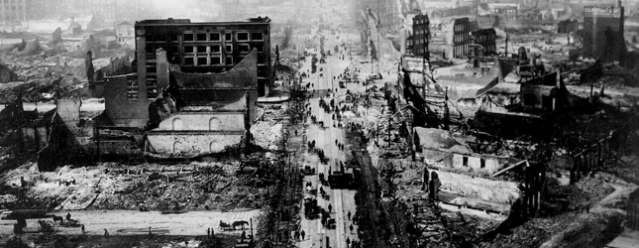
1. The Great Chilean Earthquake of 1960
Epicenter — Valdivia, Chile
magnitude – 9.5
2. The Great Alaska Earthquake of 1964
epicenter — Prince William Strait
magnitude — 9.2
3. 2004 Indian Ocean Earthquake
Epicenter — Sumatra, Indonesia
magnitude — 9.1
4. 2011 Sendai earthquake
Epicenter — Sendai, Japan
magnitude — 9.0
5. The earthquake and tsunami in Severo-Kurilsk, 1952
Epicenter — Kamchatka, Russia
Magnitude – 8.5-9.0