
 Unbelievable facts
Various countries of modern Europe attract hundreds of millions of tourists every year. Countless people go there from all over the world to briefly experience the history, architecture and culture of this part of the world.
However, from the 15th to the 18th century, Europe was far from the most pleasant and comfortable place. And for a lot of grown women, Europe was just a terrible place. The reason for this was religious terror due to the confrontation that existed between the Catholic and Protestant churches.
In Europe at that time, cases in which women were accused of serving the devil were common. More than two hundred thousand people living in Germany, Sweden, France, Britain and other countries were involved in terrible trials to determine whether they were witches.
Witch hunters used absolutely wild methods to test women for their commitment to evil spirits. Some of these methods were as brutal as they were stupid, as they left no chance for suspects to survive. We suggest you check out some of these methods.
Witch hunt
Don't let the witch sleep
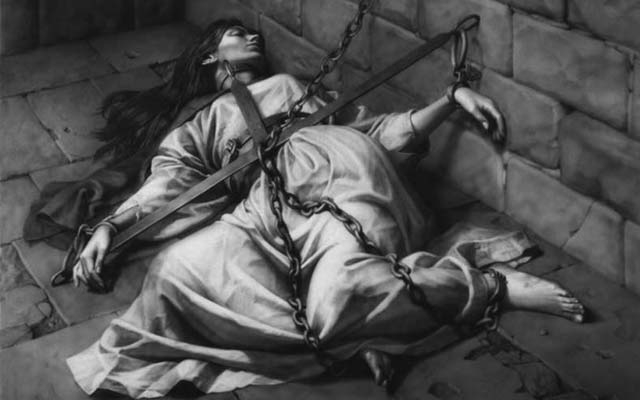
Italians were the first to use this brutal method of identifying witches, which later became very popular in Scotland. We know it by the name of sleep deprivation (sleep deprivation).
At first glance, it doesn't look so scary — many of us have experienced what it was like when work required it. This is what parents face when their young children don't let them sleep.
However, this does not compare to what those accused of witchcraft experienced, for whom sleep deprivation was not only a cruel ordeal, but a real torture.
Potential witches were inserted into their mouths with a metal hoop with four sharp metal pins. This hoop was then attached to the wall behind the unfortunate people at such a height that they could not even try to lie down, as it caused the sufferers wild pain.
It also happened that those who guarded witches were ordered to keep women awake by any means the jailers could think of. Usually, after three days of forcible wakefulness, victims began to experience severe hallucinations.
Read also: The main WITCHES among the zodiac signs: how dangerous are they and how to become them?
When women in this condition were interrogated, many of them told fantastic stories about their own flights, about becoming animals. And few people had the strength to deny their participation in Satanic rituals.
Witch hunters claimed that this test makes it possible to “awaken” the witch in women. And this, in their opinion, was the main evidence of the guilt of the accused. After this, in Scotland, for example, victims were strangled and then burned.
Touch test

In 1662, two elderly women were subjected to a notorious test in England called the “touch test”. These women were named Rosa Callenberg and Emmy Danny.
The women were accused of bewitching two young girls who later developed seizures. Witch hunters believed that someone under the influence of witchcraft should show an unusual reaction when physically contacting the one who bewitched him.
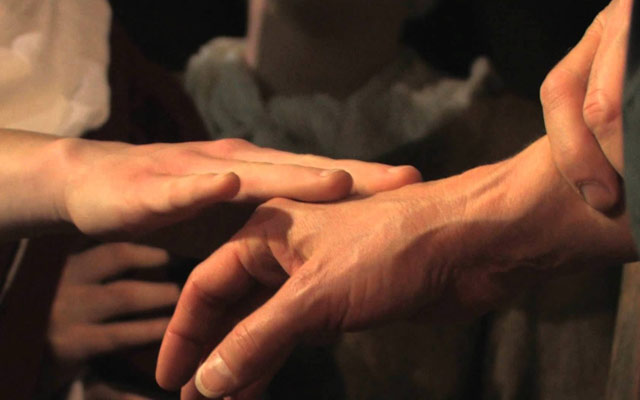
The suspect was taken into a room and then forced to place her hands on the victim, who was suffering from seizures. If the seizures stopped, this fact became evidence of the defendant's guilt.
In the Callenberg and Danny case, prosecutors reported that young girls (allegedly their victims) clenched their fists so hard at the time of seizures that even the strongest men in the village were not in able to unclench their fingers.
However, as soon as the elderly women accused of witchcraft put their hands on the girls, their fists opened their hands with their hands open. After that, the judge decided to check the girls themselves: they were blindfolded and began to bring into the room front persons who also touched victims of witchcraft.
As it turned out, the girls reacted in the same way to the touch of any person. Thus, the judge admitted that they were fraudsters. However, this fact did not prevent judges from convicting Callenberg and Danny, after which they were hanged.
Rack
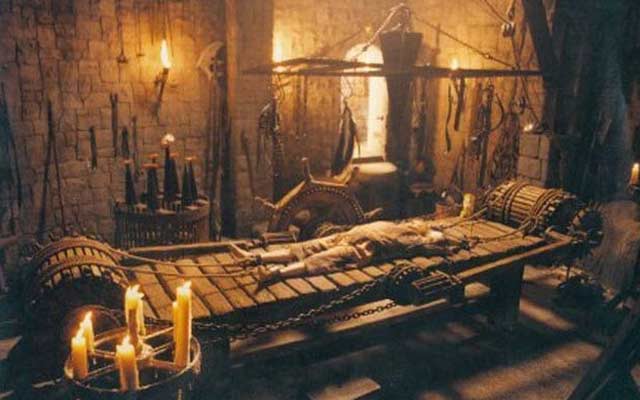
Germany is generally considered to be the country that punished the largest number of witches. According to some estimates, in the 1620s, during the five-year period of the so-called Würzburg witch trials, more than nine hundred people were killed.
No suspect managed to escape Prince Bishop Philip Adolf Ehrenberg, who was involved in mass trials. Even his own niece, 19 Catholic priests and several boys were injured.
Seven of them were charged with having sex with demons. After that, some were beheaded, while others were burned at the burning pole. The unfortunate persons were found guilty after their own confessions, which were obtained as a result of torture.
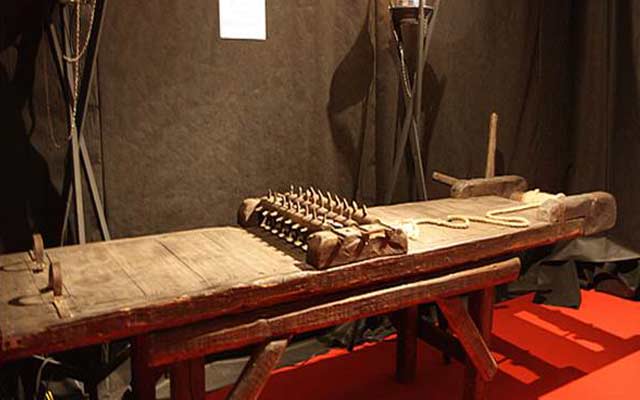
Torture at that time was not unusual or illegal in Central Europe. The Germans, on the other hand, had many brutal methods of forcing their victims to confess
forcibly. One of the most popular methods was the rack.
The rack was usually a metal frame with a wooden rotating shaft at one end (or both ends). The hands of the unfortunate were tied to one shaft, and their legs (by the ankles) to the other. During their interrogations, the executioners used shafts to increase pressure on joints and bones, stretching them.
If the victim was sturdy and stubborn, the torture could continue until the skeleton's movable bones came out of their joints. The unfortunate people felt terrible pain, accompanied by terrible sounds made by their own bones. After that, how could anyone not admit that they were messing with the devil himself?
Medieval witch torture
Witch piercing
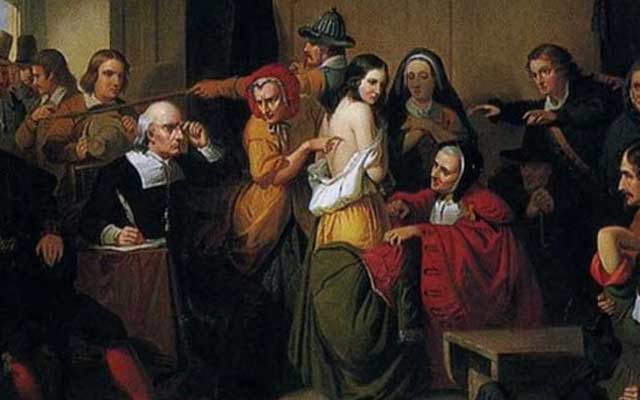
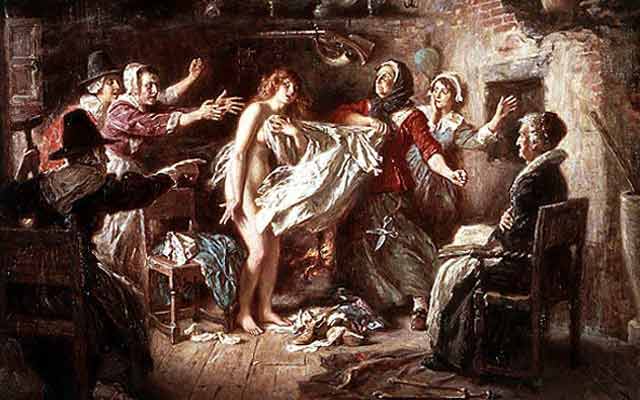
Piercing suspects with needles was considered one of the most accurate ways to identify their connection to the devilish world. The suspects were stripped almost naked in front of judges and then shaved from head to toe.
Then a witch piercer (a very respected profession at that time, by the way) looked for the so-called devil's mark on the victim's body by piercing the human body with a thick needle .
At that time, it was believed that if you could find a point that did not cause bleeding or acute pain, then this was the most irrefutable evidence of contact a suspect with the devil.
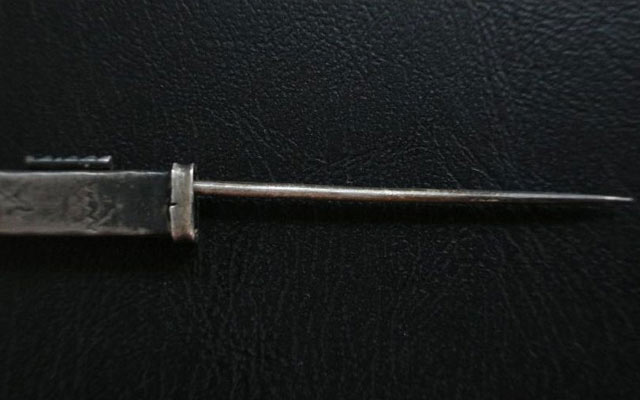
This torture was akin to what is now considered an egregious form of sexual perversion and violence. In a society where modesty was elevated to the rank of ultimate virtue, many women were willing to confess anything to stop this humiliation.
In Scotland, a witch piercer could expect a reward of six pounds for identifying one witch. Given the fact that in those harsh times, the average daily wage could not exceed one shilling, there is no doubt that the piercers did their best.

Like most other works, only males were usually piercers. However, this did not prevent one woman from becoming probably one of the most famous witch piercers in the history of this method of identifying witches. Her name was Christine Caddle.
But she called herself John Dixon. Christine participated in the processes while wearing masculine attire. It is known that she sent dozens of witches to their deaths. As a result, her forgery was discovered, for which she was sent to plantations in Barbados, where a fever was raging.
Given the fact that many convicts did not even survive the journey to the island, and Christine made it there, we can conclude that this woman had remarkable strength. Or she was just really lucky. Nothing is known about Christine's fate.
Seeing witches

The Swedes were the most inventive in their persecution of witches. They relied heavily on children's testimonies. Moreover, sometimes they were the children of the accused themselves. At the same time, children were tortured until they began to tell the necessary fantastic stories about the activities of witches.
During interrogations, children were mainly required to talk about their experience visiting Blokula, a cliff in the middle of the sea where witches allegedly gathered for their coven. It was believed that there was a hole at the top of the cliff through which you could see hell.
Under torture, some young witnesses gave out such “creative” science fiction stories that their unhappy parents immediately lost their lives. The Swedes believed that some boys had the ability to detect the so-called devil's mark on witches' faces.
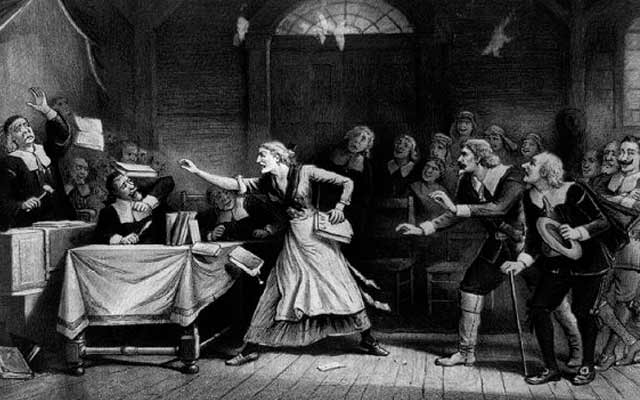
It was quite common practice when, after a church service, such boys would bypass parishioners, pointing to some women who were then accused of being involved with the devil. Boys were paid for every witch they found, and the unfortunate ones were usually executed within just a few days.
It is not surprising that those who allegedly saw witches were most often homeless orphans and beggars — this was the easiest way for them to make money. However, this work also involved very real risks. There have been many cases when such “clairvoyants” were beaten to death by relatives of “witches”.
Shameful chair
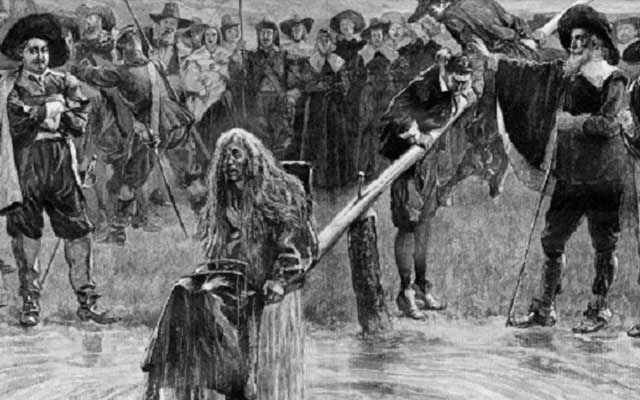
The type of test known as the “shameful chair” was the most common, as it was considered the most reliable way to identify a witch. It was often used as a punishment or even an execution.
The victim was tied to a chair, and sometimes her ankles and wrists were also tied together. The chair itself was then attached to a long beam, part of a simple mechanism resembling a well crane, after which the suspect was lowered into cold water.
The logic behind this test was simple. The judges assumed that if a woman was guilty, she must have come to the surface somehow. After that, the suspect would be executed like a real witch.
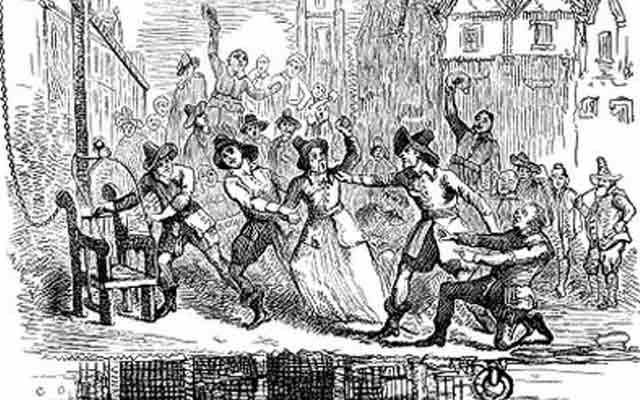
If the suspect started to sink to the bottom, then she was presumed innocent. Witch hunters had several reasons to believe that this type of test was plausible.
Some believed that witches automatically surfaced to the surface of the water because they rejected their baptism as an act of rejection of God. Others believed that witches could use their magical powers to stop diving into the water and resurface.
Finally, women were convinced of their innocence by the fact that they sank to the bottom and drowned. This meant that they were innocent, and therefore the Lord God was ready to accept them into His Kingdom of Heaven.

According to witch hunters, this was a much more enviable fate than the fate that awaited the “perpetrators” — torture, punishment, execution and hell. Sometimes such immersion was used as a form of torture: the unfortunate were immersed several times until they confessed to what was required of them.
It is noteworthy that the shameful chair was created specifically for women. It was also used to execute prostitutes and so-called vixens. Vixens were considered women who caused trouble, causing confusion and discord between, for example, household members and neighbors, spreading false rumors, cursing and quarreling with them.
Especially for such cases, a special punishment was invented: the shameful chair was attached to the cart in such a way that it was on a hill. The victim was taken across the city to the dive site. Humiliation was added to the other suffering of the unfortunate.
Medieval Witches
Weighing a witch
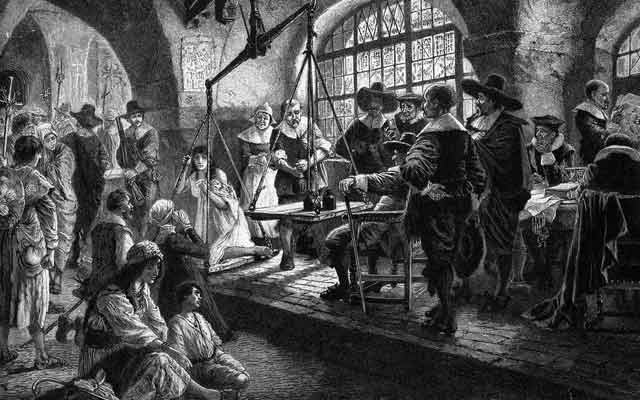
In Holland, in the town of Oudewater, there was a very famous weight chamber. Women from all over Europe, including Germany and Hungary, came here to prove their innocence in witchcraft.
The idea behind this idea was very simple. It was believed that the human soul is a rather heavy burden. And since a witch does not have a soul, it means that she will weigh much less than women who are innocent of witchcraft.
Several scales of various sizes were installed in the weight chamber. A woman stood on one side of the scale, and cast-iron counterweights were placed on the other. If the person being weighed was “right”, she received a certificate confirming her innocence.
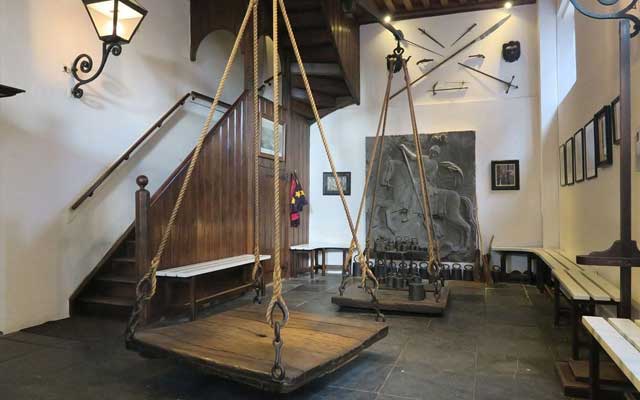
The Dutch were not unique in their idea that weighing a woman could make it possible to determine whether she was associated with evil spirits. In the English town of Aylesbury, it was quite normal for women to be stripped naked and then weighed on the scales, using a heavy, cast-iron Bible as a counterbalance.
And if the scales were not balanced, then the suspect being weighed was declared a sorceress. Elsewhere in England, witches were weighed using several Bibles as a counterbalance. If no direct evidence of guilt was found, it was always possible to add a few more copies of the Scriptures to the scales…
A witch's confrontation with a murdered man
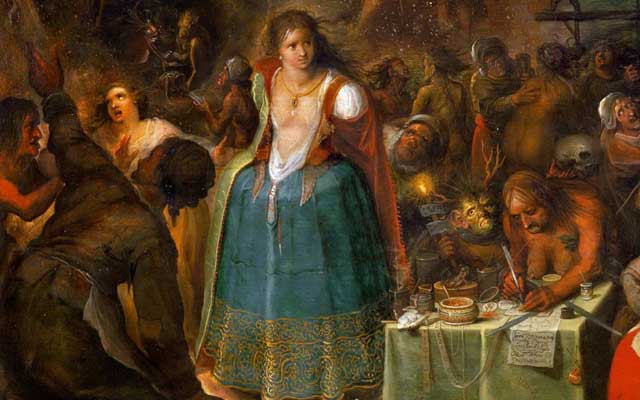
If someone was accused of committing murder by witchcraft, many European courts of that era proved guilty in a very interesting way that could be called in person a bet with a corpse.
In medieval Europe, people believed that the soul of a murdered (or died a natural death) person remained in his body for some time. And that is why the body may react in some unusual way to the presence of a murderer next to it.
The accused person was forced to say out loud the name of the victim, then walk around his body and then touch his wounds. If there was blood on the body at the same time, if the body could somehow twitch, or if the dead person's lips were foaming, then the suspect was accused.
Also read: 13 signs you're a witch
Of course, the fluid that flowed from the victim's wounds, and which the court recorded as blood, was not blood. It looked like blood, but it was the products of decay and decay that begins almost immediately after a person dies.
Dead bodies may also show subtle movement, such as the release of gases from the stomach. At the same time, it is sometimes even possible to distinguish sounds similar to moans. These signs were interpreted as the soul's desire to leave the body to avoid contact with the murderer.
Witch breast
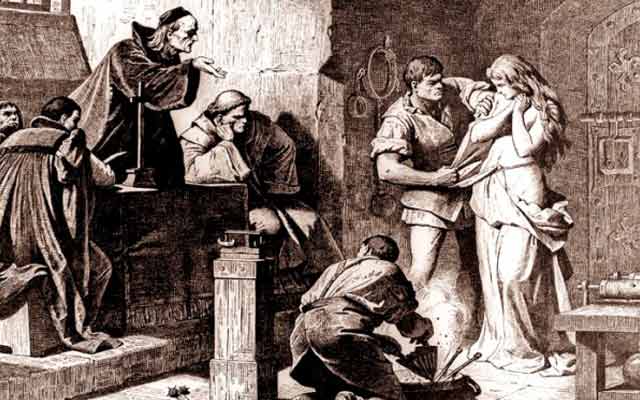
If the suspect in witchcraft had pets, then witch hunters resorted to another method of identifying demonic power. It was believed that witches had demons in their homes under the guise of pets.
People believed that demons disguised as dogs, cats, rats, and even insects ate witches' milk. And then the witch had to have very big nipples, which was also considered the devil's mark.
If a birthmark, papilloma, or any other characteristic feature was found on the body, then this was considered as evidence that a woman is associated with devilish power and feeds her pets with her breasts.
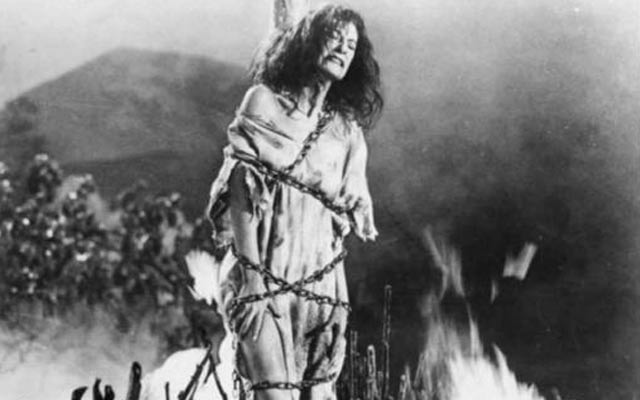
As you know, at least 80 percent of those accused of witchcraft were women. The idea that the devil provided witches with this horrible breast through which demons feed actually suggests that witch hunts were more often misogyny.
At the same time, the breasts of those accused of witchcraft were subjected to the most severe and humiliating “treatment”. In fact, this was ordinary torture, which was often carried out in public, in front of large crowds.
In this context, the story of Anna Pappenheimer from Bavaria, who was tortured because she allegedly had a sexual relationship with the devil, is indicative. As punishment, the woman's chest was ripped out, after which both Anna and her sons were burned.
Witches can't cry
In the Middle Ages, a treatise on witches called The Witches' Hammer was published. It was considered a documentary that could provide reliable information about witches, their rituals and practices, as well as how to prosecute them in order to identify and punish them.
This treatise was written in Latin by two German monks. It is noteworthy that this book has been considered a kind of bestseller in Europe for several hundred years. Its sales were so high that the Witches' Hammer was rightfully the second most popular after the Bible.
According to The Witches' Hammer, witches were unable to shed real tears when faced with trial. Moreover, they were unable to cry even when they were tortured.

The authors of The Witch Hammer also urged witch hunters to be vigilant not to fall for the tricks of sorcerers who knew how to shed “false tears” at the right time.
It is noteworthy that during the Middle Ages, lack of hygiene and medicine often led to lacrimal duct infections in old age. Often, due to certain types of infections, the lacrimal glands really lost their ability to secrete tears. It is not surprising that this criterion was the cause of the death of so many women during that era.